
Performance For Party: How to Book Live Entertainment Right

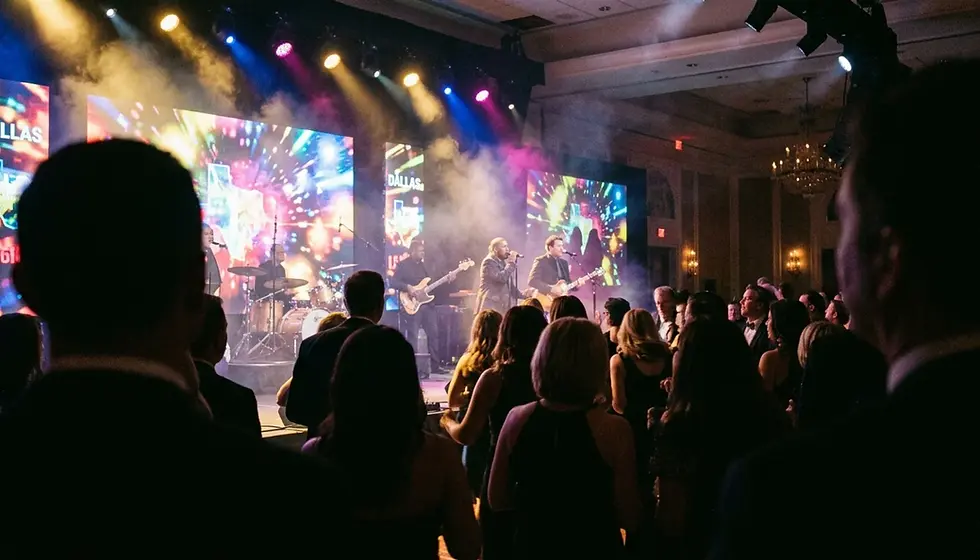
The right performance for party entertainment comes down to three decisions: matching band size to guest count, briefing the performers on your crowd's age range and energy, and confirming venue logistics like power and sound limits before you sign anything. Get those three right and the entertainment runs itself on the night.
Key Takeaways
A live band engagement typically runs two 45 to 60 minute sets with a short intermission, though corporate and gala bookings sometimes stretch to three sets for longer programs.
Live bands generate roughly 40% higher guest engagement than recorded DJ sets, according to industry research cited by UptownDrive.com in 2026, largely due to interactive performance and crowd reads.
Dallas hosted 27 million visitors last year and generated $6.6 billion in direct visitor spending, per Visit Dallas, with recreation and event-related spending topping $800 million.
Briefing a performer on guest age range, must-play songs, and do-not-play songs before the event is the single biggest factor in whether a party performance lands or falls flat.
Venue logistics, stage footprint, power circuits, and noise ordinances, should be confirmed at least two to three weeks before the event date, not the week of.
Cap City Band, based in Austin, books performances for private parties, corporate events, and galas across Austin, Dallas, San Antonio, and Houston, Texas.
Planning a party performance in 2026 means navigating more entertainment formats than ever, live bands, DJs, live band karaoke, hybrid sets, and figuring out which one actually fits your guest list. Most hosts get stuck not because good options don't exist, but because nobody tells them what questions to ask before they sign a contract.
This guide walks through the practical side of hiring a performance for a party: how much time you're actually paying for, how to brief a band so the set matches your crowd, what venue details trip up first-time hosts, and where a live band clearly beats a playlist. Cap City Band books this kind of entertainment across Central Texas every month, from milestone birthdays in Austin to holiday parties in Dallas-Fort Worth, and the questions clients ask before booking follow a predictable pattern.
Whether you're planning a backyard birthday, a company holiday party, or a nonprofit gala, the fundamentals below apply. The details change with venue size and guest count, but the decision-making framework stays the same.
How Much to Hire a Band for 2 Hours?
Hiring a band for a two hour performance typically covers two sets of live music, usually 45 to 60 minutes each, with a break built in between for the band to reset gear and let recorded music or a brief DJ interlude carry the room. Pricing depends heavily on band size, market, and whether sound and lighting equipment is included.
A four to five piece band costs less than a full show band with three lead vocalists, horns, or a dedicated MC. Industry pricing examples for smaller live acts commonly land in the four figures for a 90 minute booking, with larger bands, additional sets, or added production like sound and lighting pushing the total higher. Specifically, cost drivers include the number of musicians, whether a sound engineer travels with the group, and if the booking includes ceremony or cocktail hour coverage in addition to the main event.
As a result, two nearly identical bookings in the same city can vary significantly in price based on those add-ons. For example, a four piece band with a house sound system costs less than a six piece band bringing its own PA, lighting rig, and a dedicated sound technician. Corporate planners in Dallas and Houston should ask for an itemized quote breaking out base performance fee, equipment, travel, and any overtime rate in writing before comparing options across providers.
What Are Fun Activities for a Party?
Fun party activities in 2026 center on interactive experiences that give guests something to do, not just something to watch, and live music consistently ranks among the highest engagement formats available. Beyond the performance itself, the activities that work best complement rather than compete with the entertainment.
First, live band karaoke has become one of the fastest growing requests for private parties and corporate holiday events because it turns passive listeners into participants. Instead of a static karaoke machine playing backing tracks, a live band plays behind guest vocalists, which changes the entire energy of the room. Cap City Band offers this format specifically for hosts who want their guests performing, not just watching from the sidelines.
Additionally, structured dance sets built around specific eras, think a run of 90s hits followed by current chart songs, keep multi-generational crowds engaged longer than a single-genre playlist. Photo booths, lawn games for outdoor venues, and a cocktail hour acoustic set before the main show also extend the entertainment window without exhausting guests. For corporate parties, pairing a live band with a brief awards or recognition segment during a natural set break keeps the program moving without dead air. The mistake most hosts make is stacking too many activities and leaving no room for the band to actually build momentum on the dance floor.

What Are Cool Party Activities for Adults?
Adult party activities that work best pair sophisticated entertainment formats with flexible energy levels, since adult crowds, unlike kids' parties, need the ability to shift from conversation to dance floor without a jarring transition. A well-run performance for a party of adults reads the room and adjusts in real time.
Specifically, a cocktail hour with a smaller acoustic lineup, then a full band transition for open dancing later in the night, gives adult guests both a lower-energy social window and a high-energy dance segment. This two-phase structure works particularly well for milestone birthdays, anniversary parties, and nonprofit galas where speeches or paddle raises need a quieter musical backdrop before the dance portion opens up.
Live band karaoke also performs unusually well with adult crowds in the 30 to 60 age range, since it taps into nostalgia without requiring guests to know current chart hits. Additionally, a band with genuine vocal range, not a single lead singer working through a fixed setlist, can move from a Motown deep cut to a current pop hit without losing the room. That versatility matters more at a 40th birthday party than at a college mixer, where guests span a much narrower age range and a single genre often suffices.
One activity worth reconsidering: oversized production elements like elaborate string quartets for a ceremony-only segment when a full band could cover the entire event. That approach often creates redundant costs, since you end up paying two separate acts to cover what one versatile band handles in a single booking.
How Do You Keep Guests Entertained at a Party?
Keeping guests entertained at a party requires matching the entertainment's pacing to your event's natural rhythm rather than running a fixed script regardless of how the room is responding. A performance for a party succeeds or fails based on the band's ability to read the crowd and adjust song selection, tempo, and energy on the fly.
First, brief your performer on the guest list breakdown ahead of time. Specifically, tell them the age range, whether children will be present, and what two or three songs are non-negotiable must-plays. A band that knows grandma wants a specific song and the groom's college friends want a very different one can build a set that satisfies both without guessing.
Additionally, build natural breaks into the evening, a toast, an award presentation, a cake cutting, so the band has clear cues for when to lower energy and when to bring it back up. As a result, guests never sit through a lull because the transitions feel intentional rather than accidental. A common mistake among first-time hosts is assuming the band will simply "figure it out." Professional acts do read a room well, but a five-minute conversation beforehand about your priorities saves far more disappointment than winging it on the day.
Finally, don't overload the schedule. A performance stretched across too many mini-segments, three sets, a karaoke interlude, a DJ handoff, loses momentum. Two focused sets with clear energy arcs consistently outperform a fragmented five-part evening, based on what most experienced planners across Austin, Dallas, and Houston report after running both formats.
How Do You Choose the Right Performance for Different Party Themes?
Choosing the right performance format depends primarily on the party's purpose, a corporate holiday party has different needs than a 60th birthday celebration or a nonprofit gala, and matching format to occasion prevents the most common booking regret hosts report.
For milestone birthdays and anniversaries, a full band with a broad, multi-decade setlist works best because guest lists typically span several generations. For corporate events, including product launches and client appreciation nights in Dallas and Austin, a band that can also handle light MC duties, welcoming guests, cueing award presentations, avoids the cost of hiring a separate host. For nonprofit galas, tone matters more than volume: the performance needs to dial energy up and down around program moments like paddle raises and speeches, which requires a band experienced with that specific format rather than a standard party band.
Notably, holiday parties in November and December book out fastest across Texas markets, since companies and families compete for the same weekend dates. Booking three to six months ahead is common practice for in-demand Austin, Dallas, and Houston acts during that window. A private party with a narrower age range, say a bachelorette weekend or a 21st birthday, can lean into current hits without the multi-generational balancing act a wedding or family milestone event requires.
What's a Practical Checklist for Briefing a Performer Before the Party?
Briefing a performer before a party means giving the band or entertainer specific information about your guest list, must-play and do-not-play songs, and event timeline so they can build a set tailored to your crowd rather than a generic default. This single step separates a forgettable performance for a party from one guests talk about for years.
Use this checklist when briefing any performer, whether it's Cap City Band or another provider:
Guest age range and count: Tell the band the approximate number of guests and the age spread, since a 25-person office party needs a different set than a 200-guest wedding reception.
Must-play songs: Provide two to five songs that absolutely need to happen, first dance songs, a father-daughter dance, a company anthem, or a nostalgic favorite for the guest of honor.
Do-not-play list: Flag any songs, artists, or genres to avoid, whether for personal reasons or because they clash with the event's tone.
Timeline and key moments: Share the schedule, cocktail hour, dinner, toasts, cake cutting, award presentations, so the band knows when to lower energy and when to bring the room back up.
Dress code and formality level: Let the performer know if the event is black-tie, business casual, or backyard casual so stage presence matches the room.
Emcee expectations: Clarify whether the band handles announcements and transitions or if a separate host manages that role.
Sending this information at least two weeks before the event, ideally a month for weddings and large corporate events, gives the band time to rehearse specific requests rather than sight-reading them on the spot.
What Is the Typical Duration and Structure of a Party Performance?
A typical party performance runs two to three hours of active entertainment, structured as two 45 to 60 minute live sets with a 15 to 20 minute break in between, though corporate galas and longer wedding receptions sometimes extend to three sets. Understanding this structure helps hosts budget both time and money accurately.
During the break, most bands play recorded music through the house or portable sound system so the room never goes silent. Specifically, this intermission also gives musicians time to hydrate, adjust equipment, and prepare for the next set's specific requests. For events with formal programs, speeches, award presentations, first dances, that break often gets timed intentionally to coincide with those moments so the live band isn't standing idle during a toast.
Additionally, crowd-engagement tactics vary by format. A standard cover band builds momentum through song sequencing, opening a set with recognizable, moderate-energy songs before climbing toward high-energy closers. Live band karaoke structures differently, alternating guest vocalists with band-led songs to keep the energy from dipping between amateur performances. As a result, the choice between formats should factor into how you plan your evening's overall pacing, not just which songs get played.
What Venue Logistics Should You Confirm Before Booking a Performance?
Venue logistics for a live performance include stage footprint, power circuit availability, sound level restrictions, and load-in access, and confirming these details before booking prevents day-of surprises that can derail an otherwise well-planned party.
First, stage size matters more than most first-time hosts realize. A three-piece acoustic act needs a fraction of the space a full band with drums, keys, and three vocalists requires. Ask your venue for exact dimensions and confirm they match what your chosen performer needs, ideally in writing, so nobody discovers a mismatch the day of the event.
Second, power requirements can quietly derail an evening. A full band with amplifiers, a PA system, and stage lighting typically needs multiple dedicated circuits, not a single outlet shared with catering equipment. Specifically, ask whether the venue has adequate power access near the performance area or whether you'll need to arrange a generator, common for outdoor events in the Texas Hill Country or backyard parties without commercial-grade electrical service.
Third, many residential neighborhoods and some event venues in Dallas and Austin enforce noise ordinances with specific curfew times for amplified sound. Confirm the venue's sound curfew and any decibel restrictions well before the event, since a band cutting a set short due to a noise violation is a preventable disappointment. Finally, confirm load-in access, stairs, elevators, loading dock availability, and parking for the band's vehicles, especially at venues in dense downtown areas where street parking is limited.
Logistics Item | Why It Matters | When to Confirm |
Stage footprint | Full bands need significantly more space than acoustic duos or trios | At booking, minimum 3 weeks out |
Power circuits | Amplifiers, PA, and lighting often require multiple dedicated circuits | 2-3 weeks before event |
Noise ordinance/curfew | Residential areas and some venues enforce amplified sound cutoffs | At venue booking stage |
Load-in access | Stairs, elevators, and parking affect setup time and crew logistics | 1-2 weeks before event |
DIY Entertainment vs. Professional Hire: Which Fits Your Party Budget?
DIY entertainment, a curated playlist and a decent speaker, costs far less upfront than a professional band, but it also removes the crowd-reading, live interaction, and structured energy management a professional performance for a party delivers. The right choice depends on your event's size, formality, and how much you're relying on entertainment to carry the room.
For a small gathering of 15 to 20 close friends, a well-built playlist genuinely works fine, since the group's own conversation and connection carries the social energy. But once a guest list grows past 40 to 50 people, or once the event includes structured moments like toasts, award presentations, or a first dance, the gap between a playlist and a live performance widens considerably. According to industry data cited by UptownDrive.com in 2026, live bands generate roughly 40% higher guest engagement than recorded DJ entertainment, largely because a live band adjusts in real time to what's actually working in the room, something a fixed playlist cannot do.
Additionally, professional hire removes a significant logistical burden from the host. Sound equipment, microphones for toasts, and crowd management during key transitions all fall on the couple or event planner in a DIY setup. A professional entertainment provider handles all of that as part of the booking. The tradeoff is straightforward: DIY saves money for small, casual gatherings, while professional hire pays for itself once guest count, formality, or program complexity increases.
Data Snapshot: Texas Event Market in 2026
Texas's live event market remains strong heading into 2026, driven by consistent tourism and corporate event spending across the state's major metros. Dallas alone hosted 27 million visitors last year, generating $6.6 billion in direct visitor spending, according to Visit Dallas, with recreation accounting for $800 million, or 13%, of that total.
Metric | Figure | Source |
Dallas annual visitors | 27 million | Visit Dallas |
Dallas direct visitor spending | $6.6 billion | Visit Dallas |
Dallas recreation spending | $800 million (13% of total) | Visit Dallas |
Live band engagement vs. DJ | Roughly 40% higher engagement | UptownDrive.com, 2026 |
This level of sustained event activity across Dallas, Austin, San Antonio, and Houston means demand for professional performance for party bookings remains steady year-round, with predictable seasonal spikes around spring and fall wedding season and the November-December holiday party rush. Corporate planners in particular should note that recreation and entertainment spending represents a meaningful share of overall Texas event budgets, a trend that supports investing in higher-quality live entertainment rather than treating it as an afterthought line item.

Why Cap City Band Is the Right Choice for Your Next Party Performance
Cap City Band is an Austin, Texas based live entertainment company built specifically around the problems hosts run into when booking a performance for a party, thin vocal range, rigid setlists, and no MC flexibility. The band solves these with three distinct lead vocalists and a choreographed variety show format designed to hold a room's attention from cocktail hour through last dance.
What separates Cap City Band from a standard four-piece cover act is vocal depth. Forté Appling has been a fixture in the Austin music scene since 2011, opening for national acts including Sublime and Bowling For Soup, and brings versatile vocal range that can pivot from a soulful ballad to a high-energy dance anthem within a single set. Suzanne Van Velson trained in vocal performance at Lamar University and has spent over a decade fronting respected Texas acts, giving the band's harmonies a trained, classical foundation that a karaoke-circuit vocalist simply cannot replicate. Matt Raines, a Rhode Island native now based in Austin, brings performance experience from cruise ships, jazz clubs, and Texas honky tonks, plus two original albums, rounding out a lineup with genuine range across eras and genres.
For hosts specifically comparing entertainment formats, Cap City Band also offers live band karaoke, pairing real musicians with guest vocalists instead of a backing-track machine, a format that turns any private party, holiday event, or milestone celebration into an interactive show rather than passive background music. For corporate clients, the band handles light MC duties, welcoming guests, cueing award moments, without requiring a second vendor contract, a detail that matters for planners juggling corporate event entertainment budgets across Austin, Dallas, San Antonio, and Houston.
Cap City Band also offers a sister band for clients wanting a different sound profile for the same portfolio of events, expanding the range of live music solutions available under one point of contact. Confirmed multi-market travel across Central Texas means a Houston or Dallas planner gets the same proven act, and the same lineup depth, without wondering whether an Austin-based group can deliver consistently outside its home market. Other options exist in the broader entertainment market, but few combine three trained lead vocalists, a choreographed show format, and live band karaoke under a single booking.
What Common Mistakes Should You Avoid When Booking a Party Performance?
The most common mistake hosts make when booking a performance for a party is confirming availability and price without asking about overtime rates, equipment inclusions, or a written rider detailing exactly what the band needs from the venue. This single gap causes more day-of friction than any other booking error.
Additionally, many hosts wait too long to book, especially for the November-December holiday season or peak spring and fall wedding months, when in-demand Texas acts book out three to six months ahead. Booking last minute often means settling for reduced availability or a less experienced act. Another frequent mistake: assuming a demo reel accurately represents live performance quality. A polished video doesn't always reflect how a band actually reads a room in real time, so requesting references or attending a public showcase, where available, gives a far more accurate picture than studio-quality footage alone.
Finally, hosts sometimes skip the briefing conversation entirely, assuming the band will "figure out" the crowd. As covered earlier, a five-minute conversation about guest demographics and must-play songs prevents the single biggest source of post-event disappointment: a set that technically sounded good but never matched the room.
Frequently Asked Questions
How much does it cost to hire a band for a two hour party?
Pricing for a two hour band booking varies by band size, market, and whether sound and lighting equipment is included, with smaller acts costing less than full show bands with three lead vocalists and dedicated production. Request an itemized quote breaking out base fee, equipment, and travel before comparing providers.
What's the difference between a live band and live band karaoke?
A live band performs a set list for guests to watch and dance to, while live band karaoke pairs real musicians with guest vocalists who take turns performing. Cap City Band offers both formats, and live band karaoke works especially well for interactive parties where hosts want guests actively participating rather than watching.
How far in advance should I book entertainment for a party?
Book three to six months ahead for weddings and peak holiday season events, since in-demand Austin, Dallas, and Houston acts fill their calendars fastest during November and December and spring wedding season. Smaller private parties can sometimes book closer to the date, but earlier is always safer for guaranteed availability.
Can a band also serve as MC for my event?
Many professional bands, including Cap City Band, can handle light MC duties like welcoming guests and cueing key moments without requiring a separate host booking. Confirm this capability during the quote stage since not every entertainment provider includes it by default.
What should I ask before signing an entertainment contract?
Ask for the overtime rate in writing, confirm what equipment is included versus what the venue needs to provide, and get a clear breakdown of the performance schedule, including number of sets and break length. A provider that hesitates to answer these questions in writing is worth reconsidering.
Is a live band worth it compared to a DJ for a party?
Live bands generate roughly 40% higher guest engagement than DJ entertainment, according to industry research, largely due to real-time crowd reading and interactive performance. A DJ can work well for tighter budgets or smaller gatherings, but a live band typically creates stronger, more memorable energy for events over 40-50 guests.
Does Cap City Band travel outside Austin for events?
Yes, Cap City Band regularly travels to Dallas, San Antonio, and Houston for weddings, corporate events, and private parties, in addition to its home Austin market. Confirmed multi-market travel means clients outside Central Texas get the same proven lineup and show quality without added logistical uncertainty.
Conclusion: Booking the Right Performance for Your Party
Booking a strong performance for a party comes down to matching band size and format to your guest list, briefing the performer thoroughly on age range and must-play songs, and confirming venue logistics like power and noise curfews well before the event date. Get those three elements right and the entertainment carries the room without you having to manage it in real time.
As Texas's event market continues growing into 2026, driven by strong tourism and corporate spending across Dallas, Austin, San Antonio, and Houston, the gap between a generic playlist and a professionally briefed live band only becomes more noticeable to guests who've experienced both. Cap City Band brings three trained lead vocalists, a choreographed variety show format, and live band karaoke to private parties, corporate events, and galas across Central Texas, with confirmed travel to every major Texas metro.

If your next event needs a performance for a party that actually reads the room instead of running a fixed script, get started with Cap City Band and tell us about your guest list, your must-play songs, and your venue details. We'll build a quote around what your crowd actually needs.
Written by Suzanne Davila, Owner/Performer at Cap City Band
Content powered by inkSTR.co


Comments