
Slow Songs for Weddings: The Complete First Dance Guide

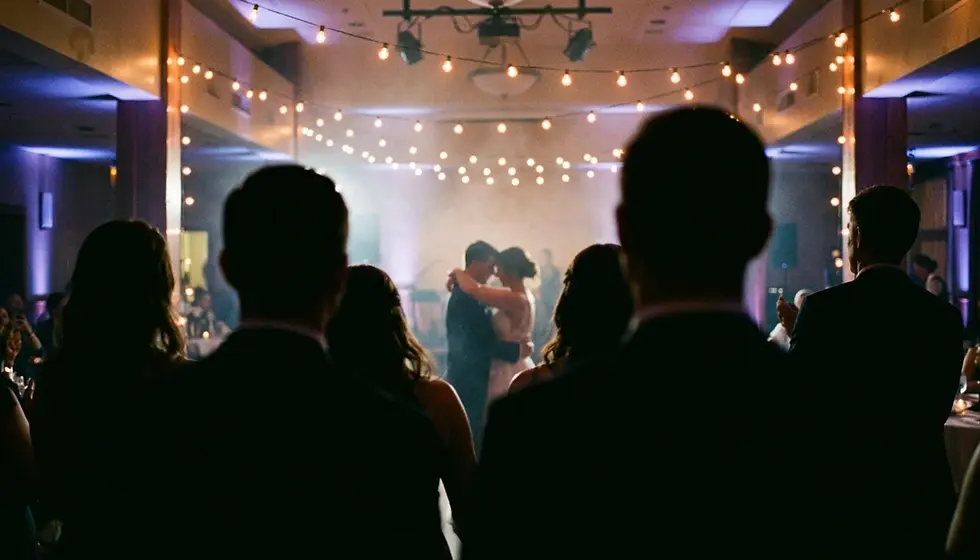
The best slow songs for weddings fall between 60 and 80 beats per minute, the tempo range that matches a comfortable walking pace and gives couples room for an unchoreographed sway rather than forced steps. Songs like "Perfect" by Ed Sheeran, "All of Me" by John Legend, and "Make You Feel My Love" by Adele consistently top first dance requests because their tempo, lyrics, and emotional arc all land in that sweet spot.
Tempo matters more than genre: songs between 60 and 80 BPM work best for unchoreographed first dances, according to 2026 wedding-music trend analysis.
"Perfect" by Ed Sheeran leads first-dance requests, appearing 401 times in the set lists of wedding bands analyzed by FixTheMusic and named in 532 of 774 couple enquiries mentioning "first dance."
"Valerie" by Amy Winehouse is the single most-played song across 1,380 wedding bands studied on FixTheMusic, though it's typically used outside the first dance slot.
Length matters: most processional songs need to run 90 seconds to three minutes, and reception slow songs should stay under four minutes to hold guest attention.
A live wedding band like Cap City Band can stretch, shorten, or reinterpret a slow song in real time, something a fixed DJ track can't do when a couple gets emotional mid-dance.
Nearly half of 2026 couples plan to work at least one Taylor Swift song into their wedding playlist somewhere, often as a slower acoustic cut rather than the radio version.
Picking slow songs for a wedding is one of those planning tasks that feels simple until you actually sit down to do it. You want something that sounds like "you" as a couple, works for the moment it's attached to (first dance, parent dance, or the slow stretch of the reception), and doesn't put half the room to sleep. At Cap City Band, we've built full wedding sets around this exact challenge for years across Austin, Dallas, San Antonio, and Houston, and the questions couples ask us before locking in a setlist follow a pretty consistent pattern.
This guide walks through the most-requested slow songs for 2026 weddings, the tempo and timing math that actually makes a first dance work, how to adapt a slow song for different cultural or religious ceremonies, and why the arrangement, not just the song choice, is what makes a moment memorable. We'll also cover a gap most wedding-song lists skip entirely: what a slow song actually does to a room emotionally, and how to edit one down for a more conservative or intimate setting.
What Is the Number 1 Song Played at Weddings?
The most-played song at weddings overall is "Valerie" by Amy Winehouse, appearing in the set lists of 584 wedding bands tracked by FixTheMusic, more than any other single track in their dataset. That said, "Valerie" is an uptempo dance-floor song, not a slow song. Among slow songs specifically, "Perfect" by Ed Sheeran holds the top spot for first-dance requests.
FixTheMusic's analysis of over 1,380 live wedding bands and roughly 29,000 wedding enquiries found "Perfect" named in 401 band repertoires and specifically requested by 532 of 774 couples who mentioned "first dance" in their planning notes. That's a meaningful signal: when couples are asked directly what they want for their first dance, Sheeran's ballad wins by a wide margin.
Close behind, "All of Me" by John Legend and "Thinking Out Loud" by Ed Sheeran each carry over 2.9 billion streams, according to streaming data cited in 2026 wedding-music trend analysis, and both remain staples in live band repertoires. If you want a song your guests already know by heart, without it feeling overplayed, these three are the safest starting point. A live band handles all three differently than a DJ would, since a real vocalist can slow the tempo down further for the walk-in or hold a note longer during the bridge, something a fixed studio recording simply cannot do.

What Is the Best Slow Song to Dance to?
The best slow song to dance to is one built around a steady, walkable tempo of 60 to 80 BPM with a clear melodic build, since that pacing lets two people sway naturally without needing choreography. "Make You Feel My Love" by Adele, an ultra-slow 72 BPM ballad with over 1.3 billion streams, is frequently cited as ideal for intimate first dances precisely because of that tempo.
Beyond tempo, the best slow dance songs share a structural trait: they start quiet and build. "A Thousand Years" by Christina Perri, which appears in roughly 15% of wedding playlists according to 2018 data and has continued climbing in popularity through 2026, follows that same soft-verse-to-swelling-chorus arc. That build gives a couple a natural cue to look up, make eye contact, or bring in a spin around the two-minute mark.
For couples who want something newer, "Ordinary" by Alex Warren has become the most recommended first dance pick for 2026, topping the Topsify US Spotify wedding playlist with nearly 184,000 saves. It's proof that first-dance trends do shift year to year, even while classics like "Can't Help Falling in Love" by Elvis Presley stay in near-constant rotation. Our advice at Cap City Band: pick the song that matches your actual relationship story first, then check the tempo. A song you love at 90 BPM can usually be reworked into a slower arrangement by a live band; a song you don't connect with can't be saved by a perfect tempo.
What Is the Most Beautiful Wedding Song?
"Most beautiful" is subjective, but among slow wedding songs, a handful consistently get named across genres and decades: "At Last" by Etta James, "What a Wonderful World" by Louis Armstrong, and "The Way You Look Tonight" by Frank Sinatra. Each pairs a simple, singable melody with lyrics that read as timeless rather than trend-driven.
"At Last" works especially well as an entrance song or first dance for couples wanting a vintage, soulful feel, and its slow swing tempo gives a live band room to add horn accents or a saxophone solo that a DJ mix cannot replicate. "What a Wonderful World" tends to land best as a parent dance song, given its reflective, grateful tone, while Sinatra's "The Way You Look Tonight" remains a go-to for couples who want a big-band, classic Americana atmosphere.
Modern couples increasingly ask us to blend a classic with a contemporary layer, for example opening a first dance with an acoustic guitar arrangement of a modern pop song and then folding in a jazz-influenced bridge. This genre-blending mashup approach is one of the clearest 2026 wedding playlist trends, driven largely by multigenerational guest lists where parents and college friends need to find common ground in the same three minutes of music. A three-vocalist band like ours, with Forté Appling's soulful range, Suzanne Van Velson's classically trained blend, and Matt Raines' honky-tonk and jazz background, can execute that kind of layered arrangement live, which a pre-recorded playlist cannot do convincingly.
Do You Play Slow Songs at a Wedding Reception?
Yes, slow songs remain a standard part of most wedding receptions beyond just the first dance, typically appearing during the parent dances, a designated "slow set" mid-reception, and sometimes a final send-off song. Reception slow songs give guests a breather between high-energy dance sets and create a natural rhythm to the evening.
Most receptions build in two to four slow moments: the couple's first dance, a father-daughter or parent-child dance, occasionally a full wedding party dance, and sometimes one slow song inserted into the middle of the reception to cool the room down after an extended uptempo run. Whitney Houston's "I Will Always Love You" is frequently recommended for these moments, though it's worth noting for its length and vocal intensity, a full band vocalist needs real range to do it justice live.
Here's our honest take from booking these moments across hundreds of Texas weddings: don't overload the middle of the reception with slow songs. One well-placed ballad resets the room; three in a row empties the dance floor and takes real momentum to rebuild. If you're working with a band, ask them how they read the crowd for that timing rather than locking a rigid slow-song schedule into the contract. If you're comparing entertainment formats, our guide on Austin wedding bands covers how live acts typically structure a full reception timeline around these transitions.
How Do You Choose a Slow Song That Fits Your Story?
Choosing a slow song that fits your story means starting with the relationship, not the charts, and working backward to a song whose lyrics, tempo, and emotional arc match a specific memory or feeling between you. This is a different process than picking a song because it's popular, and it produces a far more memorable moment.
Start by asking what your song needs to do. First, does it need to hold up to a full listen, since guests will be watching and listening for two to four minutes straight? Specifically, does the lyrical content match your relationship, or does it just sound nice? For example, "A Thousand Years" carries heavy, dramatic lyrics about eternal devotion that suit a whirlwind romance, while "Thinking Out Loud" leans into steady, long-term commitment language that fits couples who met young or dated for years before marrying.
Additionally, consider whether the song has a personal connection: a song from your first date, a song playing during a proposal, or a shared favorite artist. As a result, couples who choose meaning over popularity almost always report a more emotional reaction from their guests than couples who default to whatever topped a "best wedding songs" list that year. Nearly half of 2026 couples are weaving in a Taylor Swift track somewhere in their set precisely because her catalog spans so many specific relationship stories, giving couples an easy match to their own timeline.
Why Does the Choice of Slow Song Matter Emotionally?
The choice of a slow song matters emotionally because music triggers memory formation more reliably than almost any other sensory input at a wedding, meaning the first dance song often becomes the permanent soundtrack couples associate with their wedding day for decades afterward. This is one of the most underexplored angles in typical wedding song guides, and it deserves more attention than a simple popularity ranking.
A slow song played live, with real vocal dynamics and a band responding to the couple's mood in real time, creates a different emotional imprint than a studio recording piped through speakers. When Suzanne Van Velson or Forté Appling adjusts phrasing based on how a couple is holding each other, or when Matt Raines leans into a lyric because he can see the room reacting, that's a collaborative emotional moment, not a static playback. Couples consistently tell us afterward that this is the difference they remember most.
For guests, a well-chosen slow song does something similar on a smaller scale: it reminds people of their own relationships, their own weddings, or their own losses. That's part of why couples should think carefully before choosing a slow song tied to a breakup, a funeral, or another emotionally loaded personal association for close family. A song that means everything to the couple but carries painful memories for a parent in the front row needs a second look before it goes on the setlist.
How Should Slow Songs Be Adapted for Cultural or Religious Ceremonies?
Slow songs for weddings should be adapted for cultural or religious ceremonies by working directly with musicians who can transpose, retime, or reinterpret a piece to fit specific liturgical, cultural, or family traditions, rather than forcing a standard pop ballad into a setting where it doesn't belong. This is a gap most wedding song lists skip entirely, and it matters more than people expect.
For a Catholic Mass ceremony, for example, many couples want a processional built around classical or sacred music rather than a pop ballad, and Canon in D by Johann Pachelbel remains a dominant choice, appearing in the repertoire of over 240 wedding bands according to industry data. A live band or ensemble can adjust the tempo of a piece like that in real time based on how long the aisle actually is, something a fixed recording can't do if the walk runs long or short.
For multicultural or destination weddings, 2026 wedding playlists increasingly include non-English tracks and world-music influences, according to Uptown Drive's coverage of current wedding song trends, reflecting more diverse guest lists and blended family traditions. If you're planning a ceremony that blends two cultural backgrounds, ask your band directly whether they can learn a specific piece in another language or adapt an instrumental arrangement to honor a family tradition. A band with real vocal range and arranging flexibility, like the three-vocalist lineup at Cap City Band, can typically accommodate this kind of request far more easily than a DJ working from a fixed music library.
How Do You Edit or Remix a Slow Song for a Conservative Setting?
Editing a slow song for a conservative or more formal reception setting typically means trimming length, softening instrumentation, or removing explicit or overly casual lyrical content while preserving the emotional core of the piece. This is another area competitors barely address, yet it comes up constantly with corporate-adjacent weddings, religious venues, and multigenerational family events.
First, consider length. Most reception slow songs run three to five minutes in their original form, but a live band can tighten a song to under three minutes by trimming an instrumental intro or cutting a repeated verse, which keeps the moment tight without losing the chorus everyone came to hear. Additionally, some ceremony venues, particularly religious ones, have explicit restrictions on secular music during specific ceremony segments, so it's worth asking your officiant or venue coordinator directly what's permitted before finalizing a processional song.
For couples worried a chosen song feels too casual or club-oriented for a formal ballroom reception, a live band can rearrange it acoustically, stripping out heavy percussion or electronic production in favor of piano, acoustic guitar, or a stripped string arrangement. Acoustic and stripped-back arrangements of popular tracks are now outperforming original produced-pop versions on 2026 wedding playlists, which tells you this isn't a compromise, it's often the more requested version. If you want a band that can execute that kind of on-the-fly rearrangement rather than just playing a static recording, that flexibility is exactly what separates a live wedding band from a DJ set.

Modern vs. Classic Ballads: Which Should You Choose?
Modern ballads work best for couples wanting their first dance to feel current and personally relevant, while classic ballads suit couples prioritizing timeless, broadly recognizable songs that connect across generations of guests. Neither choice is objectively better; the right pick depends on your priorities and your guest list makeup.
Factor | Modern Ballads | Classic Ballads |
Example songs | Perfect, Ordinary, A Thousand Years | At Last, The Way You Look Tonight, Can't Help Falling in Love |
Guest recognition | Strong with younger guests | Strong across all generations |
Streaming popularity | Ordinary led 2026 Spotify wedding saves with over 183,000 | Steady, established demand for decades |
Live band flexibility | Easy to slow down or strip back acoustically | Naturally suited to jazz or big-band arrangement |
Best for | Couples wanting a personal, current feel | Couples wanting a timeless, formal atmosphere |
Pop songs account for roughly 40% of all wedding song choices overall, while classical music leads for about 21% of couples specifically during the ceremony processional, according to 2026 industry survey data. That split tells you something important: couples tend to go modern for the first dance and reception, but lean classical or traditional for the walk down the aisle. If you're unsure which direction fits your event, a band experienced across both formats, like the lineup at Cap City Band, can help you build a set that shifts naturally between the two rather than forcing one style across the entire evening.
What Genre-Specific Slow Song Options Work Best?
Genre-specific slow song options work best when matched to the overall musical identity of the wedding rather than picked in isolation, since a country ballad in the middle of an R&B-heavy set feels disconnected even if the song itself is beautiful. Country, pop, R&B, and jazz all offer strong slow-song catalogs, but each pulls a different emotional register.
Country ballads tend to lean narrative and specific, often naming places, memories, or small details that fit couples who want a storytelling first dance. Pop-R&B fusions and country-pop hybrids are currently the two fastest-growing subgenres in wedding playlists, according to Boston Common Band's 2026 wedding music trends report, meaning couples are increasingly blending these categories rather than picking one lane. R&B slow songs, meanwhile, tend to bring stronger vocal runs and more dynamic build, which favors bands with genuinely strong lead vocalists rather than a backing track.
Jazz standards like "At Last" or "The Way You Look Tonight" work best for couples wanting a supper-club, formal reception atmosphere, and they give a band room to improvise instrumental solos live. If your reception spans multiple genres across the night, which is increasingly common given multigenerational guest lists, a band with three distinct lead vocalists covering different genre strengths, as Cap City Band offers, handles those transitions more convincingly than a single-vocalist act trying to stretch across every style.
Timing and Length: How Long Should Slow Songs Run?
Slow songs at weddings should generally run under four minutes for reception moments and between 90 seconds and three minutes for a processional, since guest attention and ceremony pacing both suffer when a slow song drags past those windows. Timing is one of the most overlooked parts of slow song selection.
For processionals, most couples walk at a comfortable tempo of 60 to 80 BPM, matching a slow, deliberate pace down the aisle. If your chosen song runs longer than the actual walk, a live band can simply fade or resolve the piece early, something a fixed track can't do gracefully without an abrupt cut. For first dances, three to four minutes is the sweet spot: long enough to feel substantial, short enough that guests stay engaged rather than reaching for their phones.
For reception slow sets, we generally recommend no more than one slow song at a time before returning to uptempo material, based on what we consistently see across the sets we play for Austin, Dallas, San Antonio, and Houston weddings. A designated slow segment mid-reception should run no longer than two songs total. If you want more insight into how a full band builds these transitions across an entire event, our post on how ATX wedding bands take the lead in group dances covers the pacing logic in more depth.
Why Choose Cap City Band for Your Wedding's Slow Songs?
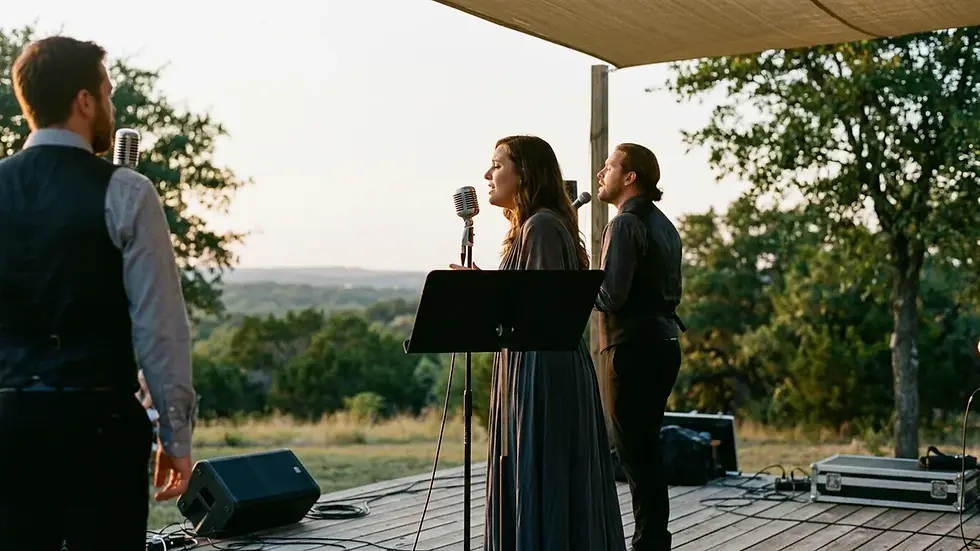
Cap City Band is an Austin-based live wedding band built specifically to handle the range a modern wedding demands, from a stripped-back acoustic first dance to a full horn-driven jazz ballad for a parent dance, all within one booking. Unlike a DJ working from a fixed track library or a single-vocalist act with limited genre range, Cap City Band's three lead vocalists give couples real flexibility across the entire slow-song spectrum.
Forté Appling, an Austin music scene fixture since 2011 who has opened for national acts like Sublime and Bowling For Soup, brings soulful, dynamic range that suits modern R&B-leaning ballads. Suzanne Van Velson, classically trained through vocal performance studies at Lamar University with over a decade at top Texas acts including Rotel and the Hot Tomatoes and Memphis Train Revue, delivers the kind of controlled, classical blend that elevates a Sinatra-style standard or a stripped acoustic arrangement. Matt Raines, a Rhode Island native now based in Austin with performance experience spanning cruise ships, jazz venues, and Texas honky tonks, rounds out the group with genuine jazz phrasing for those supper-club style ballads.
What sets Cap City Band apart from a standard cover act is the ability to rework a slow song live, whether that's trimming length for a shorter aisle walk, stripping electronic production for a more formal room, or building a genre-blending mashup for a multicultural guest list. The band also offers a sister band option for couples wanting a different sound profile for the same event, and covers ceremony through last dance in one contract, eliminating the need to separately book a ceremony musician and a reception act. That single-booking approach is one of the clearest ways Cap City Band solves the coordination headache couples run into when trying to stitch together multiple vendors just to cover one wedding day of music.
Other options in the market for Texas wedding entertainment exist, and comparing lineup size, vocalist range, and genre flexibility is worth doing before you book. But if you want a band that treats your first dance as a collaborative, live moment rather than a static playback, that's the differentiator to look for. You can browse examples of past work through our roundup of top Austin wedding bands for additional context on how live acts across the market typically structure a full-day booking.
Practical Guidance: How to Pick and Confirm Your Slow Songs
Choosing your slow wedding songs is a process best handled in stages, not all at once, since your first dance, parent dances, and reception slow set often need different approaches and different levels of input from family. Here's a straightforward path to follow.
Start with the first dance. Pick this first since it carries the most weight and typically takes couples the longest to agree on. Base it on your story, not the charts.
Confirm parent dance songs separately. Ask parents directly if they have a song in mind; many do, and skipping this step is a common source of last-minute stress.
Give your band a "do not play" list. If a song carries painful associations for a close family member, tell your band in advance so it never comes up, even as a request from a guest.
Ask about tempo flexibility. Confirm your band or DJ can adjust the length of a processional song in real time if your aisle walk runs longer or shorter than expected.
Decide on a slow-set placement. Work with your bandleader on where in the reception timeline a slow song makes sense, rather than scattering them randomly.
Request a rearrangement if needed. If your favorite song feels too casual or too intense for your venue, ask whether it can be reworked acoustically or trimmed for length.
Finalize your list 30 to 60 days out. Popular Texas wedding acts, including Cap City Band, typically lock in final setlists in the final month before the event, giving time for rehearsal without leaving room for late-stage indecision.
The most common mistake we see is couples picking songs based purely on what's trending without checking whether the tempo, length, or lyrical content actually fits the moment. The second most common mistake is not communicating "do not play" songs early enough. Both are avoidable with a short planning conversation before the big day.
Frequently Asked Questions About Slow Songs for Weddings
What is the most requested first dance song in 2026?
"Ordinary" by Alex Warren is currently the most recommended first dance song for 2026, topping the Topsify US Spotify wedding playlist with nearly 184,000 saves. "Perfect" by Ed Sheeran remains the historically top-requested pick, appearing in 401 wedding band repertoires and named directly by 532 of 774 couples surveyed about their first dance.
How slow should a first dance song be?
Most first dance songs work best between 60 and 80 BPM, a tempo that matches a natural walking or swaying pace and doesn't require choreography. Songs slower than that range, like the 72 BPM "Make You Feel My Love" by Adele, work well for couples wanting a more intimate, slow-sway moment.
Can a live band change the length of a slow song?
Yes, a live wedding band can trim, extend, or fade a slow song in real time based on how the moment is unfolding, something a pre-recorded DJ track cannot do gracefully. This flexibility is one of the clearest practical advantages of booking a live band like Cap City Band over a fixed playlist.
What is a good parent dance song?
"What a Wonderful World" by Louis Armstrong is one of the most commonly chosen parent dance songs thanks to its reflective, grateful tone. Other options include "The Way You Look Tonight" by Frank Sinatra for a more formal, classic feel, or a modern acoustic ballad if the family prefers a more contemporary sound.
Should I include slow songs from different cultures or languages at my wedding?
Yes, if your family background or guest list calls for it. Non-English tracks and world-music influences are increasingly common in 2026 wedding playlists, reflecting multicultural guest lists and blended family traditions, and a versatile live band can typically learn or adapt a specific piece to honor that tradition.
How many slow songs should be in a wedding reception?
Most receptions include two to four slow moments total: the first dance, one or two parent dances, and occasionally one slow song inserted mid-reception to reset the energy. We generally recommend against stacking more than one slow song back-to-back, since that tends to empty the dance floor rather than build momentum.
Does Cap City Band travel outside Austin for weddings?
Yes, Cap City Band regularly performs for weddings in Dallas, San Antonio, and Houston in addition to its home base in Austin, Texas. If you're planning a wedding anywhere in Central Texas or across the state's major metros, the band's multi-market experience means the same lineup and setlist flexibility travels with you.
Can a slow song be rearranged to feel less casual for a formal venue?
Yes, a slow song originally produced with heavy electronic or pop production can be rearranged acoustically with piano, acoustic guitar, or strings to suit a more formal ballroom or religious venue. Acoustic and stripped-back arrangements are currently outperforming original produced versions on 2026 wedding playlists, so this rework is often a popular choice, not just a compromise.
Final Thoughts on Choosing Your Wedding's Slow Songs
The right slow songs for weddings come down to tempo, story, and arrangement, not just chart popularity. Aim for the 60 to 80 BPM range for your first dance, keep reception slow songs under four minutes, and give real thought to how a song fits your ceremony's cultural or religious tone before it goes on the final list.
Whether you land on a modern pick like "Ordinary" or a timeless standard like "At Last," the arrangement and performance matter as much as the song title itself. A live band gives you the flexibility to adjust tempo, trim length, and rework a song's feel in ways a fixed playlist simply cannot match, and that flexibility tends to be what couples remember most fondly years later. As you finalize your 2026 wedding entertainment plans, treat your slow-song choices as collaborative decisions with your musicians, not just a list handed over the week of the event.
Cap City Band has built full wedding sets around exactly this kind of collaborative planning for years across Austin, Dallas, San Antonio, and Houston, and we'd welcome the chance to help you build a first dance moment that actually sounds like your relationship.

If you want a band that can rework a first dance in real time and shift seamlessly from a soft acoustic ballad to a full horn-driven parent dance, get started with Cap City Band and tell us the story behind your song choices.
Written by Suzanne Davila, Owner/Performer at Cap City Band
Content powered by inkSTR.co


Comments