
The Best Instrumental Songs for Your Wedding Ceremony


The best instrumental songs for wedding ceremonies are pieces that carry emotional weight without requiring a single word. Canon in D by Johann Pachelbel, Clair de Lune by Claude Debussy, and A Thousand Years by Christina Perri in piano and cello arrangements consistently top the most-requested lists in 2026, and for good reason. Each one creates a sonic atmosphere that lets the ceremony moment breathe.
Canon in D by Pachelbel remains the single most requested processional piece for the bride's entrance in 2026, according to curated playlists tracked across major streaming platforms.
Clair de Lune by Debussy works beautifully for the exchange of vows or dinner background, where its quiet intensity draws attention inward rather than toward the band.
A Thousand Years by Christina Perri, rendered as a piano and cello cover, suits first dances and the signing of the marriage register equally well.
A comprehensive wedding ceremony typically needs music programmed for at least five distinct moments: guest seating, bridal party entrance, processional, key ceremony moments, and recessional.
Live instrumental performance at weddings allows a musician to adjust tempo, dynamics, and transitions in real time, something a streamed playlist cannot replicate.
Cap City Band brings live performance depth to every phase of a Texas wedding, from the first note of the prelude through the final recessional chord.
Why Do Couples Choose Instrumental Music for Their Wedding?
Instrumental music for weddings refers to performances or recordings where melody, harmony, and rhythm carry the emotional content without lyrics. Couples in 2026 are increasingly choosing instrumental arrangements because they maintain emotional depth while keeping the focus on the ceremony itself rather than on the words of a song. A piano cover of a familiar pop song can feel more intimate than the original recording, and a string arrangement of a classical piece fills a venue with a sense of occasion that background playlists rarely achieve.
Specifically, instrumental music solves a real logistical problem for ceremonies. Song lyrics can clash with vow language, draw attention away from the officiant, or feel tonally mismatched in a quiet outdoor chapel. An instrumental version of the same song carries all the emotional recognition without the verbal interference.
Additionally, the Spotify playlist titled "Best Wedding Instrumentals 2026" has accumulated over 56,000 saves, a data point that signals just how actively couples are seeking curated instrumental collections as planning resources. That level of consumer demand reflects a broader shift toward intentional, emotionally driven ceremony music that the wedding industry is seeing across all markets in 2026.
For couples planning Austin wedding ceremonies, the choice between live instrumental performance and a curated playlist comes down to one thing: do you want music that responds to the room, or music that runs on a schedule? A live musician can slow down a processional if the bridal party needs an extra moment. A playlist cannot.
What Is the Most Popular Song Played at Weddings?
Canon in D by Johann Pachelbel is the most frequently requested instrumental wedding song across ceremony programs in 2026. Pachelbel composed the piece in the late 17th century, and its repeating bass line and layered melodic structure make it instantly recognizable to guests of every generation. Its steady tempo suits a bridal procession precisely, giving the bride time to move gracefully without feeling rushed.
Beyond Canon in D, A Thousand Years by Christina Perri consistently ranks among the top three most requested instrumental ceremony songs, particularly in piano and cello arrangements. First released in 2011 for The Twilight Saga soundtrack, the song carries an emotional association with patient, enduring love that resonates in a ceremony context. The instrumental version strips away the vocal performance and lets the melody speak entirely through the instruments.
Can't Help Falling in Love by Elvis Presley rounds out the most-requested trio. Originally recorded in 1961, the song translates beautifully to acoustic guitar or piano arrangements. Its waltz-like 3/4 time signature gives it a gentle, romantic quality that works for first dances as well as processionals.
For a complete look at how live bands handle popular wedding songs, the Cap City Band team has covered the top 40 hits played live at weddings in detail, including how familiar songs translate from studio recording to live performance.
What Are the Most Beautiful Instrumental Songs for a Wedding Ceremony?
The most beautiful instrumental wedding songs are pieces where the musical architecture carries emotional weight that needs no vocal reinforcement. Several compositions consistently appear at the top of curated lists, each suited to a specific moment in the ceremony program.
Timeless Classical Pieces
Clair de Lune by Claude Debussy is described by music educators as one of the most emotionally complete solo piano pieces ever composed. Its three-part structure moves from contemplative stillness to an urgent middle section and back to quiet resolution, mirroring the emotional arc of a ceremony in miniature. It suits the exchange of vows or quiet instrumental dinner background better than a processional, where a steadier tempo is more practical.
Air on the G String by Johann Sebastian Bach, drawn from his Orchestral Suite No. 3, is a violin-led piece with serene, contemplative notes that work perfectly as a prelude while guests are being seated, or as accompaniment to the lighting of a unity candle. Its unhurried pace gives it a meditative quality that few pieces match.
Ave Maria, in either the Schubert or Gounod setting, remains a ceremony staple, particularly for formal or religious celebrations. Both versions carry a reverence that reinforces the sacred character of a wedding ceremony without requiring lyrics to make the point.
Contemporary Pop Songs as Instrumental Covers
Perfect by Ed Sheeran and All of Me by John Legend are two of the most requested contemporary instrumental covers in 2026. Both songs have melodies strong enough to carry a performance without vocals, and both carry immediate emotional recognition for guests who know the originals. Piano and cello arrangements are the most common format for these pieces, and the combination works because the cello's tonal warmth mimics the resonance of a human voice.
Thinking Out Loud by Ed Sheeran translates particularly well to acoustic guitar solo arrangements, giving a warmer, more informal quality that suits outdoor ceremony settings at Hill Country venues in Texas, where a full string ensemble might feel over-produced for the space.

What Are the Best Instrumental Songs for Each Wedding Moment?
Wedding ceremony music is typically programmed across multiple distinct moments, and matching the right piece to each phase of the event is where thoughtful planning produces the most noticeable results. A moment-by-moment approach to instrumental wedding songs ensures that the emotional tone shifts intentionally as the ceremony progresses.
Guest Seating Prelude (20 to 30 minutes before the ceremony begins)
The prelude is background music, but it sets the room's emotional temperature before the ceremony begins. Classical pieces like Bach's Air on the G String, Pachelbel's Canon in D in a quieter arrangement, or Debussy's Reverie work well here. The goal is to establish a mood of anticipation without signaling the start of the formal program. Ambient jazz standards or soft acoustic guitar covers of contemporary songs are equally effective for couples who want a less formal atmosphere.
Bridal Party Entrance
The bridal party entrance benefits from a piece with a clear, steady tempo that gives attendants a natural walking rhythm. Canon in D is the most common choice, and it suits this moment particularly well because its layered structure allows a live musician to extend the piece as needed without breaking the musical logic. A Thousand Years is the top contemporary alternative for this moment, especially for couples who want something with a more modern emotional register.
Processional (Bride's Entrance)
The processional is the most emotionally charged moment in the ceremony program, and the music choice here carries the most weight. Canon in D dominates here for traditional ceremonies. For couples who want something more unexpected, Coldplay's A Sky Full of Stars in an orchestral arrangement or Christina Perri's A Thousand Years both create a sense of arrival without the lyrical cues of the original recordings. Live musicians can slow the tempo slightly for this moment, something a recorded track cannot do.
Exchange of Vows and Unity Ceremony
Vows are spoken, which means ceremony music at this moment should recede into the background rather than compete for attention. Clair de Lune's quieter passages, Air on the G String, or a soft acoustic guitar improvisation work well. The goal is emotional support for the words being spoken, not a performance. For unity candle or sand ceremony moments, choose a piece with a natural duration of two to three minutes that a live musician can extend or truncate cleanly.
Signing of the Register
The signing of the register typically lasts three to five minutes, making it an ideal slot for a slightly longer piece. A Thousand Years in its full piano and cello arrangement runs approximately four minutes, aligning neatly with this moment. Comptine d'un Autre Ete (from the Amelie film score by Yann Tiersen) is a contemporary alternative that carries cinematic warmth without the mainstream familiarity that might distract guests.
Recessional (Newlyweds Walking Back Down the Aisle)
The recessional is the one moment in the ceremony program where the music should be unmistakably celebratory. Wedding March by Felix Mendelssohn has been synonymous with this moment for generations, and its bright major-key fanfare structure signals the transition from ceremony to celebration with clarity. For couples who want something less traditional, Vivaldi's Spring from The Four Seasons, an upbeat cello and piano arrangement of a Beyonce song, or even a jazz ensemble playing a New Orleans-style second line piece all create the sense of joyful release the recessional requires.
Cocktail Hour
The cocktail hour is where instrumental music transitions from ceremonial to social. A jazz trio or acoustic guitar player performing Sinatra standards, bossa nova classics, or lightly arranged contemporary pop creates the conversational background that cocktail hour requires. The music should be present enough to fill silence but relaxed enough that guests can speak at a normal volume without straining. Cap City Band's Austin variety band format adapts naturally to this shift in energy, with the instrumental and acoustic arrangements during cocktail hour giving way to the full band setup for the reception.
Dinner Background Music
Dinner music follows the same logic as cocktail hour but leans slightly more toward ambiance than entertainment. Soft jazz standards, Brazilian guitar, or classical piano are the most reliable choices for dinner background. Clair de Lune and similar Impressionist piano pieces by Debussy and Ravel work especially well here, creating an elegant atmosphere without demanding attention.
First Dance
The first dance is the moment when the ceremony's instrumental elegance meets the reception's celebratory energy. A Thousand Years and Can't Help Falling in Love are the two most requested first dance instrumental songs in 2026. For couples who want the full vocal performance for this moment, a live band that can sing the original is often the better choice. But for couples who want the intimacy of a purely musical moment, a piano and cello duet delivers an emotional intensity that recorded music rarely matches.
Which Instruments Work Best for Wedding Ceremony Music?
Instrumental wedding ceremony music is not limited to piano and cello, though those two instruments dominate the genre. The right instrumental format depends on the venue's acoustic character, the size of the ceremony, the couple's musical preferences, and the budget available for live performance.
Piano and Cello Duo
The piano and cello combination is the most versatile pairing for wedding ceremony music. The piano provides harmonic foundation and melodic clarity; the cello brings warmth and tonal resonance that closely resembles the human voice. Together, they can handle repertoire ranging from Bach and Pachelbel to contemporary pop covers with equal authority. This pairing works in almost any venue, from a small chapel with a resident piano to a large ballroom with a grand piano provided by the couple.
String Quartet
A string quartet (two violins, viola, and cello) produces a fuller, more formal sound than a duo and suits larger ceremony spaces where the music needs to carry through a substantial room. String quartets are particularly effective for classical repertoire: Vivaldi, Handel's Water Music, Bach's Brandenburg Concertos, and Pachelbel's Canon all benefit from the harmonic depth a four-piece ensemble provides. The trade-off is cost. A professional string quartet in the Austin to Texas market typically commands a higher fee than a duo, and the logistics of transporting four musicians and instruments require additional coordination.
Harpist
The harp carries a specific ceremonial association that few instruments match for sheer atmospheric effect. A solo harpist creates an immediately distinctive sound environment, particularly effective for outdoor ceremonies at vineyard venues or Hill Country properties where the instrument's natural reverb suits open-air acoustics. Harpists typically work from a smaller classical and Celtic repertoire but can accommodate contemporary pop arrangements on request. Booking a skilled wedding harpist in Texas requires early planning, as qualified performers are less numerous than piano or guitar players in most markets.
Acoustic Guitar
Acoustic guitar is the most accessible and affordable live instrumental option for smaller, informal ceremonies. A skilled fingerpicking guitarist can cover an enormous range of material, from classical Spanish guitar to contemporary acoustic pop, and the instrument travels easily to any venue. For outdoor ceremonies in Central Texas, where the relaxed atmosphere of a Hill Country setting suits casual elegance over formal grandeur, a solo acoustic guitarist often fits the aesthetic better than a string ensemble. The limitation is volume: acoustic guitar fills a small intimate space beautifully but struggles in a larger venue without amplification.
Jazz Ensemble
A jazz trio (piano, bass, and drums or piano, bass, and saxophone) brings a warm, sophisticated sound that works particularly well for cocktail hour and dinner background music. For couples drawn to a Great Gatsby aesthetic or a New Orleans-inspired wedding, a jazz ensemble creates a thematic coherence that classical string music cannot match. Jazz arrangements of standards like La Vie en Rose, Fly Me to the Moon, and The Way You Look Tonight are perennial cocktail hour favorites.
Full Live Band with Acoustic Opening Sets
One option that no competitor in this space adequately covers is the hybrid approach: a full live band that performs acoustic or semi-acoustic instrumental sets during the ceremony and cocktail hour, then shifts to full production for the reception. This approach eliminates the need to book and coordinate multiple separate vendors. Cap City Band structures its live band entertainment and wedding emcee package to cover this full arc under a single booking agreement, from the first prelude note through the last dance. Forté Appling, Suzanne Van Velson, and Matt Raines each bring the vocal and acoustic performance range to handle ceremony music with the same professionalism as the reception set.

How Do You Choose Instrumental Wedding Songs for a Specific Theme or Venue?
Choosing instrumental songs for a wedding ceremony means matching the music's genre, tempo, and instrumentation to the venue's architectural character and the couple's overall aesthetic vision. A choice that sounds perfect on a reference playlist may feel tonally mismatched in a specific physical space or against a specific ceremony backdrop.
Matching Music to Venue Type
Traditional church ceremonies suit the formal classical repertoire: Canon in D, Ave Maria, Handel's Hallelujah Chorus in an orchestral arrangement, and Bach's Jesu, Joy of Man's Desiring. The reverb of stone walls and vaulted ceilings amplifies classical string and organ pieces in ways that benefit the music. Modern, minimal instrumentation can feel thin in a large traditional space.
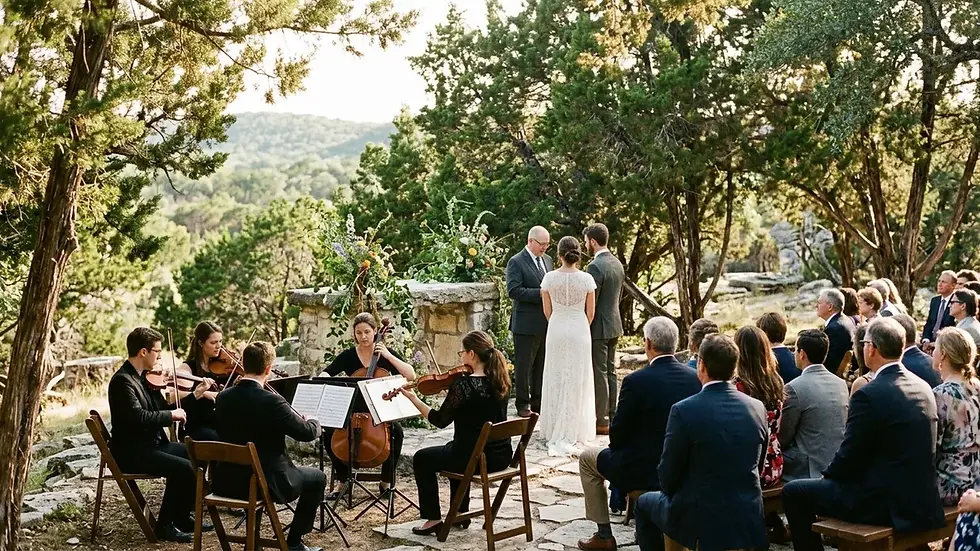
Outdoor Hill Country venues in Texas, from the limestone terraces of the Texas wine country around Fredericksburg to the cedar-lined ceremony spaces along the Pedernales River corridor, suit acoustic and semi-acoustic arrangements. The natural reverb of an outdoor setting and the ambient sound of wind and insects create an acoustic environment where a solo guitarist or a small string duo feels authentic rather than under-powered.
Industrial loft and warehouse venues in East Austin carry a different aesthetic entirely. A jazz quartet, a classical crossover ensemble playing contemporary arrangements, or an acoustic pop duo fits the stripped-back architectural character of these spaces more naturally than a formal string quartet.
Matching Music to Wedding Aesthetic
Bridgerton-inspired weddings, a trend that accelerated sharply after the Netflix series premiered, have driven notable demand for orchestral and string quartet arrangements of contemporary pop songs. Imagine Dragons, Taylor Swift, and Billie Eilish songs rendered as string quartet pieces create the period-drama atmosphere of a Regency-era ballroom while using melodies guests recognize instantly. This genre is sometimes called classical crossover, and it represents one of the fastest-growing requests for wedding ceremony music in 2026.
Bohemian and folk-inspired weddings suit fingerpicking acoustic guitar, Celtic harp, and light percussion. The intimate character of these instruments mirrors the less formal, more personal ceremony style that bohemian weddings typically favor.
Cinematic weddings, inspired by film scores rather than pop or classical traditions, draw on composers like Yann Tiersen, Hans Zimmer, and Max Richter. Tiersen's Comptine d'un Autre Ete, Zimmer's Time from Inception, and Richter's On the Nature of Daylight have all appeared on curated wedding instrumental playlists with growing frequency. These pieces carry emotional depth without the mainstream familiarity that makes a guest think of a movie rather than the ceremony.
What Does It Cost to Hire a Live Instrumentalist for a Wedding?
The cost of hiring live instrumental wedding musicians varies considerably based on the number of performers, the performance duration, geographic market, and the musicians' professional experience. Understanding these variables helps couples make informed decisions about where to invest their entertainment budget.
Format | Typical Texas Market Range | Best Suited For |
Solo acoustic guitarist | $300 to $600 for a two-hour set | Small intimate ceremonies, cocktail hour |
Solo harpist | $400 to $800 for a two-hour set | Formal ceremonies, prelude and cocktail hour |
Piano and cello duo | $600 to $1,200 for a two-hour set | Full ceremony program, medium to large venues |
String quartet | $1,200 to $2,500 for a two-hour set | Formal ceremonies, ballroom venues, 150+ guests |
Jazz trio | $800 to $1,800 for a two-hour set | Cocktail hour, dinner background |
Full live band (ceremony through reception) | $3,500 to $10,000 or more depending on scope | Full-event coverage, ceremony to last dance |
These ranges reflect general Texas market rates in 2026 and will vary based on the specific market (Austin, Houston, Dallas, and San Antonio each have their own supply and demand dynamics), the musicians' experience level, and the scope of the booking. Rates above are estimates for planning purposes. Always request an itemized quote from any live musician or band before signing a contract.
The most efficient approach for couples who want both ceremony instrumental music and a full reception band is a single-vendor booking with a group that can cover both. Cap City Band's booking process includes a detailed conversation about the full event arc, from the first prelude note through the final reception song, so couples get a single point of contact and a cohesive musical experience rather than multiple vendor contracts to coordinate.
How Do You Work With a Musician to Customize Instrumental Arrangements?
Working with a live musician to customize instrumental wedding songs means communicating clearly about key, tempo, duration, and arrangement style before the event day. Most professional musicians can accommodate customization requests, but the earlier you raise them, the better the result.
Communicating Tempo and Duration Preferences
Many couples have a specific recording in mind when they request a song, and that recording's tempo may not match the pace of their processional. Tell your musician which recording you are using as a reference and whether you want the live version to match that tempo or adjust. A professional musician can extend a piece by repeating a section or slow it to match the pace of a longer procession, but only if you communicate the need in advance.
Requesting Specific Arrangements
If you want a classical crossover arrangement of a pop song (for example, a string quartet version of Perfect by Ed Sheeran), confirm that the musician has the sheet music or arrangement for that specific format. Many professional wedding musicians maintain a library of arranged covers, but not every requested song will be immediately available. Give at least six to eight weeks of lead time for custom arrangement requests.
Briefing the Musician on Ceremony Logistics
A live musician needs the same logistical information as any other wedding vendor: venue layout, start time, parking access, load-in window, and a clear signal system for when to begin and end each musical moment. Many ceremony timing issues stem from musicians who were not told who gives the start cue for the processional or how long the vow exchange typically runs. A briefing call or detailed email two weeks before the event prevents most of these problems. Cap City Band's booking process includes pre-event consultation as a standard step, covering setlist, logistics, and moment-by-moment timing before the event date.
What Are Good Background Songs for a Wedding Reception?
Good background songs for a wedding reception are pieces that create a consistent emotional atmosphere without dominating the room. The goal during dinner and cocktail service is to fill silence, support conversation, and signal to guests that the evening is moving through a relaxed, enjoyable phase before the dance floor opens.
For classical and semi-classical background music, the most reliable repertoire includes Debussy's Clair de Lune, Chopin's Nocturne in E-flat major, Satie's Gymnopedies, and Bach's Goldberg Variations. All four maintain a gentle forward momentum without the rhythmic urgency that pushes guests toward dancing before dinner is finished.
For contemporary acoustic background music, fingerpicking guitar arrangements of John Mayer, Jason Mraz, and Jack Johnson songs suit the informal warmth that cocktail hour requires. Bossa nova standards like The Girl from Ipanema, Wave, and Corcovado create a sophisticated lounge atmosphere without the formality of classical repertoire.
The strongest reception music programs move deliberately from background to foreground as the evening progresses: instrumental ambient music during cocktail hour, a step up in energy during dinner with light jazz or acoustic pop, and then a full band performance that opens the dance floor with a recognizable, high-energy opening set. For couples in Austin, Houston, Dallas, and San Antonio planning this full musical arc, the Texas wedding band selection they make for the reception should ideally extend to cover ceremony and cocktail hour as well, creating a single cohesive performance experience.
Frequently Asked Questions About Instrumental Songs for Weddings
What is the most popular instrumental song for a wedding processional?
Canon in D by Johann Pachelbel is the most widely requested instrumental processional song for wedding ceremonies in 2026. Pachelbel composed the piece in the late 17th century, and its steady tempo, layered melodic structure, and immediate emotional recognition make it a natural fit for the bride's entrance. A Thousand Years by Christina Perri in a piano and cello arrangement is the top contemporary alternative for couples who prefer a more modern sound.
Can a live band handle both ceremony instrumental music and reception entertainment?
Yes. A professional full-service wedding band can cover the complete event arc from prelude and ceremony through cocktail hour and reception under a single booking. Cap City Band structures its wedding entertainment packages to span the entire event, eliminating the need to coordinate separate vendors for instrumental ceremony music and reception performance. This approach also ensures tonal consistency across the full evening, since the same musicians transition from acoustic ceremony mode to full band reception mode.
What is the best instrumental song for a first dance?
A Thousand Years by Christina Perri in a piano and cello arrangement is the most requested instrumental first dance song for 2026 weddings. Can't Help Falling in Love by Elvis Presley, Perfect by Ed Sheeran, and All of Me by John Legend are also consistently among the top requests in their instrumental formats. The right choice depends on the couple's personal connection to the melody rather than any universal ranking.
How much does it cost to hire live instrumental musicians for a wedding ceremony in Texas?
Live instrumental musician costs in the Texas market in 2026 typically range from approximately $300 to $600 for a solo acoustic guitarist to $1,200 or more for a string quartet, depending on performance duration and the musicians' experience level. Full live band coverage spanning ceremony through reception generally ranges from $3,500 to $10,000 or more based on scope, date, and logistics. Request an itemized quote from any performer before signing a contract, as pricing varies significantly by market and availability.
What is the difference between live instrumental music and a streamed playlist for a wedding ceremony?
Live instrumental performance at a wedding allows a musician to adjust tempo, dynamics, and transitions in real time as the ceremony unfolds. A streamed playlist runs on a fixed schedule and cannot slow down for a longer procession, pause between moments, or extend a piece when the officiant needs more time. Professional live musicians can respond to ceremony pacing with precision that recorded music structurally cannot replicate.
What instrumental pieces work best for an outdoor Texas wedding ceremony?
Outdoor ceremonies at Hill Country venues, vineyard properties, and open-air event spaces in Texas suit acoustic and semi-acoustic instrumental arrangements best. Solo acoustic guitar, small string ensembles, and harp performances adapt naturally to outdoor acoustic conditions where natural reverb and ambient sound are part of the environment. Classical pieces like Air on the G String by Bach and Canon in D carry well outdoors, as do acoustic guitar covers of contemporary pop songs in the style of John Mayer or Ed Sheeran.
When should I book live musicians for my wedding ceremony?
For peak Texas wedding season dates (April through June and September through November), booking ceremony musicians and reception entertainment 12 to 18 months in advance is the reliable standard for most professional performers. Off-peak months in January, February, July, and August typically offer more flexibility, but professional acts in the Austin, Houston, and Dallas markets still book several months ahead of popular event dates. If your wedding falls in a peak month, beginning outreach at least a year out protects your first-choice options.
Can I request a specific instrumental arrangement of a pop song for my ceremony?
Yes. Most professional wedding musicians can accommodate custom arrangement requests for popular songs, provided you give adequate lead time. Six to eight weeks before the event is a reasonable minimum for requesting a new arrangement. When communicating with your musician, share the specific reference recording you have in mind, your preferred tempo, and the ceremony moment the piece is intended to accompany. Cap City Band's booking process includes a detailed setlist and arrangement conversation as a standard part of event preparation.
Ready to Plan the Full Musical Arc of Your Wedding?
The best instrumental songs for wedding ceremonies are not just beautiful pieces of music. They are emotional signals that mark the transitions of one of the most significant days of your life. Canon in D tells your guests the ceremony has begun. Clair de Lune creates space for vows to breathe. The Wedding March announces that something wonderful just happened. Choosing these pieces intentionally, and pairing them with live performance that can respond to the room in real time, is what separates a wedding that guests remember from one that simply went according to schedule.
The strongest ceremonies are those where every musical moment was chosen with intention and performed with the flexibility only a live musician can provide. If you are planning a wedding in Austin, Houston, Dallas, or San Antonio and want your ceremony music and reception entertainment handled by a single professional team, Cap City Band covers the full arc under one booking. Three vocalists, a choreographed reception show, and a setlist process that starts with your specific preferences mean the music feels designed for your event, not borrowed from a template.

Every Cap City Band wedding booking starts with a conversation about your event, your guests, and the musical moments that matter most to you. If the questions in this guide feel familiar, you are exactly the kind of couple the Cap City Band booking process was built for. Get started with Cap City Band at capcityband.com and let's build the full soundtrack for your wedding day together.

Comments