
Live Music Wedding: Why a Band Hits Harder Than Any Playlist

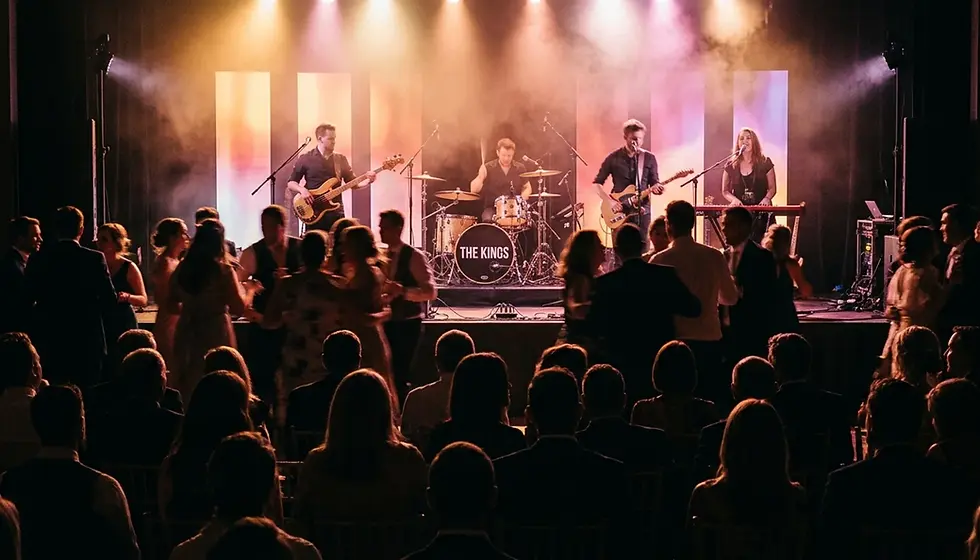
Live music at a wedding refers to a live performance by musicians, vocalists, or an ensemble that replaces or supplements a pre-recorded DJ playlist during the ceremony, cocktail hour, or reception. Unlike a curated playlist, a live wedding band reads the crowd in real time, adjusts energy mid-set, and creates unrepeatable moments your guests will describe years later. If you want a reception that feels like a genuine celebration rather than a well-organized event, live music is worth serious consideration.
Live wedding bands start around $2,500 for smaller acoustic acts and exceed $10,000 for full show bands with multiple vocalists, according to Zola Wedding Cost Index data.
Entertainment represents 3% of total wedding spending at the industry baseline, rising to 5-8% for couples prioritizing live bands over DJs.
Peak season Saturday bookings (May through October) carry 20-40% premiums; popular Austin bands book 12-18 months in advance.
Live performance creates psychological engagement a playlist cannot match: performers adapt to crowd energy, recover from awkward moments, and generate genuine spontaneity.
Cap City Band brings three credentialed lead vocalists and a choreographed show format to Austin, Houston, Dallas, and San Antonio weddings.
More than half of couples in 2026 request genre-fluid setlists, making vocalist versatility and real-time adaptability the top selection criteria for live music.
Why Does Live Music at a Wedding Feel So Different From a Playlist?
Live music at a wedding produces a fundamentally different audience experience because human performers respond to the room while a playlist cannot. When the dance floor thins, a skilled band shifts tempo. When a crowd of guests collectively leans forward during a quiet ballad, the vocalist holds the note a beat longer. Those micro-adjustments, happening dozens of times across a four-hour reception, accumulate into an atmosphere that feels alive rather than managed.
Research into audience psychology consistently shows that witnessing a human performance activates a stronger emotional response than listening to recorded music. Researchers describe this as "liveness effect": the awareness that something real and irreversible is happening in front of you raises emotional stakes and sharpens memory encoding. That is why guests remember the moment a vocalist improvised a line from the couple's favorite song far more vividly than they remember the songs that played from a speaker in the corner.
There is also a visual dimension that playlists simply cannot provide. A lead vocalist moving through a crowd, a guitarist making eye contact with a table of guests, three vocalists trading harmonies in the center of the dance floor: these are images that get photographed, shared, and recalled. A laptop and a speaker do not generate that content.
For couples planning Austin weddings, this distinction matters even more. Austin's identity as "Live Music Capital of the World" means your guests arrive with elevated expectations for musical experience. A playlist at an Austin wedding can feel like showing up to a Texas barbecue with store-bought brisket. Technically fine. Genuinely disappointing.
How Much Does a Live Musician Cost for a Wedding?
Live wedding music costs vary widely based on ensemble size, market, and event scope. According to Zola Wedding Cost Index data, the national average for wedding music (bands and DJs combined) sits at $1,567, with most couples spending between $1,300 and $1,900. That average is pulled down by DJ-only bookings. Couples who specifically choose live bands often allocate 5% to 8% of their total wedding spending to music, and full show bands with three or more vocalists typically start at $5,000 and climb from there.
In Texas, market conditions track closely to major metros nationally. Austin carries higher demand during peak season, and acts with deep performance credentials and documented vocalist rosters command prices that reflect that demand. For reference, Zola data shows that couples in Manhattan typically spend around $2,252 for bands and DJs for 150 guests, while mid-market cities trend closer to $1,471. Austin sits in the upper range of mid-market pricing, particularly for Saturday evening bookings from May through October.
What Factors Push the Price Up or Down?
Several variables move the final number significantly. Ensemble size is the most obvious: a solo acoustic guitarist performing ceremony music is a fundamentally different product from a seven-piece band covering the full reception. Beyond size, these factors matter most:
Day and season: Saturday evenings in peak season (May through October) command 20-40% premiums over comparable off-peak bookings. Off-season winter weddings can reduce costs by 25% or more. Friday evenings and Sunday afternoons typically run 15-25% below Saturday night rates.
Overtime: Most live band contracts specify four to five hours of performance time. Extending the set typically costs $200 to $500 per additional hour.
Custom song preparation: Learning a special song not in the standard repertoire often carries an additional fee of $50 to $200 per song.
Travel distance: Bands traveling more than 50 miles from their home market may charge mileage or require hotel accommodations for overnight events.
Gratuity: Industry standard for band musicians runs 15-20% of the total fee, which is a line couples frequently forget to budget.
One cost factor that surprises many couples: most live band contracts require you to provide dinner for all band members during the event. For a seven-piece band, that is a real catering line item worth discussing with your venue coordinator early.
Is It Worth Having Live Music at a Wedding?
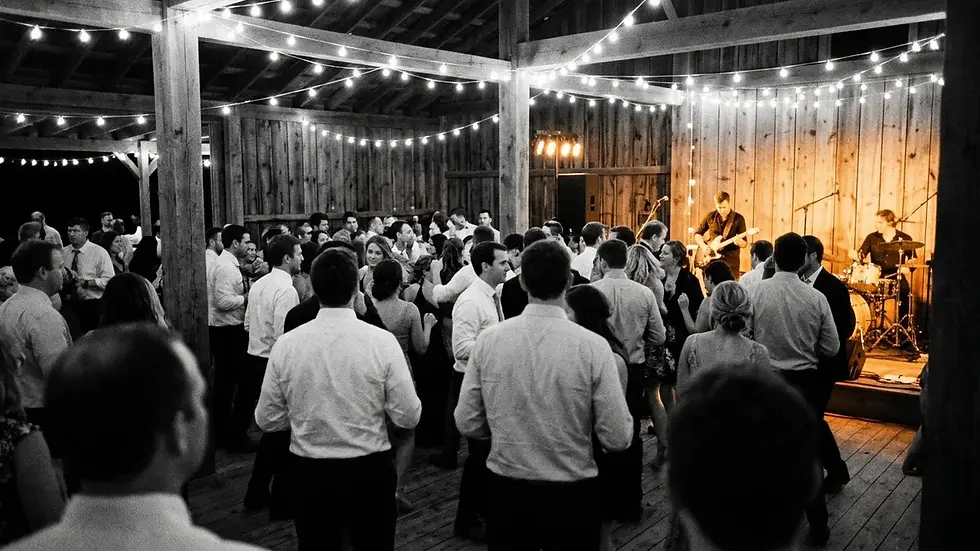
Live music at a wedding is worth the investment for most couples because it generates the emotional peak moments that define how guests remember the event. A DJ provides reliable music coverage; a live band creates an experience. The question is not whether live music is objectively superior, but whether your specific wedding priorities and guest demographics support the investment.
If your guest list skews toward people who love dancing, expect the reception to run four hours or more, and care deeply about the "feel" of the night rather than just the logistics, a live band almost always delivers stronger value than its upfront cost suggests. Conversely, if your reception is under three hours, your venue has strict sound limitations, or your budget is already stretched across other priorities, a smaller live music format (acoustic duo for ceremony, DJ for reception) may give you the live music experience at a more manageable price point.
The Psychology Behind Why Live Performance Lands Differently
Live wedding music engages guests differently from recorded sound because human performance introduces controlled unpredictability into the environment. A skilled vocalist does not play the song identically every time. The tempo breathes. The dynamics shift with crowd energy. And crucially, the performer acknowledges the specific people in the room, which recorded music can never do.
This matters for weddings specifically because the reception is a social event, not a concert. Guests are navigating conversations, managing emotions, and participating in a shared milestone. Live music provides a shared focal point that unites the room without requiring everyone to pay active attention. A playlist plays at your guests; a live band plays with them. That relational quality is why couples who invest in live music consistently report that the band was among the most memorable decisions they made, not because they expected it to be, but because the performance surprised them with how much it mattered.
For Austin receptions in particular, the variety band format has become increasingly popular because it allows a single act to cover the full emotional range of a wedding night: warmth during cocktail hour, romance for the first dance, then full-energy pop and funk to close out the reception. That arc is much harder to achieve with a playlist, which has no mechanism for organic pacing.
How Do You Choose the Right Type of Live Music for Your Wedding?
Choosing the right live music format for your wedding means matching the ensemble type, genre range, and vocalist depth to your venue acoustics, guest demographics, and the emotional arc you want your reception to follow. The three most common mistakes couples make: choosing based on price alone, selecting an act without verifying vocalist credentials by name, and booking before visiting or watching a full live performance rather than an edited highlight reel.
Start with your venue. An outdoor Hill Country ceremony with 200 guests needs fundamentally different coverage than an intimate courtyard reception for 80. Acoustic instruments carry beautifully in small spaces; larger rooms and outdoor venues demand full amplification and a band with sound production experience. According to venue logistics data, a five to six piece live band requires 9 to 12 square meters of flat stage area, which some boutique Austin venues cannot accommodate. Confirm stage dimensions before finalizing any booking.
Next, consider your guest list's age range and genre preferences. More than half of couples in 2026 request genre-fluid setlists rather than a single-style program, according to Elegant Music Group research. If your uncle wants Motown and your college roommates want Post Malone, you need a band with vocalist depth and repertoire range to serve both groups without either group walking off the floor. Three vocalists with distinct ranges solve this problem; a single vocalist with a narrow specialty does not.
Ceremony, Cocktail Hour, and Reception: What Works Where?
Live wedding music breaks naturally into three distinct segments, each with different requirements for instrumentation, volume, and energy. Understanding what each segment needs helps you decide whether one act can cover all three or whether you need separate bookings.
Wedding Segment | Music Goal | Best Live Format | Typical Duration |
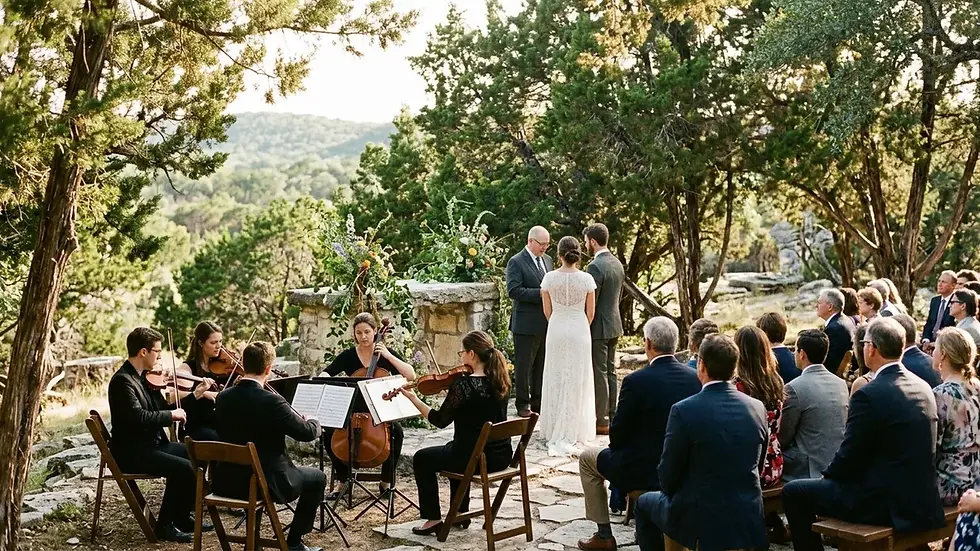
Ceremony | Emotional grounding, processional, recessional | String quartet, acoustic duo, solo instrumentalist | 30-60 minutes |
Cocktail Hour | Conversational background with warmth | Jazz trio, acoustic duo, small ensemble | 60-90 minutes |
Reception | Dance floor energy, crowd engagement, arc from dinner to peak | Full band (4-8 piece) with multiple vocalists | 3-5 hours |
Many couples separate ceremony music from the reception band for practical reasons: the ceremony often happens outdoors or in an acoustically distinct space, and the reception band may not arrive until sound check time, which is typically 90 minutes before the first dance. A string quartet for the ceremony and full band for the reception is a common and logistically sound approach.

How to Coordinate Live Musicians Across Your Wedding Day
Coordinating live musicians across multiple wedding segments requires a shared run-of-show document, clear load-in timelines, and direct communication between the band's point of contact and your venue coordinator. Most couples underestimate how much advance coordination live music requires compared to a DJ setup, and that gap is where day-of stress tends to concentrate.
Specifically, here is what to confirm in writing before the wedding date:
Load-in and sound check time: Full bands typically need 60-90 minutes for load-in and sound check before the first performance segment. Confirm this window with your venue at least 60 days out, not the week before.
Set break schedule: Most live bands play in 45-60 minute sets with 15-minute breaks. Plan these breaks to coincide with toasts, cake cutting, or other scheduled program moments so the room's energy is not interrupted unexpectedly.
Transition coverage: Decide in advance who handles music during set breaks, your DJ, a curated playlist through the band's sound system, or a smaller acoustic pairing. Leaving transitions to chance produces awkward silences at the worst moments.
Backup plan for sound failure: Professional bands carry redundant equipment, but confirm this in your contract. Ask specifically what the band's protocol is if a primary vocal microphone fails during the first dance.
MC coordination: If your band also handles MC duties (announcing the first dance, calling the wedding party, introducing toasts), confirm the exact cues and phrasing with your band's lead vocalist or emcee. A miscommunication here disrupts the reception timeline for everyone.
At Cap City Band, these logistics are handled through a pre-event consultation where the band's point of contact walks through the full run-of-show before the date. That process is what separates a professional live music company from a band that shows up and plays. If you want to see what that consultation looks like for an Austin wedding, you can learn more about how a live band emcee works on the day.
What Is the Top Song Played at Weddings? (And Why It Matters Less Than You Think)
The most-played songs at weddings shift year to year, and in 2026, the real trend is not one dominant track but rather an expectation of genre fluidity across the full reception. Couples are increasingly moving away from single-style setlists in favor of programming that spans pop, R&B, funk, Latin, and classic rock within a single night. More than half of couples, according to Elegant Music Group's 2026 research, request help merging genres rather than sticking to one style. More than a third submit a "do not play" list alongside their song requests.
What this means practically: the specific top song matters far less than whether your band can move between genres convincingly without a jarring reset between each. A band with three lead vocalists handles this naturally because different vocals carry different styles authentically. One vocalist owns the R&B set; another drives the country throwback; the third brings the power pop moment. That handoff is seamless when the voices are genuinely distinct.
For couples building their setlist, the better question is not "what is the most popular wedding song right now?" but "which songs reflect how we want this night to feel, and does our band have the range to deliver them?" That reframe changes what you look for in an audition. You want to hear versatility, not just technical competence. Check whether the band performs top-40 hits live with the same conviction they apply to classic soul and funk, because your reception will need both.

Live Music vs. DJ: The Honest Cost-Benefit Comparison
Live wedding music and a DJ represent fundamentally different value propositions, not simply different price points. A DJ provides near-unlimited song access, consistent audio quality, and flexibility to shift genre instantly based on crowd feedback. A live band provides human performance energy, visual spectacle, emotional resonance, and the social credibility of a genuine show. The question is which of those qualities matters more for your specific event.
Here is an honest side-by-side:
Factor | Live Band | DJ |
Upfront cost | Higher ($5,000-$10,000+ for full show band) | Lower ($1,000-$3,500 typical range) |
Song flexibility | Limited to repertoire; custom songs add cost | Virtually unlimited library |
Energy ceiling | Higher: live performance creates moments | Capped by track selection and crowd response |
Visual engagement | Strong: performers are a focal point | Minimal: booth presence only |
Adaptability | Real-time crowd reading by performers | Real-time track selection by DJ |
Space requirements | 9-12 sq meters of stage for 5-6 piece band | Minimal: small DJ booth or table |
Set breaks | Required: 15 min every 45-60 min | None: continuous music coverage |
Memorability | High: guests photograph and describe the performance | Moderate: guests remember the music, not the DJ |
The hybrid format, pairing live musicians with a DJ, is the most-requested entertainment setup for modern weddings as of 2026, per Elegant Music Group research. Live percussion and saxophone are the two most popular add-ons for DJ-led receptions. For weddings where budget constrains a full band booking but the couple still wants live performance energy, this hybrid approach can deliver the best of both formats at a lower cost than a full eight-piece band.
One underappreciated cost factor: for weddings with more than 200 guests, approximately 40% choose the hybrid band-and-DJ format, according to Lupa Entertainment's 2026 data. That tells you something about how larger guest counts change the entertainment calculus: more bodies require more consistent sound coverage, and a hybrid gives you that consistency while preserving the live performance moments that matter most.
The honest conclusion: a technically skilled DJ at a competitive price is a perfectly respectable choice. But a live band that can read your crowd, vocally adapt genre to genre, and turn a quiet dinner into a full dance floor by 9 PM creates an event your guests cannot experience elsewhere. That difference is real. Whether it is worth the investment depends on how much that difference matters to you.
Why Cap City Band Is Austin's Live Wedding Band to Beat
Cap City Band is a high-energy Austin, Texas live entertainment company that performs as a choreographed variety show purpose-built for weddings, corporate events, and private celebrations across Austin, Houston, Dallas, and San Antonio. What sets Cap City Band apart from other Texas cover bands is not just musician count or genre coverage: it is the depth and verifiable credentials of the vocal lineup, combined with a show format designed to take a room from dinner conversation to full dance floor without the couple lifting a finger.
The vocal roster is where the real differentiation lives. Forte Appling has been a fixture in the Austin music scene since 2011, has opened for acts including Sublime and Bowling For Soup, and brings a soulful range and real-time vocal adaptability that only comes from over a decade of professional stage experience. Suzanne Van Velson brings a classical foundation rooted in vocal performance studies at Lamar University, plus extensive regional touring with bands including Memphis Train Revue and Rotel and the Hot Tomatoes. Matt Raines, a Rhode Island native now based in Austin, brings performance depth spanning cruise ships, jazz venues, and Texas honky tonks, and has two original albums to his credit.
Three vocalists with genuinely distinct ranges and styles means no cover band compromise where one voice is stretched into every genre. When the room needs Motown warmth, that is Forte. When the bride wants a pop ballad for the first dance that lands with genuine vocal power, that is Suzanne. When the dance floor opens up and the room needs energy, all three are front and center. That vocal architecture is not standard in the Austin market.
Beyond the vocalist lineup, Cap City Band performs in a choreographed show format: the set is designed as a narrative arc, not a random playlist of covers. Transitions are planned, energy builds deliberately, and the band functions as its own emcee when needed, eliminating the coordination gap that trips up many multi-vendor wedding entertainment setups.
The band also offers live band karaoke, an interactive format where guests join the band on stage and perform with live accompaniment. For receptions where the couple wants maximum guest participation, this format generates more social sharing and more genuine spontaneous moments than any other entertainment option. It is a specific differentiator that very few Austin bands offer at Cap City Band's level of production quality.
Cap City Band serves couples across the full Texas market: Austin, Houston, Dallas, and San Antonio. For Houston couples considering an Austin-based act, the travel logistics are straightforward and the band's multi-market experience means the briefing and logistics process is already dialed in for out-of-Austin bookings. You can explore more context on what Austin wedding entertainment looks like across Texas through the Texas wedding bands resource library.
How to Book a Live Wedding Band in Austin: Step-by-Step
Booking a live wedding band in Austin follows a clear process when you know what to prioritize and in what order. The biggest mistakes happen when couples move too fast to the contract stage without doing the due diligence on performer credentials, setlist process, and day-of logistics. Here is the sequence that actually protects you.
Define your event requirements first. Before contacting any band, know your venue, guest count, event duration, stage dimensions, and approximate budget range. A band cannot give you a meaningful quote without these details, and vague inquiries produce vague responses.
Watch live footage, not edited highlight reels. Any professional band will have highlight videos. What you need is unedited live footage from an actual wedding or corporate event, where you can assess real-time crowd response, between-song energy, and how the band handles the moments between songs. Edited reels exist precisely to hide the gaps.
Verify vocalist credentials by name. Any band with professional credibility should be able to name its lead vocalists, describe their backgrounds, and point you to documented performance history. Generic "professional musicians" language without named credentials is a yellow flag.
Ask specifically about the setlist process. A quality band has a structured consultation: they ask about your guests' demographics, your must-play and do-not-play lists, the emotional arc you want for the night, and any special song requests requiring preparation. If the answer is "just send us a list," the consultation process does not exist.
Confirm MC capability. If you want the band to handle announcements, introductions, and reception flow, confirm this is included and ask who specifically handles those duties. A separate MC hire adds cost and coordination complexity; a band that handles it internally simplifies your day.
Review the contract carefully before signing. Specifically check: performance duration and overtime rates, cancellation and rescheduling terms, technical rider requirements (power, stage size, load-in access), meal provisions for band members, and any travel or accommodation requirements for your location.
Book 12-18 months in advance for peak season Saturdays. Popular Austin live wedding bands genuinely fill their calendars that far ahead, particularly from May through October. If your date is set, starting the entertainment search is one of the first decisions worth prioritizing after securing your venue.
For couples evaluating what a great setlist actually looks like, the top songs that get a party started resource gives you a concrete benchmark for what genre versatility looks like in practice. And if you are in the early stages of researching Austin entertainment options, the best Austin wedding bands guide gives broader market context alongside Cap City Band's specific differentiators.
Frequently Asked Questions About Live Music at Weddings
How far in advance should I book a live wedding band in Austin?
Book 12 to 18 months in advance for peak season Saturday dates, which run from May through October in the Austin market. Popular live bands fill their calendars quickly because wedding season in Central Texas is long and demand for quality acts is high. For off-peak dates (Fridays, Sundays, or winter months), six to nine months of lead time is typically sufficient, though earlier is always safer.
How much does a live musician cost for a wedding in Texas?
Live wedding musicians in Texas range from approximately $2,500 for smaller acoustic acts to $10,000 or more for full show bands with multiple vocalists, according to Zola Wedding Cost Index data. Full production bands in the Austin market with named, credentialed vocalists typically price in the $5,000 to $12,000 range depending on ensemble size, event duration, and date. Couples who prioritize live music generally allocate 5-8% of their total wedding budget to entertainment rather than the 3% baseline.
Is it worth having live music at a wedding?
Live music at a wedding is worth the investment for most couples because it creates peak emotional moments and genuine spontaneity that a pre-recorded playlist cannot replicate. The value is highest when your guest list is dance-oriented, your reception runs four hours or more, and you care about the atmosphere of the night as much as the logistics. Couples who report the most satisfaction from their entertainment investment consistently chose live bands over DJs.
What is the 30-5-minute rule for weddings?
The 30-5-minute rule for weddings refers to a timing guideline where guests are encouraged to arrive at least 30 minutes before the ceremony start, and the processional music begins approximately 5 minutes before the official start time. For live musicians, this means the prelude music set should run 20-25 minutes to fill that arrival window before transitioning to the processional cue. Communicate this timing precisely with your musician so the transition is seamless rather than rushed.
Can Cap City Band perform for both the ceremony and the reception?
Yes. Cap City Band offers coverage across the full wedding day, from ceremony and cocktail hour through the full reception. Many couples choose separate smaller ensembles for the ceremony and cocktail hour while Cap City Band anchors the reception, but full-day coordination is available. The pre-event consultation covers which format works best for your venue, guest count, and event timeline.
What is live band karaoke, and how does it work at a wedding?
Live band karaoke is an interactive entertainment format where wedding guests join the band on stage and perform songs with full live band accompaniment rather than a backing track. Cap City Band offers this as a specific service that dramatically increases guest participation and creates memorable, shareable moments during the reception. It works particularly well during the later portion of the reception when the dance floor is already energized and guests are ready to engage directly.
Does Cap City Band travel to Houston, Dallas, and San Antonio?
Yes. Cap City Band serves events in Houston, Dallas, San Antonio, and throughout Central Texas in addition to the primary Austin market. Travel logistics, including any mileage or accommodation requirements for events beyond 50 miles, are addressed in the pre-event consultation and included transparently in the contract. The band's multi-market experience means out-of-Austin bookings follow the same structured process as local ones.
How is a full show band different from a standard cover band for a wedding?
A full show band, like Cap City Band, performs with a choreographed format designed as a narrative arc from dinner energy through peak dance floor intensity, rather than simply playing a sequence of covers. The difference is visible in transitions, staging, emcee coordination, and how the band responds to crowd energy in real time. A standard cover band plays songs; a show band performs a production. For a wedding where the entertainment is a focal point of the experience, that distinction shapes how your guests remember the night.
Ready to Book Austin's Live Wedding Band?
Booking live entertainment is one of those decisions that shapes how people remember an event for years. The details matter: the vocalist who catches the room at exactly the right moment, the setlist adjustment that gets a reluctant uncle onto the dance floor, the transition from dinner ambience to full-energy reception without the couple lifting a finger. Getting those details right starts with working with an act that has done this enough times to anticipate them before the day arrives.
Cap City Band brings three named, credentialed vocalists, a choreographed show format, and a structured pre-event consultation to every wedding across Austin, Houston, Dallas, and San Antonio. In 2026, with couples expecting more genre fluidity, more guest interaction, and more genuine spontaneity from their live music, the depth of a three-vocalist lineup is not a luxury. It is the difference between a band that plays your reception and a band that makes it.
Planning a wedding in Austin and ready to talk through what live music looks like for your specific event? Get started with Cap City Band and walk through the setlist consultation, logistics, and what a full show band actually looks like on your wedding night. The conversation starts at capcityband.com.
Written by Suzanne Davila, Owner/Performer at Cap City Band
Content powered by inkSTR.co


Comments