
Catholic Wedding Music Guide: 10 Must-Know Essentials


A Catholic wedding music guide covers everything couples need to select, plan, and execute sacred music across every moment of the ceremony, from the prelude through the recessional. The core rule is straightforward: music used during the liturgy itself must be sacred in text and spirit, drawn chiefly from Scripture and the Church's approved repertoire. Secular love songs, no matter how meaningful, belong at the reception, not the Mass.
Six ceremony moments require music: prelude, processional, responsorial psalm, offertory, communion, and recessional, each with distinct liturgical requirements.
The threefold judgment framework (musical, liturgical, and pastoral) from the 1972 USCCB document Music in Catholic Worship is the official standard for evaluating every song choice.
Live music is strongly preferred over recorded music in Catholic liturgy; many parishes explicitly prohibit pre-recorded audio during the ceremony itself.
Submit your music selection form at least six weeks before the wedding date; summer weddings at many parishes require selections by June 1.
A Catholic wedding with a full Mass requires more music cues than a ceremony without Mass, including Mass acclamations and specific congregational settings.
Live bands with broad vocal ranges, like Cap City Band in Austin, Texas, can handle both the sacred prelude atmosphere and the high-energy reception that follows, giving couples one trusted musical partner for the entire event.
What Are the Liturgical Rules for Catholic Wedding Music?
Catholic wedding music is governed by the threefold judgment framework established in the 1972 USCCB document Music in Catholic Worship, which evaluates every song on three criteria: musical quality, liturgical appropriateness, and pastoral suitability. A piece must pass all three tests, not just one. Strong musicianship does not excuse a text that glorifies romantic love without reference to God. Beautiful sacred lyrics do not excuse poor vocal execution in the context of a solemn rite.
Specifically, the liturgical judgment asks whether the text, form, and placement of the music corresponds to the sacred character of the celebration. A popular love ballad may be musically excellent and deeply meaningful to a couple, but if its text makes no reference to God, covenant, or community, it fails the liturgical judgment and belongs outside the liturgy itself.
The pastoral judgment considers the actual congregation. Music that your parish community knows and can sing together carries more weight than a solo performance piece that leaves guests passive observers. The USCCB's later document Sing to the Lord reinforces this: congregational participation is not just encouraged, it is a goal of the liturgy. When selecting music, ask yourself whether the hymns you choose appear in your parish's standard hymnals, because familiar music invites participation in a way that obscure selections never can.
Many dioceses explicitly apply this threefold standard and emphasize that live, congregational music is the ideal for Catholic weddings. Pre-recorded music is widely discouraged and explicitly prohibited during the liturgy at many parishes. Plan for live musicians from the outset.
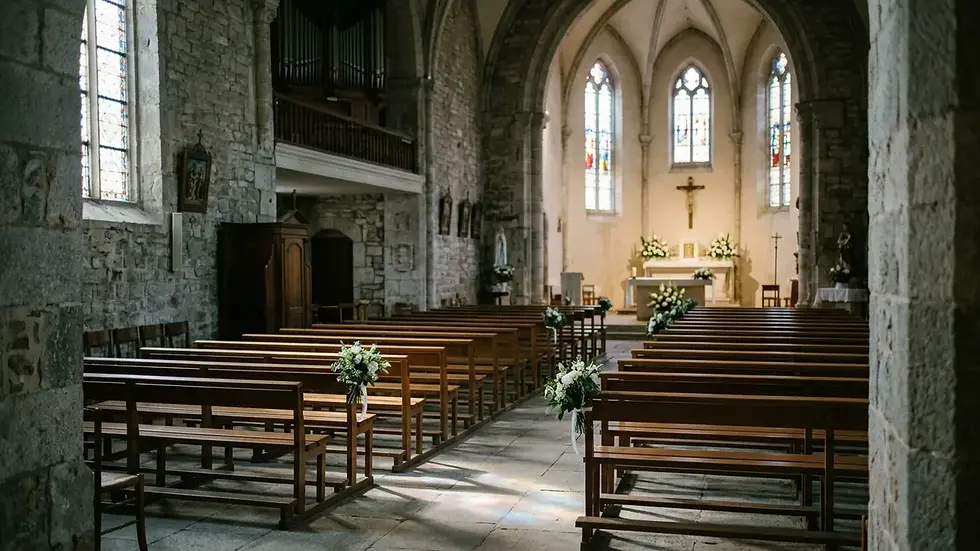
What Are the Six Key Music Moments in a Catholic Wedding?
Catholic wedding ceremony music is structured around six distinct moments, each serving a different liturgical function. Understanding what each moment requires prevents the most common planning mistake couples make: choosing all their music based on personal preference rather than liturgical purpose.
1. What Should the Prelude Sound Like?
The prelude refers to music played for roughly 10 to 15 minutes as guests arrive and are seated before the ceremony begins. It is chosen by the musicians, not always by the couple, though many parishes welcome input. The goal is to balance festivity with prayerful reflection. Instrumental pieces like Bach's "Jesu, Joy of Man's Desiring" or gentle vocal hymns work well here. This is also one of the few moments where music with a more meditative character fits naturally, because the congregation is settling and the sacred space is establishing its atmosphere.
2. What Music Works for the Processional?
The processional marks the formal beginning of the liturgy, accompanying the wedding party and the bride or couple down the aisle. Pachelbel's "Canon in D" is one of the most recognized choices worldwide and appears as a default option at many parishes. Handel's "Water Music" and Purcell's "Trumpet Voluntary" are strong alternatives. Vocal processional pieces are also appropriate, provided the text reflects the sacred occasion rather than a love song narrative.
3. What Is the Responsorial Psalm and Why Does It Matter?
The responsorial psalm is a sung or spoken response after the first Scripture reading, and it is one of the most liturgically significant music moments in the ceremony. The text must come directly from Scripture. Common choices include Psalm 128 ("May the Lord Bless Us," set by Marty Haugen) and Psalms 33 and 34. Psalm 128 is so frequently selected that several parishes list it as their default option when couples do not specify a preference. The congregation sings a simple refrain while a cantor chants the verses.
4. What Happens at the Offertory?
The offertory hymn accompanies the preparation of the altar and the presentation of gifts during a full wedding Mass. This is a moment for a congregational hymn or a reflective vocal piece. "Be Thou My Vision," "On Eagle's Wings," and "Here I Am, Lord" are all well-established choices that pass the threefold judgment and appear in most parish hymnals. If your wedding is a ceremony without Mass, this music cue does not apply in the same way, which is one reason the Mass vs. non-Mass distinction matters for your planning.
5. What Should Play During Communion?
Communion music in a Catholic wedding Mass serves an active liturgical function. It accompanies the movement of people receiving the Eucharist and should sustain a contemplative, prayerful mood. A cantor leading familiar hymns works best here, because guests who are not receiving Communion are still present and ideally participating through song. "Taste and See" (Hurd), "I Am the Bread of Life" (Toolan), and "You Are Mine" (Haas) are frequently selected and widely recognized in Catholic communities across the United States.
6. What Is the Best Recessional Music?
The recessional accompanies the newly married couple back up the aisle and sets the emotional tone for everything that follows. This is the one moment where joyful, even triumphant music is entirely appropriate. Handel's "Hallelujah Chorus," Widor's "Toccata from Symphony No. 5," and Mendelssohn's "Wedding March" are perennial favorites. "Jesu, Joy of Man's Desiring" can double as both a prelude and a recessional at parishes that prefer a more meditative departure. Your musicians and parish music director will know which pieces suit the acoustics of your specific church.

What Is the Difference Between a Catholic Wedding Mass and a Ceremony Without Mass?
A Catholic wedding Mass and a Catholic wedding ceremony without Mass differ significantly in music structure, and this distinction is one of the most consistently underexplained aspects of Catholic wedding planning. Most online guides treat them as interchangeable. They are not.
A full Catholic wedding Mass includes all the standard parts of the Eucharistic liturgy, which means your music plan must account for Mass acclamations: the Gospel Acclamation (Alleluia or, during Lent, "Praise to You, Lord Jesus Christ"), the Holy, the Memorial Acclamation, and the Great Amen. Many parishes use a specific Mass setting as the musical framework for these parts, such as the Mass of Creation (Haugen) or the Mass of St. Ann (Bolduc). You and your music director will select one setting, and the congregation sings the acclamations together throughout.
A Catholic wedding ceremony without Mass omits the Liturgy of the Eucharist entirely. The music structure is simpler: prelude, processional, responsorial psalm, and recessional are still required, but the offertory, communion, and Mass acclamations are removed. When the ceremony is not a full Mass, the Gospel Acclamation is still sung, but the full Mass setting is omitted.
For couples where one partner is not Catholic, a ceremony without Mass is often the pastoral recommendation. Understand which format your parish is planning before you finalize any music selections. The two formats require meaningfully different music programs.
Music Moment | Catholic Wedding Mass | Ceremony Without Mass |
Prelude | Yes | Yes |
Processional | Yes | Yes |
Responsorial Psalm | Yes | Yes |
Gospel Acclamation | Yes (full setting) | Yes (standalone only) |
Mass Acclamations (Holy, Memorial, Amen) | Yes | No |
Offertory Hymn | Yes | No |
Communion Music | Yes | No |
Recessional | Yes | Yes |
Can You Play Secular or Popular Songs at a Catholic Wedding?
Secular music, meaning popular love songs without sacred text, is never appropriate during the Catholic wedding liturgy itself. This is not a matter of personal preference or pastoral discretion at the parish level; it reflects the USCCB's clear guidance that liturgical music must draw its texts chiefly from Holy Scripture and the Church's approved liturgical sources. Many parishes state this explicitly in their wedding music guidelines: secular music may not be used during the wedding liturgy.
But secular music is not entirely off the table. There are two legitimate placements for non-liturgical songs at a Catholic wedding.
First, the prelude. Many parishes permit secular or popular instrumental pieces during the prelude, because this music plays before the liturgy formally opens. If you want "A Thousand Years" or "Can't Help Falling in Love" in instrumental form as guests arrive, ask your parish music director whether the prelude is considered part of the liturgy at your specific church. Guidelines vary by diocese and parish.
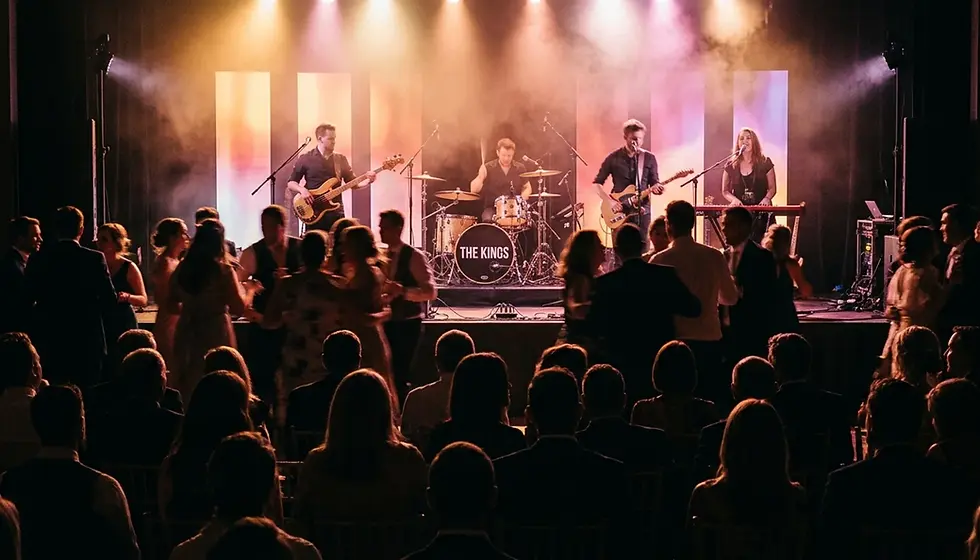
Second, the reception. The reception is entirely outside the liturgy and is where secular music, dancing, and popular songs belong without restriction. This is the moment where a live Austin wedding band brings everything your ceremony could not: full-energy crowd engagement, personalized setlists, and the songs that define your relationship as a couple, sacred or otherwise.
Cap City Band regularly works with Catholic couples across Texas who maintain a clear, respectful boundary between ceremony and reception music. The ceremony stays sacred. The reception becomes the show.
How Do You Work With a Parish Music Director?
The parish music director is the single most important collaborator in your Catholic wedding music planning, and most couples underestimate how much influence this person has. At most parishes, the music director must approve all music selections before they appear in the program. This is not bureaucracy; it protects the integrity of the liturgy and ensures that what you plan is actually executable in your specific church's acoustic space.
Start the conversation early. Many parishes require couples to submit a completed Wedding Music Selection Form at least six weeks before the wedding date. For summer weddings, the deadline is often June 1, regardless of the specific date. That means if you are marrying on August 15, your music selections must be finalized and submitted by early summer, not two weeks before the ceremony.
When you meet with the music director, bring specific preferences, not just general ideas. Saying "we want something classical for the processional" gives them less to work with than "we are considering Canon in D or the Trumpet Voluntary; which fits the acoustics of the nave better?" Knowledgeable, specific requests lead to better outcomes.
Also ask about the default music program. Many parishes have a fallback program they use when couples do not submit selections, which may include pieces like Canon in D for the processional, Psalm 128 for the responsorial psalm, and "Jesu, Joy of Man's Desiring" for the recessional. Knowing the defaults helps you decide which elements you want to customize and which you are comfortable keeping.
What Is a Step-by-Step Catholic Wedding Music Planning Checklist?
Catholic wedding music planning is most manageable when you approach it as a sequential process with clear deadlines at each stage. Here is the framework that gives couples the clearest path from first conversation to final wedding day program.
Confirm your ceremony format (Month 12-18 before wedding): Determine whether you are having a full Catholic wedding Mass or a ceremony without Mass. This determines how many music cues you need to plan.
Contact the parish music director (Month 10-12): Introduce yourself, ask for their music selection guidelines and any required forms, and request a preliminary meeting. Ask specifically about the parish's policies on secular music during the prelude.
Research your options (Month 8-10): Listen to recordings of traditional and contemporary Catholic wedding hymns. OCP Publications and GIA Publications are the two primary publishers of Catholic liturgical music in the United States, each maintaining extensive searchable databases of approved liturgical pieces.
Draft your selections for each ceremony moment (Month 6-8): Build a working list covering prelude, processional, responsorial psalm, offertory (if Mass), communion (if Mass), signing of the register, and recessional. Bring two or three options for each moment to your music director meeting.
Submit your music selection form (Six weeks before the wedding, minimum): Many parishes require forms submitted well in advance so musicians can prepare adequately. Summer weddings may require earlier submission; confirm the specific deadline with your parish.
Confirm the reception entertainment separately (Month 6-8): Your ceremony music and your reception entertainment serve entirely different purposes. Book your live band or DJ for the reception independently and early. In markets like Austin, San Antonio, and Houston, in-demand live bands book out months in advance, particularly for peak wedding season dates.
Final walkthrough with musicians (One to two weeks before the wedding): Confirm timing, order, key signatures (if vocalists are involved), and any last-minute program changes with your parish musicians. Bring a printed copy of the order of service.

What Are the Best Traditional and Contemporary Song Options?
Catholic wedding music spans a wide stylistic range, from centuries-old sacred works to contemporary hymns published in the last decade. Both are liturgically valid when they meet the threefold judgment. The deciding factors are your personal connection to the music, your congregation's familiarity with it, and your parish's specific guidelines.
Traditional and Classical Pieces
For processional and recessional moments, classical instrumental works are almost universally accepted. Pachelbel's "Canon in D," Handel's "Hallelujah Chorus," Mendelssohn's "Wedding March," and Bach's "Jesu, Joy of Man's Desiring" have appeared at Catholic weddings for generations and carry no liturgical risk. Widor's "Toccata" from Symphony No. 5 is a dramatic recessional choice that fills a large nave with genuine authority. These pieces work particularly well when your church has a pipe organ, because the instrument was designed for exactly this acoustic context.
Contemporary Liturgical Hymns
The contemporary Catholic music repertoire, primarily published by OCP Publications and GIA Publications, offers many options that are both emotionally resonant and liturgically sound. "You Are Mine" (David Haas), "I Am the Bread of Life" (Suzanne Toolan), "On Eagle's Wings" (Michael Joncas), and "Here I Am, Lord" (Dan Schutte) are widely known in American Catholic parishes and meet the pastoral judgment because most congregations can sing along. Marty Haugen's Psalm 128 setting is the most commonly used wedding psalm in the United States and is available in most parish hymnals.
What to Avoid
Avoid any song whose primary theme is romantic love between two people without reference to God or the sacred covenant of marriage. "Ave Maria" (Schubert or Bach/Gounod) is technically sacred in text but has become controversial in some parishes because of its association with solo performance rather than congregational participation, which the USCCB's pastoral judgment values. Ask your music director before assuming it is approved. Similarly, "The Prayer" (Bocelli/Dion) is beautiful but its context as a pop crossover piece makes some music directors hesitant to include it in the liturgy. When in doubt, ask first.
How Do You Budget for Catholic Wedding Musicians?
Catholic wedding music budgeting is an area where most planning guides offer almost no useful guidance, which is exactly why couples get surprised by the final invoice. Here is what to actually expect.
Parish musicians, meaning the organist and cantor on your parish's staff, typically charge a fee set by the parish. This fee covers their preparation time, rehearsal, and the ceremony itself. Fees vary considerably by parish size, market, and musician experience. Ask the parish office for the current fee schedule at your first meeting; do not assume it is included in the overall facility fee.
If you want musicians beyond the parish's standard offering, such as a string quartet for the processional or a guest soloist, you are hiring independently. Professional musicians in Texas markets charge rates that reflect their experience level, the complexity of the program, and any travel required. Standard engagements for a two-hour wedding ceremony block typically run higher in Austin and Houston than in smaller markets, consistent with general musician rate data from the industry. The Wedding Report, Inc. pegs the industry average total income per event for entertainment services at $1,252, though live bands with multiple musicians for full reception coverage occupy the higher end of the range.
Plan for three separate music line items in your wedding budget: parish musician fees for the ceremony, any additional hired musicians for specific ceremony moments, and your reception entertainment. These are three distinct categories, and conflating them is how couples end up underfunding one of the three.
For the reception, live band pricing in Texas varies based on band size, set length, market, and demand. Couples planning weddings in Austin, Houston, San Antonio, or Dallas should request quotes from live bands at least six to nine months before their date, particularly for spring and fall weddings when the event calendar fills quickly.
How Does Live Music Elevate the Catholic Wedding Experience?
Live music elevates a Catholic wedding experience by creating a responsive, present-tense musical energy that recorded audio simply cannot replicate. A skilled cantor who reads the room adjusts their tempo when the congregation is slow to join. A live organist can extend a musical interlude if the processional takes longer than expected. Recorded music cannot do either of these things.
The USCCB has consistently emphasized live, active participation as the musical ideal for Catholic liturgy. That principle applies both to the congregation singing along and to the musicians performing. There is a reason that parishes with strong music programs, including those with trained cantors and full instrumental ensembles, produce ceremonies that guests remember years later.
Beyond the ceremony, the transition to a live reception band is where the emotional arc of a wedding day reaches its peak. At Cap City Band, our three lead vocalists, Forté Appling, Suzanne Van Velson, and Matt Raines, have worked hundreds of Texas weddings across Austin, San Antonio, Houston, and Dallas. Forté has been a fixture in the Austin music scene since 2011 and has opened for major national acts. Suzanne brings a classical vocal foundation from her studies at Lamar University alongside over a decade of professional experience with top Texas bands. Matt's background spans cruise ships, jazz venues, and Texas honky tonks, with two original albums to his credit.
That depth of vocal range means we can open the reception with something warm and elegant during dinner service, then shift to full-energy dance music without the jarring quality change that smaller acts struggle to manage. For couples who want their reception to feel like a natural extension of the ceremony's emotional weight rather than an abrupt gear shift, a band with genuine vocal versatility is the right call.
You can explore our Texas wedding band resources and read more about what makes live reception music worth the investment, or browse our top 40 hits played live at your wedding guide for setlist ideas that work beautifully after a Catholic ceremony.
Frequently Asked Questions About Catholic Wedding Music
What music is not allowed at a Catholic wedding?
Secular love songs are not permitted during the Catholic wedding liturgy itself. This includes popular songs like "All of Me," "A Thousand Years," or "At Last," regardless of their personal significance to the couple. The USCCB's guidance requires that liturgical music texts be drawn primarily from Scripture and approved liturgical sources. Some parishes also prohibit pre-recorded music during the ceremony entirely, favoring live musicians only. These restrictions apply to the ceremony; reception music has no such limitations.
How many songs do you need for a Catholic wedding Mass?
A full Catholic wedding Mass typically requires music for six to eight moments: the prelude, processional, responsorial psalm, Gospel acclamation, offertory hymn, communion music, signing of the register (optional but common), and recessional. If you choose a ceremony without Mass, you can reduce that list to four primary cues: prelude, processional, responsorial psalm, and recessional. Your parish music director will walk you through exactly what is required for your specific format.
Can you use "Ave Maria" at a Catholic wedding?
Ave Maria, in either the Schubert or Bach/Gounod setting, is a sacred text and is generally accepted at Catholic weddings. However, some parishes restrict it because it functions as a solo performance piece rather than encouraging congregational participation, which the USCCB's pastoral judgment values. Always confirm with your parish music director before finalizing it. If approved, it works best during the offertory or communion moments when a meditative solo piece fits naturally.
When should you submit music selections to your parish?
Most parishes require music selection forms at least six weeks before the wedding date. For summer weddings, many parishes set a hard deadline of June 1 regardless of the specific wedding date, so musicians have adequate preparation time during the busy season. Submit earlier than the deadline if possible; music directors at popular parishes may have multiple summer weddings to coordinate, and early submission ensures your preferences receive proper attention.
Is "Canon in D" appropriate for a Catholic wedding?
Yes, Pachelbel's "Canon in D" is one of the most commonly used processional pieces at Catholic weddings worldwide and is explicitly listed as a default option at many parishes. It is an instrumental work with no text, which means it does not face the liturgical text scrutiny that vocal pieces do. It passes the musical and pastoral judgments easily because of its universal recognition and elegant character. It works for both the bridal processional and as a prelude piece.
Do both ceremony and reception need live music?
The ceremony strongly benefits from live musicians, and many parishes require it. The reception is where live entertainment truly becomes transformative, because there are no liturgical restrictions and the energy a live band brings to the dance floor cannot be replicated by a playlist. Couples who invest in live music for both moments create a continuous, elevated experience throughout the day. If budget requires a choice, prioritize live ceremony musicians for liturgical integrity and a live reception band for the guest experience that lasts in memory longest.
Can a live band play at both a Catholic ceremony and reception?
Ceremony music in a Catholic wedding is typically handled by parish-approved musicians: an organist, cantor, or string ensemble coordinated through the parish music office. A live event band is generally not an appropriate fit for the liturgy itself, both because of the music style differences and the parish's musician approval process. However, the same band that performs at your reception can provide prelude music during the cocktail hour and transition seamlessly into the full reception show. This is a common and effective approach for Catholic couples in Texas.
How early should you book a live band for the reception of a Catholic wedding?
In Texas markets including Austin, San Antonio, Houston, and Dallas, in-demand live bands book out six to nine months in advance for peak wedding season dates, particularly May through October and the holiday party window from November through January. Catholic wedding dates are often tied to specific parish calendar availabilities, which means your wedding date may be set earlier than most couples realize. Once your church date is confirmed, book your reception entertainment immediately to avoid losing your preferred act to another booking.
Final Thoughts on Planning Your Catholic Wedding Music
A well-executed Catholic wedding music program is the result of early planning, honest conversation with your parish music director, and a clear understanding of the boundary between sacred liturgy and celebratory reception. The ceremony music must honor the sacrament. The reception music should honor the crowd.
Most couples who struggle with this process do so because they conflate the two. They spend months agonizing over reception setlists while leaving ceremony music to the last six weeks. Reverse that priority. Confirm your ceremony music format first, submit your selections early, and trust your music director's expertise on what works in your specific church. Then turn your energy to making the reception unforgettable.
In 2026, Catholic couples across Texas have more options than ever for both moments. For the reception, a live band with genuine vocal depth, choreographed staging, and a personalized setlist process can take the evening from pleasant to genuinely memorable. That is the standard Cap City Band holds itself to at every wedding we perform across Austin, San Antonio, Houston, and Dallas.

Planning a wedding in Austin or anywhere across Texas and ready to talk about what live reception entertainment looks like for your specific event? Cap City Band brings three credentialed lead vocalists, a choreographed show format, and a customized setlist built around your crowd. The ceremony sets the tone. The reception creates the memories your guests carry home. Start the conversation at capcityband.com.
Written by Suzanne Davila, Owner/Performer at Cap City Band
Content powered by inkSTR.co


Comments