
The Best Prelude Song for Wedding Ceremonies in 2026


A prelude song for wedding ceremonies is background music performed as guests arrive and find their seats, typically beginning 20 to 30 minutes before the ceremony starts. The prelude creates the emotional atmosphere for everything that follows: it signals to guests that something meaningful is about to happen, and it bridges the gap between ordinary arrival and the formality of the processional.
Prelude music typically spans 20 to 30 minutes before the ceremony, with most planners recommending 5 to 10 songs for that window.
A 2023 survey cited by WeddingSift found that 68% of wedding guests felt mildly anxious or unsure what to do during unstructured pre-ceremony time when prelude music was weak or absent.
Instrumental covers of popular songs increased guests' self-reported "feeling moved" responses by 37% compared with lyrical versions, per WeddingSift's analysis of 1,247 real-wedding playlists.
For ceremonies with more than 120 guests or complex layouts, planners recommend a 25 to 35-minute prelude, adding roughly 2 minutes per 10 guests beyond 120.
Religious venues, including many Catholic parishes, require prelude selections to be submitted for approval at least 60 days in advance and may prohibit secular love songs entirely.
A live band with versatile vocalists, like Cap City Band, can perform prelude sets that transition seamlessly from intimate ceremony music into high-energy reception entertainment under one booking.
What Is a Prelude Song for a Wedding?
A prelude song for a wedding is a piece of music, instrumental or softly vocal, performed during the 20 to 30 minutes before the ceremony officially begins. Prelude music serves a structural function: it fills the time as guests arrive, orients the room emotionally, and signals the transition from ordinary social gathering to a formal ceremony. Without a strong prelude, the pre-ceremony window becomes awkward and unstructured. According to WeddingSift's research, 41% of guests who felt uncomfortable before a ceremony attributed that discomfort directly to a weak or absent prelude.
Specifically, prelude music differs from processional music in one critical way: it is background sound, not a cue for movement. Guests should be able to arrive, find seats, and converse without the music demanding their full attention. The best prelude songs sit at a volume and energy level that feels welcoming without overpowering conversation. Think of it as the emotional color wash you apply before the ceremony's main strokes.
For large weddings, typically those with more than 100 guests, most professional planners recommend starting prelude music 30 minutes before the ceremony begins. For intimate gatherings of fewer than 80 guests, 15 to 20 minutes is usually sufficient. Either way, the prelude playlist should be prepared with buffer time built in: unexpected delays are common, and running out of prelude songs before guests are seated creates an awkward silence that the processional was not designed to fill.

What Is the Prelude to a Wedding Ceremony?
The prelude to a wedding ceremony refers to the entire pre-ceremony musical segment, not just a single song, that establishes the mood before the processional begins. It is the first chapter of your wedding's soundtrack. The prelude typically begins when the first guests arrive and ends the moment the officiant signals the start of the processional. In practical terms, that window runs from 15 to 35 minutes depending on guest count, venue size, and how punctual your crowd tends to be.
First, the prelude introduces the wedding's sonic identity. If your reception will feature upbeat, genre-spanning live music, your prelude should hint at that energy without getting ahead of itself. If the ceremony is formal and classical, the prelude should reflect that register throughout. The transition from the last prelude song into the processional is one of the most emotionally charged moments of the entire wedding day. A jarring genre shift right there, say, from a jazz standard into a string quartet processional, can undercut the moment.
Additionally, the prelude serves a logistical function that couples often overlook. It communicates to guests that seating is open. It gives musicians, whether a live band, string quartet, or acoustic performer, a warm-up window in a live-performance context. And it gives the wedding planner or venue coordinator a real-time audio signal for how the schedule is tracking. If the prelude ends and the processional has not started, musicians need to know how to loop or extend gracefully. This is one reason a live act with experienced performers handles the prelude segment far more flexibly than a pre-recorded playlist.
What Are the Best Classical and Instrumental Prelude Songs for Weddings?
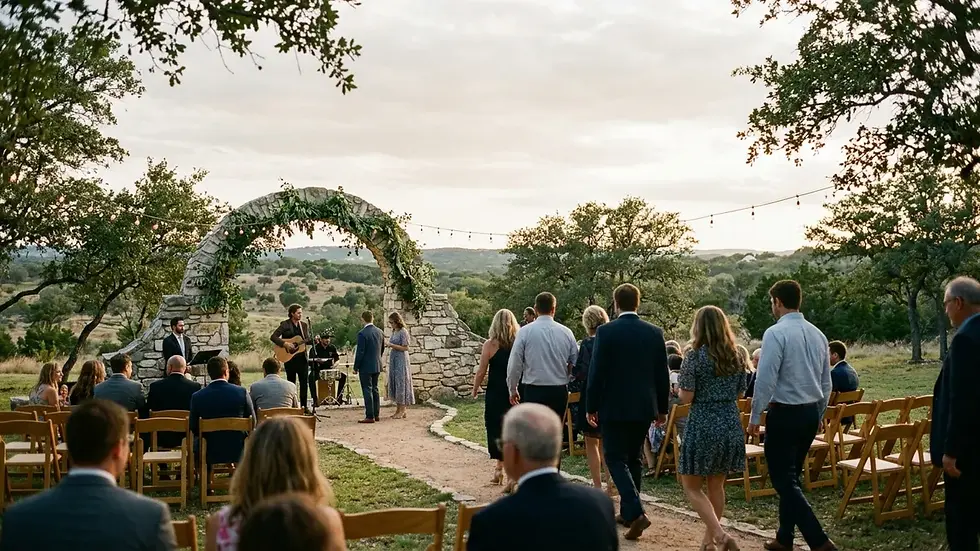
Classical and instrumental prelude songs for weddings are the most universally appropriate choice across venue types, religious requirements, and guest demographics. They are familiar without being distracting, emotionally resonant without demanding lyrical attention, and flexible enough to work at everything from a cathedral ceremony to an open-air Hill Country wedding on a September evening. The following pieces appear consistently across curated prelude lists and professional wedding music recommendations.
Timeless Classical Pieces
Canon in D Major by Pachelbel: The most requested classical prelude piece in wedding music planning. Available in solo piano, string quartet, and full orchestral arrangements, it suits nearly every venue acoustic.
Air on the G String by Bach: Slower and more contemplative than Canon in D, this piece works particularly well for formal or religious ceremonies where a reverent tone is important from the moment guests arrive.
Moonlight Sonata by Beethoven: Often arranged for solo piano as a prelude selection. Its opening movement is measured and meditative, making it ideal for the early seating window when guests are still trickling in.
Ave Maria by Schubert: Repeatedly cited by wedding music professionals as appropriate for both religious and non-religious ceremonies. Schubert's version carries emotional weight without requiring a liturgical context.
Water Music (Hornpipe) by Handel: A brighter, more festive classical option that works well if you want the prelude to carry some energy rather than settle entirely into solemnity.
Instrumental Covers of Modern Songs
Instrumental versions of contemporary songs are among the most effective prelude choices available in 2026. WeddingSift's analysis of 1,247 real-wedding playlists found that instrumental covers of songs like "A Thousand Years" or "Can't Help Falling in Love" increased guests' self-reported emotional responses by 37% compared with the lyrical originals. The familiarity of the melody triggers recognition and warmth; the absence of lyrics prevents the song from demanding attention away from conversation and seating.
A Thousand Years (Solo Piano): One of the most requested prelude songs across modern wedding planning resources. Emotionally accessible and thematically appropriate.
Can't Help Falling in Love by Brooklyn Duo: The cello-and-piano arrangement by Brooklyn Duo has become a modern standard for wedding preludes. Warm, unhurried, and recognizable to guests across multiple generations.
Unforgettable (Solo Piano): The Nat King Cole standard reimagined for solo piano sits in the prelude sweet spot: familiar enough to comfort, gentle enough to background.
Moon River (Solo Piano): From Breakfast at Tiffany's, this arrangement is a graceful prelude choice for couples who want a cinematic, emotionally open quality to the pre-ceremony window.
The Way You Look Tonight (Solo Piano): A jazz standard reimagined as solo piano; pairs well with cocktail-adjacent prelude sets and works across formal and outdoor venue types.
What Are the Best Modern and Pop Prelude Songs for Weddings?
Modern and pop prelude songs for weddings are acoustic or softly arranged contemporary tracks that reflect the couple's musical identity without overwhelming the pre-ceremony atmosphere. As of 2026, couples are increasingly replacing cookie-cutter formats with personalized, intentional celebrations, and the prelude is one of the first places that preference shows up. Choosing a modern song that matters to you and your partner, performed in a soft acoustic or instrumental arrangement, signals to guests immediately that this wedding will feel personal.
Contemporary Acoustic Picks
Golden Hour by Kacey Musgraves: The warm, drowsy quality of this song translates beautifully to acoustic guitar or piano arrangements. Its laid-back tempo suits an outdoor venue, particularly one with natural light.
Apocalypse by Cigarettes After Sex: Slower and more atmospheric than most prelude choices, this track works for couples whose wedding has a cinematic, indie-romantic tone.
Best Part by Daniel Caesar and H.E.R.: A newer standard in modern wedding music. The vocal tenderness of the original works in both acoustic cover and instrumental form, and guests who recognize it will feel a warm surprise.
Over the Rainbow by Israel Kamakawiwo'ole: The ukulele version is one of the most emotionally effective prelude choices available, crossing generational lines effortlessly. It signals ease, warmth, and joy without sentimentality.
Seasons of Love from Rent: Theatrical couples often reach for this; it works especially well in piano-only arrangement during the early seating window.
10,000 Hours by Dan + Shay and Justin Bieber: In acoustic form, this song reads as intimate and sincere, which is exactly what a well-chosen prelude song communicates.
Late Night Talking by Harry Styles: A lighter, more upbeat modern choice for couples who want the prelude to carry playful energy before a celebratory ceremony.
River by Leon Bridges: Gospel-inflected and unhurried. Particularly effective if the ceremony has spiritual undertones or if the couple wants a prelude with emotional depth.
Storybook Love by Vitamin String Quartet (from The Princess Bride): Film score fans and pop culture-forward couples will find this a perfect prelude song: familiar, cinematic, and genuinely moving in string arrangement.
Real Love by The Beatles: A quieter Beatles selection that avoids the over-familiarity of more frequently played catalog choices.
If you are planning an Austin wedding with live prelude music, a band with the vocal and instrumental depth of Cap City Band can perform these acoustic arrangements live, giving the prelude segment a warmth and spontaneity that a playlist simply cannot replicate. For more curated ideas on live ceremony music in Texas, the Cap City Band team covers this territory in depth across their Austin wedding band resources.
How Do You Build a Prelude Playlist Step by Step?
Building a prelude playlist for a wedding involves selecting 5 to 10 songs, sequencing them by energy level, and ensuring the final song transitions cleanly into the processional. Most professional wedding planners follow a three-phase structure: open with familiar, low-key tracks; build slightly in warmth and emotional resonance through the middle; and close with a song that prepares guests emotionally for the processional without stealing its thunder. The goal is a gradual intensification, not a dramatic shift.
Step 1: Calculate Your Time Window
Start with your guest count and venue layout. For ceremonies with fewer than 100 guests, a 15 to 20-minute prelude covers the arrival window comfortably. For 120 or more guests, plan 25 to 35 minutes, adding approximately 2 minutes per 10 guests beyond 120. Always build in a buffer: many professionals recommend preparing a playlist that runs 30 to 45 minutes even if you expect a 20-minute window, so late arrivals do not create an awkward silence.
Step 2: Choose a Tonal Theme
Pick one dominant mood: classical and reverent, warm and acoustic, cinematic, or contemporary pop. Genre-consistent preludes prevent guest disorientation. WeddingSift's research found that abrupt style changes, for example from jazz to Bollywood, confused 73% of surveyed guests and increased restroom traffic by 40%. Once you have your tonal lane, every song you select should belong to it.
Step 3: Sequence by Energy Arc
Open with your quietest, most conversational tracks. These play while the room is still being populated and guests are chatting. Mid-prelude, introduce songs with slightly more emotional weight: instrumental covers of recognizable contemporary songs work well here because they create recognition without demanding attention. Your final prelude song, the one played immediately before the processional cue, should be the most emotionally resonant piece on the list. Canon in D, A Thousand Years, or Can't Help Falling in Love all serve this position well.
Step 4: Test the Transition
Play the final prelude song all the way through, then immediately cue your processional music. If the tonal shift feels jarring, adjust one or the other. A live band handles this transition in real time; with a playlist, you need to test it manually in advance. Many couples overlook this step and discover on the wedding day that their carefully chosen prelude ends on an unresolved chord that clashes with the processional's opening.
Step 5: Confirm Venue and Religious Requirements
If your ceremony is at a religious venue, verify which songs are permitted. Many Catholic parishes prohibit secular love songs during the prelude and require music submissions at least 60 days in advance. Some faith-based venues treat unapproved songs as a compliance issue that can delay or reschedule the service. Submit your list early and confirm approval in writing before you finalize anything with your musicians.

How Do You Adapt Prelude Music for Non-Traditional Venues?
Adapting prelude music for non-traditional wedding venues, including backyards, state parks, outdoor lodges, and converted industrial spaces, requires addressing acoustic conditions, power access, and ambient noise in ways that a church or ballroom never demands. In 2026, with destination weddings accounting for a large share of U.S. wedding market activity, couples are increasingly planning ceremonies in spaces that were not designed for live performance. The prelude is often the first moment where venue logistics become visible to guests, so it is worth getting this right early.
Outdoor Venues
Wind, traffic, and natural ambient sound all compete with soft prelude music outdoors. Acoustic instruments that carry beautifully in a chapel can disappear in an open Texas Hill Country setting. If you plan to use live musicians for an outdoor prelude, discuss amplification with your band or ensemble well in advance. A string quartet may need light amplification at an outdoor venue for the first two rows of guests to hear clearly. A live band with professional sound equipment, like the kind Cap City Band brings to outdoor Texas events, handles this automatically through its standard production setup.
For backyard weddings specifically, power access is the first question to answer. If the venue does not have a reliable outdoor power source near the ceremony location, battery-powered amplification or a generator may be necessary. Confirm this with your venue contact at least 30 days out so your musicians can plan accordingly.
Industrial and Converted Spaces
Converted warehouses and event halls in markets like East Austin often have high ceilings and hard floors that create significant reverb. Soft, slow prelude music in these spaces can blur into an indistinct wash of sound. If your venue has this acoustic character, choose prelude songs with clear melodic lines rather than dense harmonic textures, and work with your musicians on EQ settings that reduce low-frequency buildup. A live band with experienced sound engineers understands this adjustment intuitively.
What Is the Best Entrance Song for a Wedding?
The best entrance song for a wedding is one that matches the emotional tone the couple has established through the prelude, intensifies it meaningfully, and creates a clear, unmistakable cue for the ceremony to begin. The entrance song, or processional, is the first moment of the ceremony proper: it is where the prelude's background warmth gives way to focused, collective attention. Choosing a processional song that feels like a natural extension of the prelude produces a seamless emotional escalation. Choosing one that clashes creates a jarring reset that most guests cannot explain but everyone feels.
Classic Processional Songs
Canon in D by Pachelbel serves double duty as both a prelude and a processional choice, but if it appears in both roles, plan for a different arrangement in each position so the repetition feels intentional rather than accidental. Wagner's "Bridal Chorus," commonly known as "Here Comes the Bride," remains a recognized standard, though many couples in 2026 are choosing alternatives that feel more personally resonant. Handel's "Arrival of the Queen of Sheba" is a bright, celebratory option for couples who want a formal entrance with musical momentum.
Modern Processional Songs
Couples increasingly request contemporary processional songs that reflect the musical personality established during the prelude. "A Thousand Years" by Christina Perri crosses from prelude into processional naturally in its piano or string arrangement. "Marry Me" by Train, "Thinking Out Loud" by Ed Sheeran, and "Grow Old With You" from The Wedding Singer all appear regularly in 2026 ceremony planning discussions. For couples whose prelude leaned toward indie or Americana sounds, "Stubborn Love" by The Lumineers or "First Day of My Life" by Bright Eyes translate well into processional territory.
If you are working with a live band for the full ceremony, discuss the processional transition during your planning meetings. A skilled ensemble, including experienced vocalists like those at Cap City Band, can modulate the energy and arrangement in real time based on visual cues from the wedding coordinator, something a playlist can never do. You can find more on how Austin-based wedding bands approach these ceremony-through-reception transitions in the Cap City Band guide to wedding music performance across all event segments.
How Does Cap City Band Approach Prelude and Ceremony Music?
Cap City Band approaches prelude and ceremony music as the opening act of a full wedding narrative, not a logistical checkbox before the reception begins. With three lead vocalists, including Forté Appling, Suzanne Van Velson, and Matt Raines, the band brings a vocal and instrumental range to ceremony music that most cover bands in Texas cannot match. Each vocalist brings a distinct performance background: Forté Appling's Austin stage roots and soulful vocal acrobatics, Suzanne Van Velson's classical training at Lamar University and her ensemble experience with bands like Rotel and the Hot Tomatoes, and Matt Raines's versatility across jazz, cruise ship entertainment, and Texas honky tonks. That combination of technical depth and stylistic range means the prelude segment can be shaped around whatever emotional register the couple is building toward.
Specifically, Cap City Band's ceremony music approach begins with your song preferences. The setlist conversation covers every phase of the wedding day, from the first prelude track through the last dance, so there are no handoff gaps or tonal inconsistencies between ceremony and reception. Couples who have experienced a live band's prelude, where a real performer responds to the room in real time, versus a Spotify playlist on a venue speaker system, almost universally report that the live prelude created a distinctly different emotional opening for the ceremony.
Cap City Band serves couples across Austin, Houston, San Antonio, and Dallas, and the team's experience with outdoor Hill Country venues, converted East Austin event spaces, and formal downtown ballrooms means they arrive at non-traditional venues with the acoustic and production knowledge to make the prelude land correctly regardless of the setting. For couples researching Texas wedding band options that cover the full ceremony arc, Cap City Band is the starting point worth exploring first.
What Prelude Music Rules Apply to Religious and Cultural Ceremonies?
Prelude music rules for religious and cultural wedding ceremonies vary significantly by denomination, institution, and regional tradition, and couples who overlook these requirements risk having their song selections rejected days before the wedding. In religious venues, prelude music is not merely a stylistic choice; it is part of the ceremony's sacred character and subject to institutional oversight.
Catholic and Christian Ceremonies
Many U.S. Catholic parishes explicitly prohibit secular love songs during the wedding prelude. The requirement is that prelude music be liturgically appropriate, and some parishes mandate that all music selections be submitted in writing for approval at least 60 days before the ceremony date. Violations are not minor: some venues treat unapproved secular songs as a compliance issue that can delay or reschedule the service. If your ceremony is at a Catholic parish, contact the music director early and ask for their approved repertoire list before you build your prelude playlist.
For non-denominational Christian ceremonies at dedicated wedding venues, the restrictions are usually lighter, but it is still worth confirming with the venue coordinator whether any content guidelines apply. Many faith-aligned event venues in Texas maintain informal expectations about prelude song content that are not listed in the contract.
Non-Western and Multicultural Ceremonies
Couples planning multicultural ceremonies, where one partner's family expects traditional Western prelude music and the other's cultural background calls for something different, face a unique curation challenge. One practical approach is a two-phase prelude: the opening segment draws from one cultural tradition while the second half shifts gradually toward the other, with the transition point roughly mid-prelude. For example, a ceremony honoring both South Asian and Western traditions might open with an instrumental raga-influenced piece and shift toward a Western acoustic arrangement as the processional approaches.
A live band with vocalists who have experience performing across genres has a clear advantage in multicultural prelude contexts. The ability to move between musical traditions in real time, adjusting arrangement and tone based on the room's response, is something no curated playlist can offer. This is one area where the depth of Cap City Band's three-vocalist lineup, and the breadth of genres those vocalists have performed professionally, becomes a practical asset rather than just a promotional talking point.
What Are the Most Common Prelude Music Mistakes to Avoid?
Prelude music mistakes are easy to make and surprisingly hard to correct on the wedding day itself. Most couples invest significant thought into the processional and the first dance and treat the prelude as an afterthought, which is exactly when these problems surface. Knowing the most common errors in advance gives you a clear path to avoid them.
Mistake 1: Building a Playlist Too Short
A prelude playlist that runs exactly 20 minutes for a 20-minute window will fail the moment any guest arrives late, the venue runs behind schedule, or the officiant needs an extra moment before cueing the processional. Always prepare at least 30 to 45 minutes of prelude music even when you expect a shorter window. A live band loops naturally; a playlist that ends creates silence that no one planned for.
Mistake 2: Ignoring Genre Consistency
Planning a prelude that jumps from Pachelbel to a Taylor Swift acoustic cover to a Bollywood instrumental might seem appealingly eclectic on paper. In practice, abrupt style changes during the pre-ceremony window disorient guests and create a sense of disorganization that colors their perception of the ceremony before it begins. Commit to one tonal lane and stay in it.
Mistake 3: Skipping the Processional Transition Test
Play your final prelude song from beginning to end, then immediately cue your processional music. If the transition feels abrupt or tonally inconsistent, adjust. Most couples discover this problem only at rehearsal, which leaves almost no time to correct it. Test it weeks in advance.
Mistake 4: Choosing Songs for Their Lyrics Instead of Their Sound
Prelude music plays during active conversation and guest movement. Guests will not absorb lyrics the way they would sitting still and listening. Choose songs for their melodic and emotional character, not for clever lyrical meaning that no one in the room will register. The instrumental arrangement of a song communicates its emotional identity perfectly well without the words.
Mistake 5: Forgetting Accessibility
Very soft instrumental tracks that sound perfect on headphones may be inaudible to guests with hearing impairments, particularly in larger venues or outdoor settings. Similarly, in multilingual ceremonies where some guests speak limited English, lyrics become irrelevant anyway, reinforcing the case for instrumental arrangements. Work with your musicians to set a minimum audible volume that reaches all seating areas without overpowering the space.
Frequently Asked Questions About Prelude Songs for Weddings
What is a prelude song for a wedding?
A prelude song for a wedding is background music, typically instrumental or softly acoustic, performed as guests arrive and find their seats before the ceremony begins. The prelude typically runs 15 to 30 minutes and sets the emotional tone for the entire ceremony. According to WeddingSift, 68% of guests reported feeling anxious or uncertain during pre-ceremony time when the prelude was weak or absent, which is why this segment deserves serious planning attention.
How many songs should be in a wedding prelude?
Most wedding planners recommend 5 to 10 songs for a standard 20 to 30-minute prelude, assuming each track runs 3 to 5 minutes. For ceremonies with more than 120 guests, plan for a longer prelude of 25 to 35 minutes and add roughly 2 minutes per 10 guests beyond 120. Always prepare extra songs beyond your expected window to cover delays, so you never run out of prelude music before the processional begins.
Can a wedding prelude include pop songs?
Yes, pop songs are increasingly common in wedding preludes, particularly in acoustic or instrumental arrangement. WeddingSift's analysis of real-wedding playlists found that instrumental covers of popular songs produced 37% higher "feeling moved" responses from guests compared with the original lyrical versions. Songs like Golden Hour by Kacey Musgraves, Best Part by Daniel Caesar, and Can't Help Falling in Love work beautifully as prelude choices when performed softly or arranged for piano or strings.
What is the difference between a prelude and a processional?
The prelude is background music that plays during the pre-ceremony arrival window, beginning 15 to 30 minutes before the ceremony starts. The processional is the specific song that cues the formal beginning of the ceremony, played as the wedding party and then the couple enter. The prelude creates ambient mood; the processional signals a deliberate transition from waiting to ceremony. The two should be tonally connected so the shift feels like an escalation rather than a reset.
Do religious venues restrict prelude song choices?
Many do, and the restrictions vary by denomination and individual institution. Numerous Catholic parishes prohibit secular love songs during the prelude and require that all music selections be submitted for approval at least 60 days before the ceremony. Some faith-based venues treat unapproved secular songs as a compliance issue that can delay the service. Always contact your venue's music director early in the planning process to confirm which songs are permitted before you finalize your prelude playlist.
Should prelude music be live or from a playlist?
Live prelude music creates a flexibility and warmth that a recorded playlist cannot replicate. A live performer can extend a song if guests are still arriving, adjust the emotional energy based on the room's response, and transition into the processional on a real-time cue from the wedding coordinator. Playlists are a practical alternative when budget is the primary constraint, but they require careful preparation: test the full sequence in advance, build in buffer songs, and confirm your playback system works reliably at the venue before the wedding day.
What is the most popular classical prelude song for weddings?
Canon in D Major by Pachelbel is the most frequently cited classical prelude song across professional wedding music resources. Its measured, repetitive harmonic structure creates a reliable sense of calm and ceremony, and it is available in solo piano, string quartet, and full orchestral arrangements to match nearly any venue context. Other consistently popular classical preludes include Air on the G String by Bach, Moonlight Sonata by Beethoven, and Ave Maria by Schubert.
How does a live band handle the transition from prelude to processional?
A live band transitions from prelude to processional by watching for a prearranged cue, typically a signal from the wedding coordinator or officiant, and shifting arrangement, tempo, and volume in real time to introduce the processional piece. This live responsiveness means the transition happens at exactly the right moment rather than at a fixed timer. A band with experienced musicians, like Cap City Band's three-vocalist lineup, can also modulate the final prelude song to build emotional anticipation before the processional begins, creating a more deliberate escalation than any pre-recorded transition can achieve.
Ready to Plan Your Wedding Music From Prelude to Last Dance?
The right prelude song for a wedding does more than fill silence: it shapes the emotional frame through which every guest experiences everything that follows. Whether you choose Pachelbel's Canon in a solo piano arrangement, an acoustic cover of Golden Hour, or a live performance that responds to your guests in real time, the prelude deserves the same intentional planning you bring to every other element of your ceremony. According to The Wedding Report, the U.S. wedding industry exceeded $66 billion in 2026, reflecting how seriously couples now treat every detail of the celebration. Your prelude is one of those details, and it is one of the few that guests feel before they even know the ceremony has started.
For Texas couples who want the full ceremony arc covered, from the first prelude song through the last dance, a live band with genuine musical depth makes the difference. Every Cap City Band booking starts with your song preferences, so the prelude sounds like your wedding, not a template. Request a quote at Cap City Band and start building the soundtrack your guests will talk about long after the cake is forgotten.

If you are planning a wedding in Austin, Houston, San Antonio, or Dallas and want live prelude music that flows naturally into a full reception performance under one booking, Cap City Band's three lead vocalists and choreographed show format are built exactly for that arc. Their experience across outdoor Hill Country venues and downtown Texas ballrooms means the prelude sounds right regardless of where your ceremony takes place. Browse the full Austin wedding band resources or explore Cap City Band's approach to live wedding reception music to see how the ceremony and reception connect into one cohesive evening.
Written by Suzanne Davila, Owner/Performer at Cap City Band


Comments