
Prelude Wedding Ceremony Songs: The Complete Timing Guide

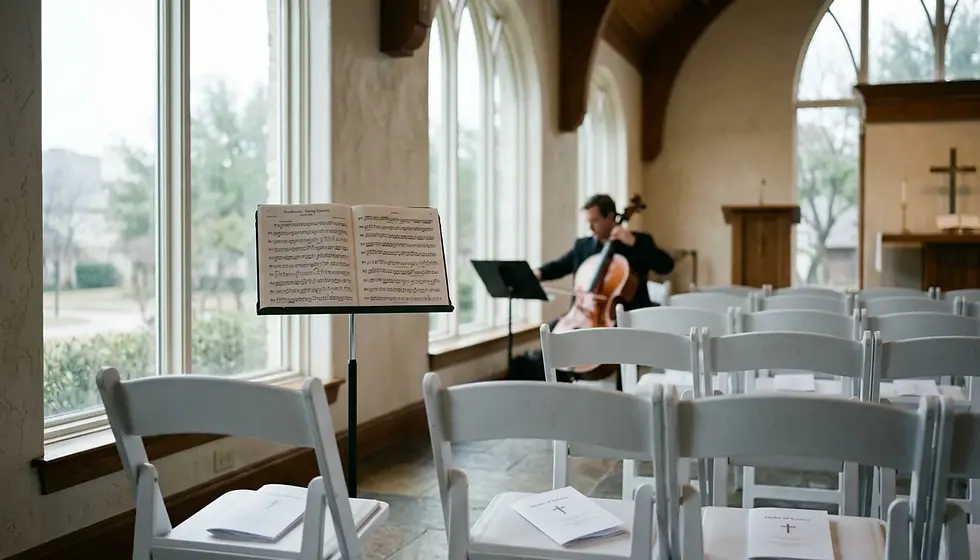
Prelude wedding ceremony songs are the music played during guest arrival and seating, typically for 30 to 45 minutes before the processional begins. This window needs roughly 10 to 15 songs depending on ceremony length, mixing quiet instrumental pieces early with warmer, more melodic tracks as the start time approaches.
Key Takeaways
Wedding ceremony prelude music typically covers a 30 to 45 minute guest arrival and seating window, according to common wedding planning guidance.
Most couples need 10 to 15 songs for the full prelude, with 10 songs cited as a common target by wedding music planning resources.
The final 10 to 20 minutes before processional should shift from quiet background instrumentals to warmer, melodic selections that build anticipation.
Classical prelude staples include repertoire by Bach, Handel, Mozart, and Debussy, while modern couples often lean acoustic, indie, or contemporary love songs.
Live musicians, whether a string quartet, pianist, or full band, give couples more flexibility to adjust timing in real time than a fixed recorded playlist.
Cap City Band, an Austin-based live wedding band serving Dallas, Houston, and San Antonio, builds a timed four-stage guest-arrival framework into every ceremony booking.
If you're staring at a blank playlist and a ceremony start time, you're not alone. Most couples underestimate how much music the prelude actually eats up, then scramble two weeks out trying to fill 30-plus minutes without repeating songs or accidentally playing something with a breakup lyric while grandma finds her seat.
This guide walks through exactly how much prelude music you need, how to sequence it so the energy builds naturally into the processional, and where couples in Dallas, Austin, and across Texas most often get the timing wrong. We'll cover classical picks, modern alternatives, genre-specific options, and the practical mechanics: licensing, sound restrictions, and what happens if your ceremony starts late.
As a working Cap City Band practitioner, this comes up in nearly every wedding consultation we run in 2026. Couples know they want music playing when guests walk in. Few have thought through how that music should evolve over 30 to 45 minutes, or how it hands off to the processional without an awkward silence.
What Is Prelude Music in a Wedding Ceremony?
Prelude music is the background music played during the guest arrival and seating period before a wedding ceremony officially begins. It fills the gap between when the first guests take their seats and when the processional starts, setting emotional tone without demanding attention.
Specifically, prelude music functions differently from processional or recessional music. The processional accompanies the wedding party's entrance, while the recessional plays as the couple exits. Prelude music, by contrast, runs in the background while guests settle in, so it should feel present but not attention-grabbing.
Common wedding planning guidance suggests the pre-ceremony arrival period usually lasts around 30 minutes, though many Texas Hill Country and outdoor venues run closer to 45 minutes if guests need extra time to park and walk to an unenclosed ceremony space. As a result, the song count and pacing shift depending on venue logistics, not just personal taste.
Most planning resources agree the prelude should start subtle, often instrumental, and gradually introduce more emotionally resonant songs as the ceremony start time nears. This is the single detail that separates a prelude that feels curated from one that feels like a random playlist on shuffle.
How Many Songs Do You Need for a Wedding Prelude?
Most weddings need 10 to 15 prelude songs to cover a standard 30 to 45 minute guest arrival window, assuming an average song length of three to four minutes. Some resources cite five to 10 songs as a safe minimum, while other wedding planning resources put the ideal number closer to 10.
The math is simple but frequently ignored: a 30-minute window at an average of 3.5 minutes per song requires roughly nine tracks. Add a buffer for a late-arriving guest or a slow processional cue, and 10 to 12 songs is a safer target than the bare minimum.
Here's a practical way to calculate your own count. First, confirm your actual guest-arrival window with your venue coordinator or officiant, since some ceremonies run shorter if the space is small and guests arrive in a tighter cluster. Second, factor in whether drinks or a receiving moment happens before seating, which can stretch the window by 10 to 15 minutes. Third, build in one or two extra songs as a buffer in case guests trickle in later than planned.
For a 20-minute garden ceremony arrival, six songs is usually enough. A 30-minute indoor church ceremony typically needs nine to 10. A 45-minute destination wedding arrival, common with Hill Country venues where guests park farther from the ceremony site, often needs 13 to 15 songs to avoid an awkward silent gap near the end.
Ceremony Arrival Window | Approximate Song Count | Typical Setting |
15 to 20 minutes | 5 to 6 songs | Small garden or courthouse ceremony |
30 minutes | 9 to 10 songs | Standard indoor or church ceremony |
45 minutes | 13 to 15 songs | Destination or Hill Country venue with extended arrival |
What Are Good Classical Prelude Songs for a Wedding Ceremony?
Classical prelude songs are instrumental pieces, typically composed for solo piano, string quartet, or harp, that play during guest seating without lyrics competing for attention. Musicians most commonly reach for repertoire by Bach, Handel, and Mozart during this window.
Specifically, frequently cited classical prelude selections include Bach's work for string quartet, solo piano, or harp, Debussy's "Clair de Lune," Satie's "Gymnopedie No. 1," Chopin's "Prelude in D-flat Major," and Elgar's "Salut d'Amour, Op. 12." These pieces adapt well across string quartet, pianist, guitarist, or harpist arrangements, which matters if your venue has a raised platform for a small ensemble but no room for a full band setup.
Notably, Satie's "Gymnopedie No. 1" reads as minimalist and modern despite being written in 1888, which makes it a strong bridge choice for couples who want a classical foundation without sounding like a formal recital. If your guest list skews younger and less traditional, lead with Satie or Debussy rather than opening with a dense Bach fugue.
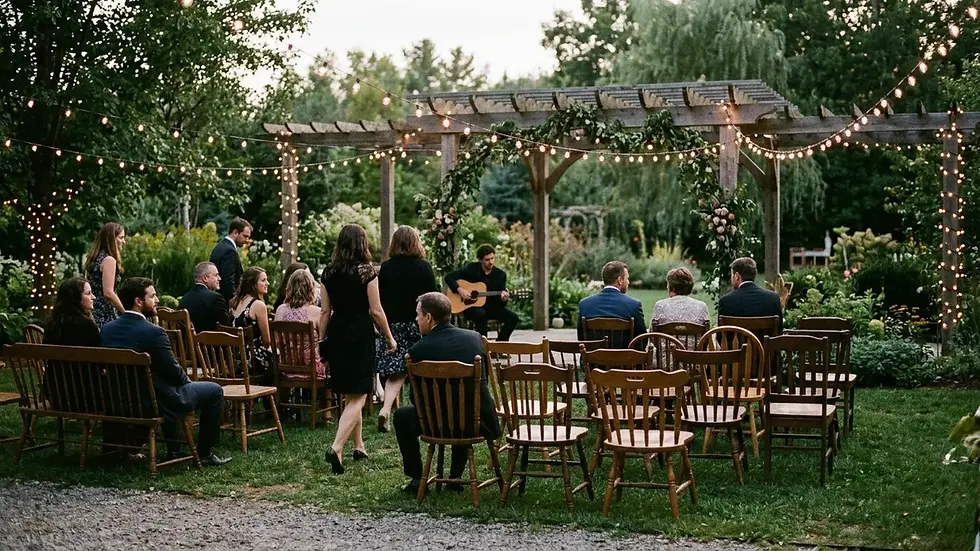
Classical prelude music works best for indoor ceremonies at churches, historic venues, or formal reception halls where the acoustics support a string quartet or solo piano without amplification. For outdoor Hill Country ceremonies with wind and ambient noise, a lightly amplified guitarist or a curated recorded playlist often translates better than an unamplified string quartet.
What Are Modern Prelude Song Options for a Ceremony?
Modern prelude songs are contemporary acoustic, indie, or pop love songs used in place of or alongside classical instrumentals, giving couples a way to inject personality into the guest-arrival period. Instrumental tracks and soft acoustic songs are reliable fallback options when couples feel stuck choosing between genres.
As a practical matter, modern selections tend to work better for outdoor or rustic venues, garden ceremonies, and couples who want the prelude to feel like an extension of their everyday music taste rather than a formal recital. Acoustic covers of well-known pop songs, stripped-down piano arrangements, and instrumental versions of modern hits all fit this category.
Contemporary vocal love songs also belong in the later stage of the prelude, closer to processional time, once the room has filled and guests are settled. In contrast, purely instrumental modern tracks work well earlier when guests are still finding seats and conversation noise is higher.
One planning mistake we see constantly at Cap City Band ceremonies across Austin and Dallas: couples pick every prelude song based on personal favorites without checking the lyrics. A song that sounds pretty on the surface can carry lyrics about a breakup, loss, or jealousy, and half your guests will notice. Screen every lyric-based pick before it goes on the final list, not just the ones that sound obviously questionable.
What Songs Are Good to Play While Waiting for the Ceremony to Start?
The songs best suited for the final stretch before a ceremony starts are warmer, more emotionally direct tracks that build anticipation without giving away the processional's big moment. This differs from earlier prelude music, which should stay in the background while guests are still arriving and finding seats.
At Cap City Band, we place this main-arrival segment roughly 20 to 10 minutes before the processional and typically suggest warmer melodic selections including "A Thousand Years," "La Vie en Rose," and "Oceans." These songs carry enough emotional weight to signal that the ceremony is close without overshadowing the entrance music that follows.
For the final two to three minutes before the processional, we recommend one transition track that builds gently and hands off naturally into the entrance music, rather than cutting abruptly from a quiet prelude song to a loud processional cue. This transition is the detail most recorded-playlist setups miss entirely, since a fixed playlist can't adjust in real time if the officiant signals a 90-second delay.
This is exactly where a live band or trained musician earns its cost over a Bluetooth speaker playlist. A live performer reads the room, the coordinator's cue, and the actual pace of guest seating, then adjusts the last song's length on the fly instead of running into dead air or an awkward overlap with the officiant's opening remarks.

Should You Book Live Musicians or Use a Recorded Playlist for Prelude Music?
Live musicians offer real-time flexibility that a recorded playlist cannot match, since a live performer can extend, shorten, or swap a song based on how guest seating is actually progressing. A recorded playlist, by contrast, runs on a fixed schedule regardless of whether your ceremony starts on time.
Industry data from a 2026 Real Weddings Study, as reported by wedding-industry content publisher BeatTribe, puts the average U.S. live wedding-band cost at $4,500, compared to $1,700 for a wedding DJ. That gap reflects more than prelude coverage. It reflects a live band's ability to handle ceremony, cocktail hour, and reception in a single booking versus stitching together separate vendors.
In the Dallas market specifically, entertainment pricing spans a wide range. Uptown Drive's Dallas wedding-band market research reports budget or emerging four-to-six-piece reception bands running approximately $3,000 to $5,000, professional or regional-tier bands at $6,000 to $12,000, and larger 10-to-14-piece production bands with horns reaching $10,000 to $18,000 or more. Solo ceremony musicians in the Dallas-Fort Worth market commonly start around $230 to $400 according to the same source, which is a reasonable option if you only need ceremony coverage and are booking reception music separately.
Notably, Uptown Drive's data shows that a growing share of larger weddings hybridize the two formats. For weddings over 200 guests, roughly 40 percent choose a combined band-and-DJ approach, according to industry data from Lupa Entertainment, letting a live musician handle the ceremony and prelude while a DJ takes over specific reception segments. This split appeals to couples who want the emotional weight of live prelude music without paying full-band rates for the entire event.
For a Dallas-area 125-guest wedding, Uptown Drive estimates a total entertainment budget of roughly $2,407 to $2,941, representing about 6.3 percent of overall wedding spend. That figure typically covers ceremony prelude through reception, not prelude alone, which is why most couples book one act for the full arc rather than splitting vendors.
How Do You Match Prelude Music to Your Ceremony Setting?
Matching prelude music to your ceremony setting means choosing instrumentation and tempo that fit the venue's acoustics, formality level, and outdoor or indoor conditions. A string quartet that sounds full and resonant in a stone chapel can get lost entirely at an outdoor Hill Country ceremony with wind noise and open air.
For formal indoor venues, including churches, historic ballrooms, and traditional reception halls, classical instrumentation, whether string quartet, solo piano, or harp, tends to project cleanly without amplification. These settings typically favor the Bach, Handel, and Mozart repertoire that's considered the classical standard for ceremony prelude music.
For outdoor or rustic venues, amplified acoustic guitar, a small combo, or a curated recorded playlist through a portable PA system usually performs better against ambient wind and crowd noise. Garden ceremonies and vineyard venues across Central Texas commonly lean toward this setup.
For couples blending cultural or religious traditions, sample prelude sets can mix classical Western repertoire with culturally specific pieces, though this is an area where most generic wedding-music articles offer surprisingly little concrete guidance. Working directly with a musician or band familiar with your specific tradition, rather than pulling songs from a generic listicle, produces a far more cohesive result.
What Should You Know About Sound Restrictions and Licensing for Prelude Music?
Wedding venues frequently impose sound restrictions and decibel limits, particularly for outdoor ceremonies near residential areas or shared event spaces, and couples rarely find out about these limits until the week of the wedding. Additionally, many venues require proof of music licensing for live performers, especially venues that host events regularly.
As a practical matter, confirm your venue's specific sound policy at least a month out, not the week of. Ask directly whether there's a decibel cap, a curfew for amplified sound, and whether the venue requires the vendor to carry general liability insurance, which most established bands and musicians already carry as standard practice.
If your ceremony involves a temporary outdoor stage, a tent, or falls in a public space, some markets require special-event permits triggered by attendee count, tent size, or public-right-of-way use. For example, larger municipal jurisdictions often require a permit once expected attendance crosses a certain threshold or a temporary stage is involved; smaller private venue ceremonies typically fall outside these triggers entirely. Confirm requirements directly with your venue coordinator and the relevant city permitting office well ahead of the date, since rules vary significantly by municipality.
For musician logistics, ask about breaks. Live bands and musicians commonly work in structured sets, and a solo prelude musician or quartet will need a short break if your guest-arrival window runs long. Build that into your run-of-show so there's no unexpected silence mid-arrival.
How Does Cap City Band Handle Prelude Music for Weddings?
Cap City Band handles wedding prelude music through a timed four-stage guest-arrival framework built into every ceremony booking, rather than treating the prelude as an afterthought tacked onto a reception-focused contract. The band structures prelude selections to shift from quiet instrumental openers to warmer, melodic songs as the processional approaches.
Unlike hiring a separate ceremony musician and a separate reception band, booking Cap City Band for the full arc means one contract, one sound check, and one group of musicians who already know your song list before the first guest sits down. That matters more than it sounds: a band that learns your story through the prelude carries that same familiarity into the first dance and the rest of the reception.
Cap City Band's three lead vocalists, Forté Appling, Suzanne Van Velson, and Matt Raines, bring distinct vocal ranges that translate directly into prelude flexibility. Appling, an Austin music scene fixture since 2011 who has opened for acts like Sublime and Bowling For Soup, brings soulful, dynamic range suited to warmer prelude songs closer to processional time. Van Velson's classical training from her vocal performance studies at Lamar University shows up clearly in stripped-down acoustic or a cappella prelude moments, a detail that separates a formally trained vocalist from a general cover-circuit singer. Raines, who has performed across cruise ships, jazz venues, and Texas honky-tonks, adds genre versatility that helps the band pivot between a classical-leaning prelude and a more contemporary, acoustic-driven set depending on what the couple wants.
For couples planning weddings in Austin, Dallas, San Antonio, or Houston in 2026, this single-vendor approach also solves a scheduling headache: no coordinating separate arrival times, sound checks, or contracts for a ceremony musician and a reception band. Cap City Band's live wedding band service covers both, with a setlist built collaboratively around the couple's specific guest list and musical taste. Couples interested in browsing real Austin wedding entertainment examples can look through the Best of Austin Wedding Bands collection, or check the Dallas Wedding Bands resources for market-specific planning guidance.
Other options exist in the market for couples comparing ceremony musicians and cover bands across Texas, and vetting any vendor's specific song range, licensing, and contract terms before signing is always worth the time regardless of who you book.
What Mistakes Should You Avoid When Planning Prelude Music?
The most common prelude music mistakes involve underestimating the arrival window's length, ignoring lyric content, and failing to plan a transition into the processional. Each of these mistakes is avoidable with basic planning done a month or more ahead of the wedding date.
Underestimating song count. Couples frequently plan five or six songs for what turns out to be a 40-minute arrival window, leading to repeated tracks or dead air. Calculate your count based on your actual venue timeline, not a generic guess.
Skipping the lyric check. A song can sound romantic on the surface while carrying lyrics about heartbreak, loss, or a breakup. Read the full lyrics of every vocal track before finalizing the list, not just the ones that seem risky.
No transition plan into the processional. Cutting abruptly from a quiet prelude song into a loud entrance track creates a jarring moment. Build in a two-to-three minute transition song that builds gradually, as Cap City Band does with every ceremony booking.
Ignoring venue sound restrictions. Outdoor and shared venues frequently cap decibel levels or amplified sound hours. Confirm this with your venue coordinator at least a month before the wedding, not the week of.
Choosing a recorded playlist with no contingency for delay. A fixed playlist can't adjust if your ceremony starts 15 minutes late. A live musician or band can extend or restructure the set in real time.
Overlooking musician breaks. If your prelude window runs long, a solo musician or small ensemble may need a short break. Confirm break structure with your vendor ahead of time so there's no unplanned silence.
Quick-Reference Summary: Planning Your Prelude Wedding Ceremony Songs
Here is the full process condensed into a checklist you can hand to your officiant, coordinator, or musician.
Confirm your actual guest-arrival window with your venue, typically 30 to 45 minutes.
Calculate your song count: roughly one song per 3.5 minutes, plus a buffer of one or two extra tracks.
Select classical or instrumental openers for the early arrival period, when guests are still finding seats.
Shift to warmer, more melodic songs in the final 10 to 20 minutes before the processional.
Choose one transition track for the final two to three minutes that builds gently into the entrance music.
Screen every vocal track's lyrics for unintended tone before finalizing the list.
Confirm venue sound restrictions and any permit requirements at least a month ahead.
Decide between a live musician, a full band, or a recorded playlist based on your venue's acoustics and your flexibility needs.
Prelude wedding ceremony songs deserve more planning time than most couples give them, largely because the format looks simple from the outside. In practice, getting the timing, sequencing, and transition right is the difference between a ceremony that feels seamlessly paced and one where guests notice an awkward silence or a jarring cut into the processional. Whether you land on 10 classical pieces played by a string quartet or a mix of acoustic modern love songs handled by a live band, the framework stays the same: start quiet, build warmth, and hand off cleanly. As you move into 2026 wedding planning season, treat the prelude with the same care you'd give your first dance song, since it's the first musical impression your guests actually experience.

If you want a band that treats prelude music as its own planned segment rather than filler before the real show starts, get started with Cap City Band and tell us about your ceremony timeline, your guest list, and the songs that matter to you. We'll build a setlist that carries from the first guest's arrival through your last dance.
Frequently Asked Questions
What is the prelude in a wedding ceremony?
The prelude in a wedding ceremony is the background music played while guests arrive and take their seats, before the processional begins. It typically runs 30 to 45 minutes and shifts from quiet instrumental songs to warmer, more emotional tracks as the ceremony start time approaches.
What is a wedding ceremony prelude, exactly, versus processional music?
A wedding ceremony prelude is the arrival and seating music, played before anyone walks down the aisle. Processional music is a separate, distinct piece or set of pieces used specifically for the wedding party's entrance, and recessional music plays as the couple exits after the ceremony concludes.
What are good prelude songs for a wedding?
Good prelude songs include classical instrumental pieces like Bach's string or piano repertoire, Debussy's "Clair de Lune," and Satie's "Gymnopedie No. 1," along with modern acoustic love songs for couples who want a more contemporary feel. The best choices depend on your venue's formality and acoustics.
How many songs do you need for a wedding prelude?
Most weddings need 10 to 15 prelude songs for a standard 30 to 45 minute guest arrival window, based on an average song length of three to four minutes. Some resources cite five to 10 songs as a safe minimum, while others recommend 10 as the ideal target.
What songs are good to play while waiting for the ceremony to start?
In the final 10 to 20 minutes before the processional, warmer and more melodic songs work better than purely quiet background instrumentals. Cap City Band recommends selections like "A Thousand Years," "La Vie en Rose," and "Oceans" for this stage, followed by one transition track that builds gently into the entrance music.
Should I hire a live musician or use a recorded playlist for prelude music?
A live musician offers real-time flexibility that a recorded playlist can't match, extending or adjusting songs if your ceremony runs behind schedule. According to a 2026 Real Weddings Study as reported by BeatTribe, live bands average $4,500 nationally versus $1,700 for a DJ, though a solo ceremony musician typically costs far less than a full band.
Can Cap City Band play both my ceremony prelude and my reception?
Yes. Cap City Band books ceremony prelude, processional, and reception music under a single contract, using the same three lead vocalists and musicians throughout so there's no gap in familiarity between the ceremony and the dance floor later that night.
How far in advance should I book a band for prelude and ceremony music?
Popular Austin, Dallas, and Central Texas wedding bands book out months in advance, especially for peak spring and fall wedding dates. Booking your live entertainment as soon as your venue and date are confirmed gives you the best chance at securing your preferred act and gives the band time to build a customized setlist around your guest list.
Written by Suzanne Davila, Owner/Performer at Cap City Band
Content powered by inkSTR.co


Comments