
What Is the Prelude at a Wedding? A Complete Guide


20 to 30 minutes before the processional
The wedding prelude is background music played as guests arrive and find seats, starting 20 to 30 minutes before the ceremony.
A standard prelude window accommodates 7 to 10 songs, assuming each piece runs 3 to 5 minutes.
Prelude music should sit at a conversational volume so guests can hear one another easily.
The four ceremony music sections are: Prelude, Processional, In-Ceremony (optional), and Recessional, each serving a distinct purpose.
Live musicians, a DJ, or a curated playlist can all handle the prelude; your venue, budget, and ceremony format determine the right fit.
In 2026, couples planning Texas weddings should confirm volume restrictions and live music policies with their venue coordinator before locking in entertainment.
Most couples spend considerable time choosing their processional song and their first dance, then treat the prelude as an afterthought. That is a mistake. Your prelude is playing while 80 to 200 people settle into their seats, catch up with family, and emotionally prepare for something important. The music underneath those moments shapes how the entire ceremony feels before a single vow is spoken.
At Cap City Band, we regularly advise couples on how ceremony music flows from the first guest's arrival through the recessional walk. The questions about preludes come up constantly, and the answers are simpler than most people expect. This guide walks through exactly what the prelude is, how long it runs, what songs work well, and how to handle the practical logistics so nothing gets lost in translation on the day of your wedding.

What Is the Prelude at a Wedding?
The wedding prelude is the musical segment that precedes the ceremony proper, playing softly in the background as guests are ushered to their seats. The word "prelude" comes from the Latin praeludium, meaning "to play beforehand," and in both classical music and wedding contexts it describes an introductory piece that prepares the audience for what follows. Specifically, the prelude refers to the ambient, background-level music that fills the space from the moment the first guest walks in until the officiant opens the ceremony.
Unlike the processional, which announces the arrival of the wedding party and commands full attention, the prelude functions as a sonic backdrop. Guests are moving around, finding seats, greeting relatives, and reading programs. The music supports that activity rather than directing it.
Because the prelude is background music by design, it differs from every other ceremony music segment in one important way: volume. Prelude music should be soft enough that two people seated side by side can hold a conversation at normal speaking volume without raising their voices. This is not a limitation; it is the point. The prelude creates atmosphere without competing for attention. It signals that the event has begun without demanding the room go silent.
What Happens During a Wedding Prelude?
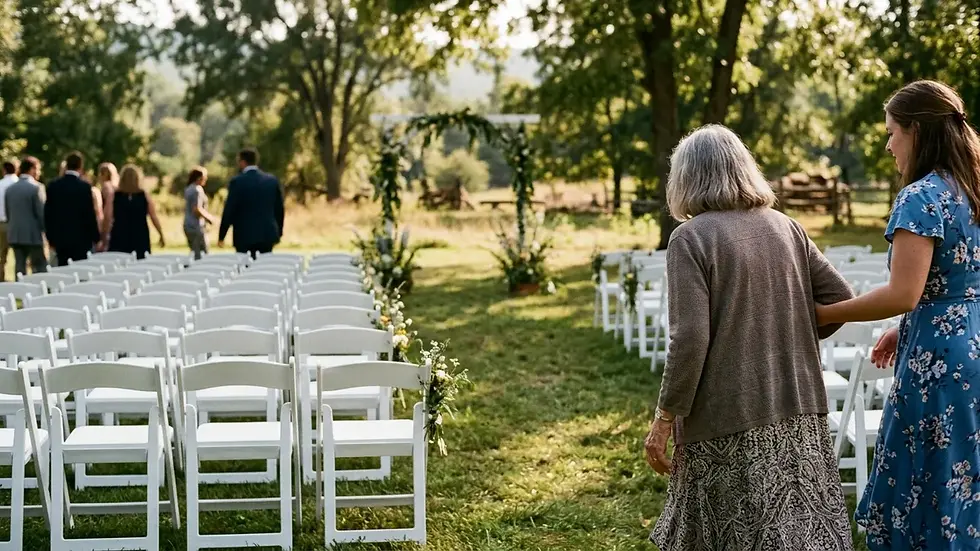
During the wedding prelude, musicians or a sound system plays continuous background music while ushers seat arriving guests. The coordinator or venue manager typically starts the prelude music 20 to 30 minutes before the scheduled ceremony start time to ensure that early arrivals are greeted with sound rather than silence. The prelude continues uninterrupted until the officiant or coordinator gives the signal to transition into the processional.
Several practical things happen during this window. Ushers escort guests to their rows. Parents of the couple are seated in the front rows, often with a specific song cue assigned to that moment. Wedding programs are distributed. Vendors make final checks. Guests who are running a few minutes late slip into their seats. The prelude music absorbs all of that activity gracefully.
One detail many couples do not plan for: the handoff from prelude to processional requires a clear signal. Specifically, the officiant, coordinator, or a designated stage manager needs to cue the musicians or DJ at the right moment. If the wedding party is ready to walk but the music transition is not cued, you get an awkward pause. Talk through this handoff with your venue coordinator and musicians before the rehearsal. Decide whether the cue is a hand signal, a countdown, or a direct earpiece communication. The logistics are simple once you have named them.
How Long Is a Prelude for a Wedding Ceremony?
A typical wedding prelude runs 20 to 30 minutes, which is enough time for 7 to 10 songs at an average of 3 to 5 minutes per piece. Some ceremonies with very large guest counts or complex seating arrangements extend to 35 or 40 minutes, but anything beyond that starts to feel like a waiting room rather than a celebration.
The practical way to plan prelude length is to work backwards from your ceremony start time. If guests are invited for 4:00 p.m. and the ceremony begins at 4:30 p.m., you need 30 minutes of prelude music. Build a playlist or a setlist with a few extra songs as buffer. Early guests may arrive at 3:45, and you do not want silence while they wait.
For live musicians, the length matters for contracting purposes. A string quartet or instrumental soloist is typically booked in one-hour or two-hour blocks. Make sure your prelude window plus your processional, ceremony, and recessional all fit within the contracted time. Running over can trigger additional fees. For couples using a DJ or a streaming playlist, length is more flexible, but you still want a defined end point so the prelude transitions to the processional cleanly rather than trailing off mid-song.
What Does Prelude Mean on a Wedding Program?
On a printed wedding program, the prelude refers to the music listed at the top of the ceremony order, before the processional entry. When you see "Prelude Music" followed by a song title or a general note like "String Quartet" or "Instrumental Selections," the program is indicating the background music guests will hear as they arrive and are seated. It is typically the first item listed in the ceremony sequence.
Some couples choose to list specific prelude song titles on the program; others simply write "Prelude: Acoustic instrumental selections" without naming every piece. Both approaches are common. Listing specific titles gives musically literate guests something to follow; keeping it general is fine if you have a longer playlist or if your musicians are improvising within a style.
The program entry also communicates tone. "Prelude: Bach and Debussy" signals a classical ceremony atmosphere. "Prelude: Acoustic versions of our favorite songs" signals something more personal and contemporary. The two words you put next to "Prelude:" on that program shape the expectation of every guest who reads it.

What Is a Good Wedding Prelude Song?
A good prelude song for a wedding is melodic, emotionally warm, and soft enough to function as background music without demanding full attention. The best prelude songs tend to have strong, recognizable melodies, gentle dynamics, and a mood that reflects the tone of the ceremony to follow. Whether you lean classical or contemporary, the key test is simple: can two people seated next to each other have a quiet conversation while this song plays without it feeling jarring or distracting?
Your guest list matters too. A prelude that thrills your college friends but confuses your grandparents is a missed opportunity. The prelude is one moment in the ceremony where every demographic, from a 7-year-old flower girl to an 80-year-old grandparent, is in the room simultaneously. Music that lands across age groups tends to be either timeless classical repertoire or widely recognized modern songs that have clear, gentle melodies rather than heavy production.
Classical Prelude Song Recommendations
Classical pieces are the traditional backbone of the wedding prelude, and for good reason. Specifically, they translate beautifully to live instrumental performance, they carry genuine emotional weight, and they age well across decades of memories. Here are three that consistently work:
"Clair de Lune" by Claude Debussy: A timeless piano work with a flowing, romantic character. It sets a contemplative, intimate mood without being somber. It works especially well at indoor venues with natural acoustics.
"Jesu, Joy of Man's Desiring" by Johann Sebastian Bach: One of Bach's most recognizable melodies, with a steady, uplifting rhythm that carries the room without overwhelming it. It suits both sacred and secular ceremonies and sounds equally strong on piano, strings, or guitar.
"Violin Concerto in E Major" by Johann Sebastian Bach: A lighter, more spirited Bach selection that works beautifully for garden weddings or outdoor Hill Country ceremonies in Texas. If you are going for a Bridgerton-era aesthetic, this piece delivers it without feeling theatrical.
One practical note for couples working with a live string quartet: most professional ensembles carry an established repertoire. If you want a piece that is not on their standard list, ask early. Many quartets can learn a specific arrangement for a reasonable additional fee, and a few weeks of lead time makes that possible.
Modern Prelude Song Recommendations
Contemporary songs work well for preludes when they have clean, melodic structures and relatively gentle production. Avoid tracks with heavy bass, complex lyrics that pull attention, or abrupt tempo changes. These selections tend to land well in 2026 with couples planning non-traditional ceremonies:
"Yellow" by Coldplay: A warm, guitar-driven song with an instantly recognizable melody. It signals a more relaxed, personal ceremony vibe without feeling casual. Works well live or as a high-quality acoustic recording.
"Thinking Out Loud" by Ed Sheeran: One of the more versatile modern prelude choices, with a slow tempo and romantic lyric that fits naturally into a ceremony setting.
"XO" by John Mayer: Understated, with gentle pacing and soft emotional content. It works as subtle background music precisely because it does not announce itself.
"A Thousand Years" by Christina Perri: A perennial choice for a reason. It is widely recognized, emotionally resonant, and holds up well in instrumental arrangements for live performance.
"Can't Help Falling in Love" covered by Haley Reinhart: The slower, acoustic arrangement of this Elvis classic has become a modern standard. It bridges traditional and contemporary taste effectively.
One thing to consider with contemporary songs for prelude: lyrics. Prelude music tends to recede into the background, but if your guests know every word to a song, they may start humming or singing along. That is not necessarily a problem, but it shifts the energy from ambient to participatory. For couples who want a quieter, more contemplative prelude atmosphere, instrumental versions of these songs sidestep that dynamic entirely.

How Does Prelude Music Fit Into the Full Ceremony Structure?
Wedding ceremony music refers to the complete arc of musical moments from the time guests arrive through the couple's exit after the ceremony concludes. There are four distinct segments in a traditional ceremony, and the prelude is the first of them. Understanding how they connect helps you plan each piece intentionally rather than treating the prelude as an isolated playlist question.
Segment | When It Happens | Musical Function | Typical Length |
Prelude | Guests arrive and are seated | Background atmosphere; welcomes guests and establishes mood | 20 to 30 minutes |
Processional | Wedding party and couple enter | Ceremonial; cues the start of the ceremony and announces each entrance | 3 to 8 minutes |
In-Ceremony (optional) | During a specific ritual, remembrance, or communion | Emotional punctuation; underscores a meaningful moment mid-ceremony | 2 to 5 minutes |
Recessional | Couple and wedding party exit after pronouncement | Celebratory; signals that the ceremony is complete and the celebration begins | 1 to 3 minutes |
Most couples choose two separate processional songs: one for the wedding party's entrance and one for the bride or groom's walk down the aisle. That distinction matters because the energy shifts. The wedding party entrance can carry a lighter, more anticipatory tone. The main entrance typically calls for something with more emotional weight.
The recessional, by contrast, should feel celebratory and upbeat. It is the moment the ceremony ends and the party begins. Many couples choose something joyful and familiar here, and it is one place where a live band's energy in the Austin wedding bands space really earns its fee: a recessional that kicks into a live, full-energy performance signals to every guest that the dance floor is next.
Who Performs the Prelude: Live Musicians, DJ, or Playlist?
The wedding prelude can be performed by a live musician or ensemble, managed by a DJ, or played from a curated streaming playlist. Each option carries different cost, flexibility, and atmosphere implications. The right choice depends on your venue's acoustics, your ceremony's size, and how much you want the prelude to feel like a curated performance versus ambient background sound.
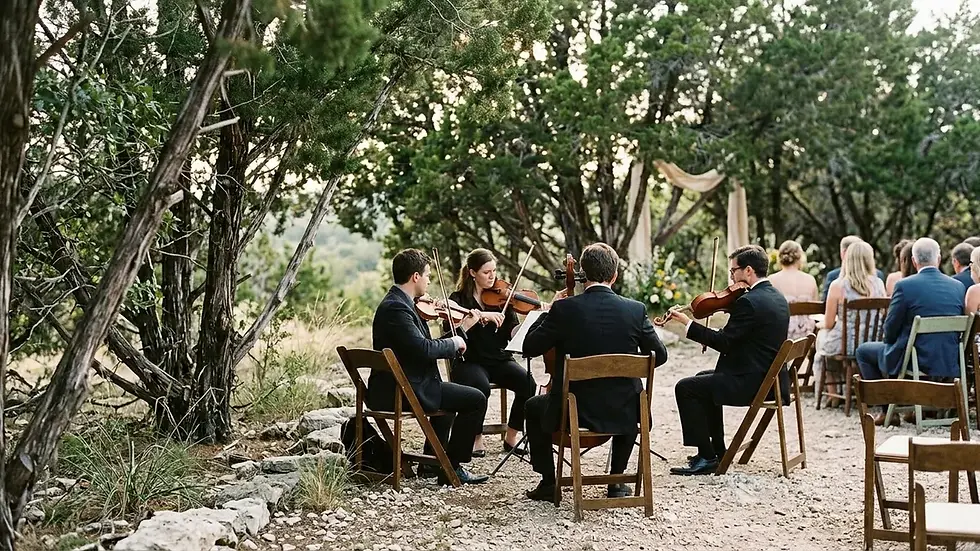
Live musicians, particularly string quartets, acoustic guitarists, and pianists, are the most immersive choice. A live performance adds warmth and presence that recordings cannot replicate. String quartets are especially versatile: they can move between classical Bach, modern pop arrangements, and original instrumental pieces without changing the acoustic character of the room. The tradeoff is cost. Hiring a live ensemble for the ceremony adds a real line item to the entertainment budget, often ranging from a few hundred dollars for a solo guitarist to considerably more for a full quartet depending on your market and performance duration.
A DJ can handle the prelude as part of a broader ceremony-through-reception package, which often makes the overall cost more manageable than hiring separate musicians for ceremony and a live band for the reception. A DJ also offers unlimited song flexibility, including any arrangement or recording you want. The limitation is energy: a DJ during the prelude is essentially pressing play on a playlist. That is perfectly functional, but it does not generate the same ambient warmth as live acoustic performance in the same space.
A streaming playlist via Spotify or a similar platform is the most budget-friendly option, and it is entirely appropriate for micro-weddings, elopements, and destination ceremonies where live musician logistics are impractical. The primary risk is technical reliability. A dropped signal, a phone that auto-locks, or an unexpected advertisement interruption mid-ceremony creates a jarring moment. If you go this route, use a dedicated device with offline downloads, confirm your venue's audio system in advance, and designate one person as the point of contact for the playlist.
Religious venues add another layer of consideration. Some churches and chapels require that prelude music be sacred in content, meaning secular pop songs or instrumental pop arrangements may not be permitted regardless of how they sound. Confirm the venue's music policy before building your prelude playlist, especially for Catholic, Episcopal, or nondenominational Christian ceremony spaces.
What Should Couples Know About Prelude Logistics?
Wedding prelude logistics refer to the practical coordination details that turn a prelude song list into a smooth, on-schedule ceremony opener. Getting these details right prevents the three most common prelude problems: awkward silence before the ceremony starts, music that is too loud to allow normal conversation, and a missed or fumbled transition from prelude to processional.
Here are the most important logistical points to address during your planning process:
Confirm the start time with your musicians or DJ. The prelude begins when the first usher starts seating guests, not when the ceremony is scheduled to begin. Build at least 25 minutes of material even if your venue's seating typically goes quickly. Early guests appreciate music; late guests appreciate not arriving to dead silence.
Set a clear volume expectation. Tell your musicians or DJ explicitly: the prelude should be conversational-volume background music. Many live musicians default to a slightly louder level because they are performing, not mixing background audio. A brief conversation at the rehearsal resolves this.
Plan the prelude-to-processional transition signal. This is the step most couples skip and then scramble to fix. Decide who cues the musicians and how. Your venue coordinator, day-of planner, or a designated wedding party member can handle this. The signal should be rehearsed, not improvised.
Consider your audience demographics. Grandparents, parents, and older guests will be seated during the prelude. Classical pieces and well-known modern songs with clean melodies tend to land well across age ranges. This is not the moment to test obscure indie tracks, however meaningful they are to you personally.
Check outdoor venue policies in Texas. Many Hill Country wedding venues along the Austin 290 corridor, as well as outdoor event spaces in San Antonio and Houston, have decibel limits that apply even to ceremony music. Confirming these restrictions in 2026 before you book any live musician for the ceremony saves a last-minute adjustment.
Build a buffer playlist. Ceremonies run long. Add two to three extra songs beyond what your estimated seating time requires. Running out of prelude music before guests are seated is an easy problem to avoid.
For couples working with a live band for the reception, it is worth asking whether the band offers ceremony and cocktail hour coverage as part of their package. At Cap City Band, clients regularly ask about full-event continuity, where a single entertainment provider manages ceremony prelude music through the last dance. That kind of coordination reduces the number of moving parts and eliminates the hand-off confusion between multiple vendors.
You can find additional guidance on setlist planning and building the right song arc for your event in the live wedding band setlist planning resources on our blog, or explore the broader landscape of wedding music showcase highlights for inspiration on how professional live bands approach ceremony-through-reception continuity.

Frequently Asked Questions About Wedding Prelude Music
What is the prelude at a wedding?
The prelude at a wedding is the background music played while guests arrive and are seated before the ceremony begins. It typically starts 20 to 30 minutes before the processional and ends when the officiant signals the start of the ceremony. The prelude is softer and more ambient than other ceremony music segments, functioning as atmosphere rather than announcement.
How many songs should be on a wedding prelude playlist?
A 20 to 30 minute prelude window typically fits 7 to 10 songs, assuming each track runs 3 to 5 minutes. Add two to three buffer songs to account for guests who arrive early or ceremonies that start a few minutes late. You do not need to play every song, but you want enough material to avoid dead silence.
Can you use a regular Spotify playlist for the wedding prelude?
Yes, a curated Spotify playlist is a practical and cost-effective option for the wedding prelude, particularly for micro-weddings, elopements, and destination ceremonies. Use a dedicated device with offline downloads to avoid streaming interruptions, confirm your venue's audio system in advance, and designate one person to manage playback on the day of the event.
What is the difference between the prelude and the processional?
The prelude is ambient background music played while guests are seated before the ceremony begins. The processional is the ceremonial music that cues the entrance of the wedding party and the couple, typically with full guest attention directed toward the aisle. The prelude sets the mood; the processional marks the official start of the ceremony.
Do you need a live musician for the wedding prelude?
No. A live musician, a DJ, or a streaming playlist can all handle the wedding prelude effectively. Live musicians, particularly string quartets, pianists, and acoustic guitarists, add warmth and presence that recordings cannot replicate, but they come at a higher cost. For couples on a tighter ceremony entertainment budget, a DJ managing the prelude as part of a full ceremony package is a practical alternative.
How loud should wedding prelude music be?
Wedding prelude music should be soft enough that two guests seated side by side can hold a normal conversation without raising their voices. If guests are leaning in and raising their voices to talk over the music, it is too loud. Brief your musicians or DJ with this specific instruction before the rehearsal so the volume is calibrated correctly from the start.
When does the wedding prelude end?
The wedding prelude ends when the processional music begins, which is the cue for the wedding party to start walking down the aisle. This transition requires a clear signal from your venue coordinator, day-of planner, or a designated wedding party member to the musicians or DJ. Rehearsing this handoff at the ceremony rehearsal prevents a fumbled pause between the prelude and the processional.
Ready to Plan Your Ceremony Music?
The prelude at a wedding is the first music your guests hear, and it is more than background noise. It is the emotional opening note of your entire ceremony. A well-planned prelude, whether performed live by a string quartet, managed by a DJ, or built as a personal playlist, tells your guests something true about the celebration ahead. Get the volume right, plan the handoff to the processional, and choose songs that hold up across the age range in your guest list. Those three steps cover most of what couples get wrong.
In 2026, Texas wedding couples have more options than ever for ceremony music, from full live band ceremony coverage to hybrid DJ setups that handle the prelude and cocktail hour while a live band takes over for the reception. The right structure depends on your venue, your guest count, and how much live music energy you want woven into the full event experience.
If you are planning a Texas wedding and want live band expertise behind your ceremony-through-reception music plan, the conversation starts at Cap City Band. Every booking includes a detailed setlist and music flow discussion, from the first prelude note to the last dance. Get started with Cap City Band and let's build the soundtrack your celebration deserves.
For more on building the perfect wedding music arc from ceremony to reception, explore our guides on Austin wedding bands and live band entertainment and wedding emcee services in Austin, Texas. If you are planning in other Texas markets, the Houston wedding bands resource covers regional logistics and what to expect from live entertainment across the state.
Written by Suzanne Davila, Owner/Performer at Cap City Band


Comments