
Best Wedding Bride Entrance Songs for Your Aisle Walk


Wedding bride entrance songs work best when they are edited to match your actual aisle length, typically 60 to 90 seconds of usable music rather than a full track. The right choice depends less on genre and more on tempo, walking pace, and whether a live musician or a recorded track will perform it.
Key Takeaways
An aisle walk usually takes 60 to 90 seconds, while most full songs run 3 to 5 minutes, so entrance tracks almost always need an edit or a chosen section rather than the whole recording.
According to FixTheMusic's 2026 wedding-music dataset covering 1,380 wedding bands and 29,000 couple enquiries, "All of Me" is the most-requested aisle song, cited through 534 bands, followed by "A Thousand Years" through 241 bands and "Can't Help Falling in Love" through 112 bands.
The Knot's Real Weddings Study of 10,474 U.S. couples married in 2026 found 71% hired a DJ and just 12% hired a live band, meaning most brides still walk to a recorded track rather than live musicians.
The Knot recommends budgeting around 6% of your total wedding budget for music, rising to 8% when you book live entertainment instead of a DJ.
Live bands typically carry a repertoire of 80 to 120 prepared songs, according to Lupa Entertainment, which means most ceremony songs can be arranged live rather than played from a phone speaker.
A live band needs roughly 9 to 12 square meters of flat stage space for a five to six piece lineup, a detail worth checking with your ceremony venue before booking musicians for the aisle.
Choosing a bride entrance song feels like a small decision until you are standing at the back of the aisle with 150 guests turned around in their chairs. Get the tempo wrong and the walk feels rushed or drags awkwardly past its emotional peak. Get the timing wrong and the song fades out mid-sentence just as your dad hands you off.
At Cap City Band, we build ceremony sets for Central Texas weddings on a near-weekly basis, and the same question comes up every time: does the bride want a recorded track cued precisely to her walk, or does she want a live arrangement that can adjust in real time if she pauses to hug someone in the front row? Both are valid. But they require different planning, and most engaged couples do not realize the difference until a few weeks before the wedding.
This guide covers the most-requested entrance songs by style, how to time your walk correctly using the actual aisle length at your venue, and what happens when a popular song has lyrics that do not quite fit a ceremony moment. We also cover how a live band handles entrance music differently than a DJ playing a fixed recording, since that distinction matters more than most planning checklists let on.
Which Song Is Best for a Bride's Entry?
The best bride entrance song matches your walking pace to the tempo, not the other way around. A song built around a slow, steady rhythm, such as Christina Perri's "A Thousand Years," gives you room to walk deliberately without the music outpacing your steps, which is why it remains one of the most frequently requested processional choices among working wedding musicians.
For couples who want a contemporary emotional build, "All of Me" by John Legend leads current booking data by a wide margin, with FixTheMusic's 2026 dataset showing it requested through 534 of the 1,380 bands surveyed. That kind of demand tells you something: the song's structure, a quiet verse rising into a soaring chorus, naturally mirrors the emotional arc of a processional. "Can't Help Falling in Love" ranks third in that same dataset, requested through 112 bands, with the Kina Grannis acoustic version often favored for its slower, stripped-down tempo, which suits a deliberate walk better than the original Elvis recording.
If you want something less expected, "Make You Feel My Love" (recorded by Adele, originally written by Bob Dylan) and "Here Comes the Sun" by The Beatles both work well for couples who want warmth without leaning on the most commonly requested titles. Whatever you pick, test it against your actual walking speed before the big day, not just how it sounds in your car.
What Is a Good Entrance Song for a Bride?
A good bride entrance song is one edited to fit the specific length of your aisle, since most full-length recordings run 3 to 5 minutes while an actual processional lasts roughly 60 to 90 seconds. Industry timing guidance puts the usable song section closer to two minutes when you include time for the bridal party ahead of the bride, plus a 20 to 80 second allowance for that party's own entrance.
This is where most engaged couples get tripped up. They pick a favorite song, assume it will work, and never test it against the physical distance they will actually walk. Common planning guidance recommends doing a timed test walk at the real venue, at your real pace, rather than guessing based on how long the song feels when you listen to it seated. A church aisle in a large sanctuary and a garden ceremony with a 20-foot path require completely different edits of the same song.
Specifically, three practical categories tend to work well once timed correctly: contemporary ballads like "A Thousand Years" or "All of Me," classical instrumental arrangements like Pachelbel's "Canon in D," and shorter vocal pieces such as Ellie Goulding's "How Long Will I Love You," which suits smaller bridal parties or shorter aisles because of its more compact runtime. As a result, the "best" song is really the one that survives an honest length and pace test, not just an emotional one.

What Song Do Brides Walk Down the Aisle To?
Brides most commonly walk down the aisle to either a classical instrumental piece or a contemporary romantic ballad, with the traditional choice remaining Wagner's "Bridal Chorus," widely known as "Here Comes the Bride." Pachelbel's "Canon in D" runs a close second among couples who want a formal, orchestral entrance without vocals.
Contemporary alternatives have gained ground steadily. As noted above, "A Thousand Years," "All of Me," and "Can't Help Falling in Love" dominate current live-band request data, and none of them carry the same century-old formality as the Wagner piece. Additionally, songs like "Lover" by Taylor Swift and "XO" by Beyoncé are popular picks for couples who want a modern pop moment instead of a classical one.
Vintage-leaning couples sometimes choose Henry Mancini's "Moon River," a pick that suits retro or old-Hollywood themed weddings. In contrast, folk-leaning couples often choose "She Moves Through the Fair," a traditional piece that pairs naturally with Irish hymns for couples building a ceremony around heritage or family tradition. The right answer depends entirely on whether your ceremony leans formal, modern, or personal to your background, and there is no single correct genre.
What's a Good Bridal Party Entrance Song?
A good bridal party entrance song is typically more upbeat and shorter than the bride's own processional, since the bridal party walks faster and in smaller individual increments rather than one continuous, deliberate walk. Common timing guidance allocates roughly 20 to 80 seconds total for the bridal party's entrance, a much tighter window than the bride's own two-minute allowance.
Because of that tighter window, many couples choose a second song entirely, distinct from the bride's entrance track, so the mood shifts noticeably when the bride herself appears. For example, a bridal party might enter to a mid-tempo instrumental arrangement, then the music transitions into the bride's chosen ballad once she reaches the back of the aisle. This is a moment where a live band has a real advantage over a DJ: musicians can extend, shorten, or transition between two songs live, in real time, based on how quickly the bridal party actually moves, rather than being locked to a fixed recording length.
If you are working with a smaller wedding party, two or three attendants rather than eight, a shorter vocal piece like "How Long Will I Love You" can double as both the bridal party and bride's entrance without feeling repetitive, since its runtime is naturally more compact than most contemporary ballads.
How Do You Choose a Song Based on Aisle Length and Walking Time?
Choosing a song based on aisle length starts with a timed test walk at your actual ceremony venue, since aisle distances vary dramatically between a compact garden ceremony and a full church sanctuary. Most processionals run 60 to 90 seconds, though some venues push closer to two minutes once you factor in a slower, deliberate pace.
Here is a practical way to work through it:
Walk the actual aisle at your venue, at the pace you plan to use on the wedding day, and time it with your phone.
Add 10 to 15 seconds as a buffer for pauses, adjusting your dress, or an emotional moment with a parent.
Select the song section that carries the emotional build you want, rather than starting from the first note of the track.
Decide on a fade-out point or a clean edit that ends naturally once you reach the altar or arbor, instead of cutting off mid-lyric.
Confirm the edit with your musician or DJ at least two weeks before the wedding, not the morning of.
As a result, the same song can require a completely different edit at two different venues. A processional that works perfectly for a 40-foot indoor aisle might need trimming by 20 seconds for a shorter outdoor ceremony space, and a live band can adjust to that in the arrangement itself rather than needing a re-edited audio file.
What Are Prelude Songs for a Wedding?
A prelude song for a wedding is background instrumental music played before the ceremony officially begins, while guests are still being seated, distinct from the processional music that accompanies the actual walk down the aisle. Prelude sets typically run 20 to 30 minutes and are built from a mix of quiet instrumental arrangements rather than a single track.
Many couples treat prelude music as an afterthought, but it sets the tone before a single vow is spoken. A string quartet arrangement, a solo piano set, or a guitarist playing acoustic instrumental covers all work well here, since guests are mingling and finding seats rather than focused entirely on the music. Classical staples like Pachelbel's "Canon in D" frequently double as prelude music before later serving as the actual processional piece, giving the ceremony a cohesive musical thread from seating through the bride's entrance.
If you are booking a live band for both ceremony and reception, ask specifically whether prelude music is included in the package or billed separately, since some vendors treat ceremony music as an add-on rather than a standard inclusion. This is a detail worth clarifying in writing before you sign anything, alongside overtime rates and load-in requirements.
What Are the Best Instrumental Songs for a Wedding Ceremony?
The best instrumental wedding ceremony songs are orchestral or acoustic arrangements without vocals, chosen specifically because they support the ceremony's tone without pulling attention away from spoken vows. Pachelbel's "Canon in D" remains the most referenced instrumental processional across bridal planning guides, prized for its steady, predictable build that suits nearly any walking pace.
Beyond the classical standard, instrumental arrangements of contemporary songs have become increasingly common. A string quartet or solo violinist performing an instrumental version of "A Thousand Years" or "Here Comes the Sun" gives couples a familiar emotional melody without needing a vocalist, which some ceremony venues actually require depending on acoustic restrictions or officiant preferences. Harp arrangements work particularly well for outdoor or garden ceremonies, where the instrument's natural resonance carries without amplification.
For couples working with a full live band rather than a chamber ensemble, ask whether the band's lineup includes a vocalist who can also perform instrumental-only ceremony sets. At Cap City Band, our three lead vocalists, Forté Appling, Suzanne Van Velson, and Matt Raines, each bring a distinct vocal texture, and Suzanne's classical training from Lamar University in particular translates well to stripped-down ceremony arrangements that need restraint rather than the full-volume showmanship of a reception set.
Does Your Ceremony Location Affect Song Choice?
Ceremony location changes both what music is appropriate and what is logistically possible, since a formal church setting, an outdoor Hill Country venue, and a civil ceremony at a courthouse each carry different acoustic realities and sometimes different rules entirely. A church with a resident organist, for example, may have restrictions on outside musicians or amplified sound that a garden venue would never impose.
Civil or registry-style ceremonies in particular sometimes carry specific restrictions on music content or timing that couples do not anticipate. If you are marrying in Bexar County, note that the county's marriage-license process is entirely separate from ceremony music rules; the license itself runs $80 for a formal license or $45 for an informal one, with office hours Monday through Friday and extended hours Wednesday, according to the county's own requirements sheet. That has nothing to do with your song choice, but it is one more reason to confirm ceremony-specific music rules directly with your officiant or venue coordinator rather than assuming what worked at a friend's wedding will work at yours.
Outdoor venues across San Antonio and the greater Hill Country often have no formal restrictions but do have practical ones: wind interference for acoustic instruments, no power outlets for amplification, or a ceremony space too small to fit a full band setup. A five to six piece live band needs roughly 9 to 12 square meters of flat stage area, so confirm that space exists before booking a full ensemble for an intimate outdoor ceremony.
Live Musicians vs. a DJ vs. a Recorded Track: What Actually Fits Your Ceremony?
A live band, a DJ, and a recorded track each handle bride entrance songs differently, and the right choice depends on your budget, ceremony size, and how much flexibility you want during the actual walk. According to The Knot's Real Weddings Study of 10,474 couples married in 2026, the average DJ cost is $1,800 compared to $4,500 for a live band, a real price gap that explains why 71% of couples hire a DJ versus just 12% who book live musicians.
Option | Average Cost (The Knot, 2026 data) | Flexibility During the Walk | Best For |
DJ / recorded track | $1,800 average; median $1,600 | Fixed edit, no real-time adjustment | Budget-conscious couples, tightly timed ceremonies |
Live band or ensemble | $4,500 average; median $1,900 | Can extend, shorten, or transition live | Couples wanting ceremony-to-reception continuity |
Solo instrumentalist (harp, violin, piano) | Varies by musician and market | High flexibility, intimate sound | Small or outdoor ceremonies with acoustic limits |
Notably, The Knot's cost quartiles show real spread within each category. DJ pricing ranges from $800 at the lower quartile to $2,700 at the upper end, while live-band pricing ranges from $900 to $7,000 depending on ensemble size and market. In contrast, a solo instrumentalist for ceremony-only music often costs less than either a full band or a DJ package, since you are booking one musician for roughly 30 to 45 minutes rather than a full-day service.
The Knot recommends allocating around 6% of your total wedding budget to music generally, rising to 8% when you choose live entertainment over a DJ. That extra 2% typically buys you a continuous, uninterrupted musical experience from prelude through your last dance, since one act handles the entire day instead of a hard cutover between vendors.
How Many Slow Songs Should You Play at a Wedding?
Most wedding receptions include somewhere between three and six dedicated slow songs across the entire event, spread across the ceremony processional, the first dance, parent dances, and one or two additional slow moments during the reception itself, rather than clustering them all together. Packing too many slow songs back-to-back tends to clear a dance floor rather than fill it.
A useful rule of thumb we apply when building Central Texas reception sets: keep slow songs to natural moments, the processional, the first dance, and parent dances, then let the DJ or band build energy steadily afterward rather than inserting extra ballads mid-reception "for atmosphere." Guests who just watched three consecutive slow dances tend to head to the bar, not the floor.
If you want one additional slow song later in the night, place it roughly two-thirds through the reception as a deliberate breather before the final high-energy set, rather than scattering ballads unpredictably. A band with a genuinely large repertoire, 80 to 120 songs is typical according to Lupa Entertainment's live-band benchmarks, can read the room and adjust in real time if the floor is dying, something a fixed DJ playlist cannot always do without manual intervention.
What Songs Are Guaranteed to Get People Dancing at a Reception?
No single song guarantees a full dance floor, but high-energy songs with a familiar, danceable groove and a wide generational reach consistently outperform niche or overly modern picks at mixed-age receptions. The safest bets tend to be songs that have already proven themselves across decades of weddings, rather than whatever is currently trending on a streaming chart.
This is precisely where a live band with genuine range earns its higher price point over a DJ. A DJ plays the recorded version exactly as released; a band with three lead vocalists, like Cap City Band's lineup of Forté Appling, Suzanne Van Velson, and Matt Raines, can shift a song's energy in real time, extending a bridge, building a key change, or reading the crowd and pivoting to a different era entirely if the floor stalls. Forté's background opening for acts like Sublime and Bowling For Soup shows up specifically in how he manages crowd energy during these transition moments, something a static playlist cannot replicate.
Our recommendation for couples building a reception setlist: give your band or DJ a mix of decades rather than leaning entirely on current hits, since a 65-year-old grandparent and a 25-year-old college roommate rarely share the same "guaranteed" dance song. A skilled live band bridges that gap live; a DJ needs a carefully pre-built playlist to do the same job.

What Contract and Booking Details Should You Confirm for Ceremony Music?
Confirming contract details before your wedding day means getting specifics in writing on song edits, prelude inclusion, overtime rates, and load-in logistics, since verbal assurances during a sales call rarely match what shows up in a signed contract. Ask any Austin-area or Central Texas entertainment vendor for their overtime rate in writing before signing; a vendor who hesitates to answer is worth a second look.
Specifically, ask whether your ceremony musician or band includes prelude music, processional edits, and recessional music as part of one package, or whether each is billed as a separate line item. Additionally, confirm how many weeks in advance you need to submit your final song list and any lyric-sensitive edits, since some popular songs include verses couples prefer to trim for a ceremony setting even when the chorus works perfectly.
Finally, ask about physical space requirements if you are booking a full band rather than a solo musician. As noted earlier, a five to six piece band typically needs 9 to 12 square meters of flat stage space, a detail smaller or non-traditional ceremony venues sometimes cannot accommodate without adjusting the lineup size.
Practical Guidance: Choosing and Booking Your Entrance Song
Choosing your bride entrance song comes down to five practical steps most couples skip until it is too late to fix easily.
Do the timed test walk at your actual venue, not a guess based on how the song feels while seated at home.
Screen the full lyrics of any pop or country song before committing, since even beloved songs sometimes carry a verse that does not suit a ceremony moment.
Decide live versus recorded early, since a live band needs the song added to rehearsal well before the wedding, while a DJ needs a final, edited audio file.
Separate your bridal party song from your own entrance song if your wedding party is large enough to need its own musical moment.
Confirm venue-specific restrictions directly with your officiant or coordinator, especially for civil ceremonies or venues with amplification limits.
Common mistakes we see couples make: assuming a favorite song will "just work" without testing the timing, forgetting prelude music entirely until a week before the wedding, and picking a bridal party song that runs the same tempo as the bride's entrance, which flattens the emotional contrast between the two moments. If you are also weighing whether an Austin wedding band fits your ceremony better than a DJ, our take is straightforward: a live band costs more on average, roughly $4,500 versus $1,800 according to The Knot's benchmark, but it buys real-time flexibility a fixed recording cannot match, especially for a bridal party that does not walk at a predictable pace.
Frequently Asked Questions
How many slow songs should you play at a wedding?
Most receptions work best with three to six dedicated slow songs total, spread across the processional, first dance, and parent dances, plus perhaps one additional slow moment later in the night. Clustering multiple slow songs back-to-back tends to clear the dance floor rather than fill it.
What are prelude songs for a wedding?
Prelude songs are the instrumental or acoustic background music played while guests are being seated, before the processional begins. They typically run 20 to 30 minutes and are distinct from the actual entrance music that accompanies the bridal party and bride.
What are the best instrumental songs for a wedding ceremony?
Pachelbel's "Canon in D" remains the most commonly referenced instrumental processional, along with instrumental string or harp arrangements of contemporary songs like "A Thousand Years." The right choice depends on whether your venue allows amplification and whether your ceremony leans classical or contemporary in tone.
What songs are guaranteed to get people dancing at a wedding reception?
No song guarantees a full floor, but songs with wide generational appeal and a familiar, danceable groove consistently outperform niche or trend-driven picks. A live band with a large repertoire and multiple vocalists can read the crowd and adjust in real time, which gives it an edge over a fixed DJ playlist.
How much does a wedding band cost in Texas compared to a DJ?
According to The Knot's Real Weddings Study of couples married in 2026, the average live-band cost is $4,500 versus $1,800 for a DJ, though pricing ranges widely from around $900 to $7,000 for bands and $800 to $2,700 for DJs depending on market and package. Request a formal quote for exact Texas pricing, since these figures are national averages.
Can a live band perform both my ceremony and reception?
Yes, many live bands, including Cap City Band, cover ceremony prelude, processional, and recessional music as well as the full reception set within one booking. This avoids the coordination risk of hiring a separate ceremony musician and a separate reception act, and it means one vendor is accountable for the entire day's music.
How do I choose a bride entrance song based on my aisle length?
Time your actual walk at the ceremony venue, add a 10 to 15 second buffer, and then select or edit a song section that matches that duration rather than assuming the full track will fit. Most processionals run 60 to 90 seconds, though some venues with longer aisles need closer to two minutes.
Should I choose a different song for my bridal party than for myself?
Many couples use a separate, slightly more upbeat song for the bridal party's entrance and reserve a more emotional ballad for the bride's own walk, since the bridal party moves faster and in shorter individual increments. This creates a clear emotional shift once the bride appears, rather than one continuous song feeling repetitive across two very different walking paces.
Conclusion
The right wedding bride entrance song is the one edited to fit your actual walking pace and aisle length, not just the one that sounds best on a playlist at home. Whether you land on a classical standard like "Canon in D," a modern favorite like "All of Me," or a personal folk pick like "She Moves Through the Fair," timing and arrangement matter more than genre alone.
As of 2026, couples across Austin, San Antonio, Dallas, and Houston increasingly want one vendor who can carry the day's music from prelude through the last dance, rather than stitching together separate ceremony musicians and a reception act. That continuity is exactly what a live band offers over a DJ, and it is worth weighing against the cost difference before you book.
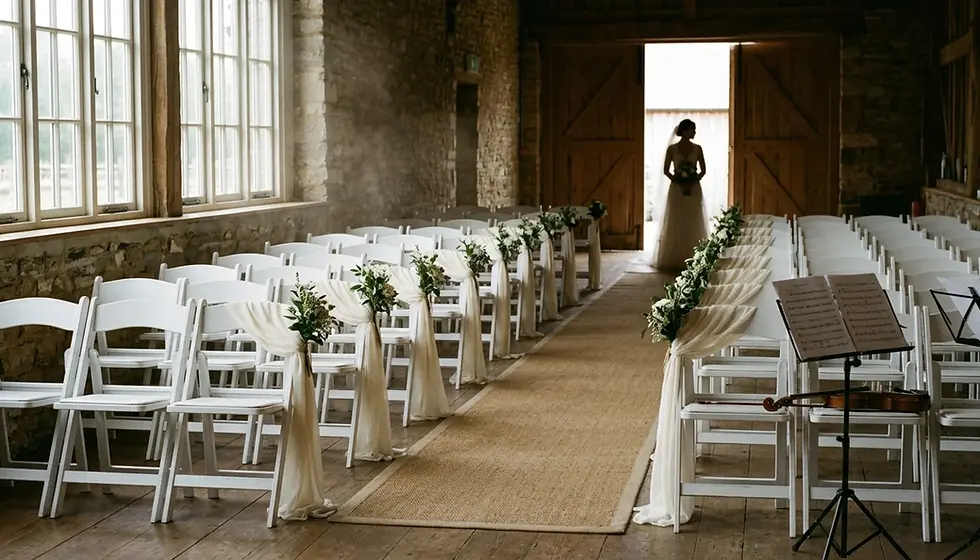
If you want a band that can build your ceremony processional and your reception dance floor from the same custom setlist, one built around your specific aisle length, guest list, and must-play songs, get started with Cap City Band and tell us about your Austin, San Antonio, Dallas, or Houston wedding.
Written by Suzanne Davila, Owner/Performer at Cap City Band
Content powered by inkSTR.co


Comments